




Used Aircraft Guide

Beech 35 Bonanza

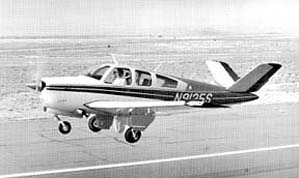
[IMGCAP(1)]Since its introduction in the late 1940s, the Beechcraft Bonanza has enjoyed a reputation as a sweet-handling speedster ideal for the pilot wishing to fly long cross countries while hauling a reasonable load.

That said, the airplane has not been without serious troubles. In the 1980s, a string of fatal crashes was traced to failure of the signature tail surfaces. After initially denying the problem, Beechcraft developed a fix to beef up the structure, which virtually every V-tail has. These were mandated by AD.

The program of tail strengthening, combined with a campaign to find and fix any latent empennage afflictions has produced stunning results. The number of in-flight…

Read More »

Commander 114TC

[IMGCAP(1)]

Despite the best efforts of the marketing department some airplanes suffer the scourge of being known for their weakest traits. Cessnas Cardinal, for example, is underpowered; Mooney 231s have gimpy engines; Aerostars are widowmakers and maintenance nightmares.

Never mind that the sins of the rollout models are often atoned by post-production fixes, potential buyers remember the worst and move on. The Commander 112/114 series cross to bear has always been speed, or lack thereof. When Rockwell got into the light airplane business in 1972, its aim was to produce a new airplane that would fly faster and haul more than any other single in the market.

What emerged was a st…

Read More »

Lake Amphibians

[IMGCAP(1)]

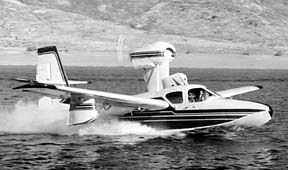
Boats or floats? Thats the first question many pilots wishing to operate off the water ask. Boats, of course, are airplanes with displacement hulls while float planes are conventional designs fitted with heavy and draggy pontoons.

For those who opt for boats, the practical choice narrows to one airplane: The venerable Lake Amphibian, an airplane that has become an icon for off-the-water flying.

Homebuilts aside, the Lake is the only displacement-hull amphibian being built today and, frankly, not many are rolling off the line. About a dozen new Lakesare built for civil use each year, plus an unknown number of the Seawolf, a military/utility variant. But there are plenty…

Read More »

Maule Taildraggers

[IMGCAP(1)]

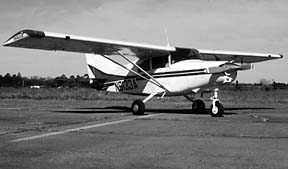
Though not exactly a household name, Maules have been around seemingly forever, having found a niche that they fill pretty well: if you want a new four-place taildragger, there arent too many choices any more. While the big manufacturers were dropping like flies in the 1980s, Maule stuck with it, chugging along and producing airplanes at relative bargain prices.

First and foremost, the Maule is a busHPlane, meant to be operated out of extreme airfields while requiring little maintenance. Maules as a group fulfill that mission well. History shows a high accident rate, but given the environment in which these airplanes are typically used, that shouldnt be too much of a surp…

Read More »

Maule MXT-7-180

[IMGCAP(1)]

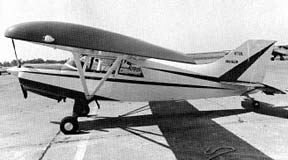
It may not be sleek, sexy or fast, but the relatively new Maule MXT-7-180 does deliver typically good Maule short-field performance for a relatively low price, while leaving the bugaboo of taildragger ground handling behind.

The tri-gear Maule is the companys first attempt at direct competition with mainstream four-place, fixed-gear singles. Introduced in 1991, at about the same time as the AGAC Tiger, the airplane didnt exactly turn the industry around…but then, no design has done all that well; the days of producing hundreds of airplanes a year are long gone. It bears noting that Maule is still in business, and still producing MXT-7-180s, while AGAC is history.

Read More »

Meyers 200

[IMGCAP(1)]

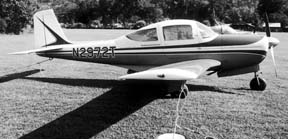
There’s something about the Meyers 200 that is hauntingly familiar. It doesnt look like a 40-year-old factory airplane; rather, its more like a current homebuilt with that sleek bubble cabin… kind of like a Lancair IV. Thats not surprising, given the following bit of aviation trivia that one of our readers sent in: Lance Neibauer, designer of the Lancairs, is evidently the nephew of the late Ray Betzold, who along with Al Meyers and Pard Diver brought the Meyers 200 into existence. Neibauer was exposed to that sleek shape early on.

While it may resemble a modern composite homebuilt in its looks, the Meyers is definitely a product of the late 1950s. Construction consist…

Read More »

Cessna 402 Businessliner

[IMGCAP(1)]

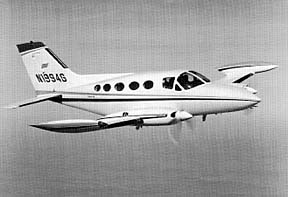
Big, cabin-class turbocharged piston twins are a bit of a niche item these days. Too large and costly for personal transport, yet lacking sufficient performance to satisfy high-rolling corporate clients yearning for the whine of turbines and the comfort of pressurization, theyre used mostly for air taxi and specialty cargo operations. The businesses that once bought this class of airplane are in many cases now looking to more cost-effective alternatives, including time-sharing of the new crop of efficient jets and even airline travel to get executives to their destinations.

But when the mission matches the capabilities of a large piston twin through accidents of geography…

Read More »

Cessna 414 Chancellor

[IMGCAP(1)]

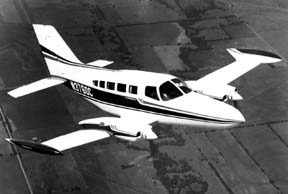
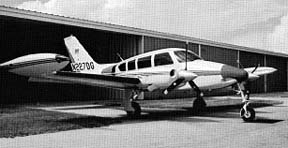
Parts-bin hybrids with spacious cabins and relatively small, efficient engines, 414-series airplanes can carry lots of fuel or a small crowd with their belongings-but not both. Also, the big Cessnas have safety records that are unmatched by any other light twin.

All told, Cessna Aircraft Corp. built nearly 1000 of the airplanes-roughly a 50/50 split between early tip-tanked 414s and wet-wing 414A Chancellors-during 15 years of production. The original intent was for the 414 to be an easy step up to pressurization, and over the years the airplanes have become popular as workhorses for small charter and corporate flight departments, as we’ll as comfortable transports for pri…

Read More »

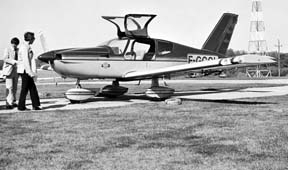
Aerospatiale TB-9 Tampico Club

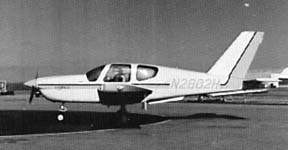
[IMGCAP(1)]As the final entry in the Caribbean series, the Tampico Club filled the bottom niche in SOCATAs line of new-wave piston singles. Boasting innovative design features, it was hoped that the Tampico would coax US flight schools into the purchase of some new aircraft to replace their fleets of aging trainers.

The way in which the airplanes were built was also innovative. Airframe parts were produced in France and shipped to the US to be assembled and fitted with American components.

The idea met with some limited success, but the company didnt sell enough airplanes to keep the venture going. In 1995, SOCATA teamed with Morane Saulnier and Renault to begin work on a new line o…

Read More »

Cessna 310

[IMGCAP(1)]

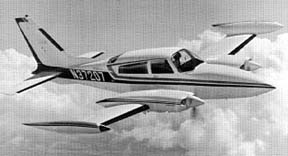
The Cessna 310 is one of the classics of general aviation, enjoying a 27-year production run during which it served as Cessnas answer to the Beech Baron, Piper Aztec, Commander 500, and Aerostar. More than 5,400 were built, and there are several major variations.

With so much to choose from, any serious buyer should be able to find an airplane that fits the bill.

But there are things to be careful of when considering a 310. First and foremost is the gear, which is relatively delicate and sensitive to proper rigging and maintenance. The airplane can also be a handful to fly, though pilots note that with proper training and due diligence, it can make a good IFR platform….

Read More »

Cessna 320 Skyknight

[IMGCAP(1)]

The Cessna 310 was a radical departure and a solid advance in general aviation products when it was introduced late in 1954. The second airplane in the 300 series was the 320 Skyknight. Introduced in 1961 as a 62 model year product, the 320 was a big step up in performance. Featuring a larger cabin, it also represented one of many areas in which Cessna pioneered or at least persevered: turbocharging.

Turbocharging was not new, even to general aviation. But it was tricky, temperamental and not very reliable. Other manufacturers tried and gave up. Cessna and its vendors stuck with it, deciding that the performance gain was worth the difficulties.

For its time, the 320 was…

Read More »

Aerospatiale TB-10 Tobago

[IMGCAP(1)]We don’t get to see much French hardware in this country any more, but those of us who remember such wonders as the Citroen automobiles with their hydraulic suspensions, or the old Renault 16, the interior of which could be stripped out in minutes without tools, will also recall that the French have their own distinctive way of doing things. The engineering is elegant or odd, depending on your point of view.

The SOCATA Caribbean series, when it was introduced in this country in the mid-1980s, was the embodiment of that unique way of doing things. Markedly different from anything wed ever seen, the French imports had a lot to offer, and they even managed to successfully buck t…

Read More »