











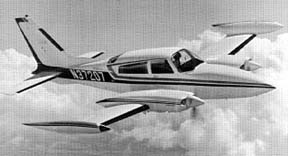
The Cessna 310 is one of the classics of general aviation, enjoying a 27-year production run during which it served as Cessnas answer to the Beech Baron, Piper Aztec, Commander 500, and Aerostar. More than 5,400 were built, and there are several major variations.
With so much to choose from, any serious buyer should be able to find an airplane that fits the bill.
But there are things to be careful of when considering a 310. First and foremost is the gear, which is relatively delicate and sensitive to proper rigging and maintenance. The airplane can also be a handful to fly, though pilots note that with proper training and due diligence, it can make a good IFR platform. Finally, there’s the 310s somewhat unusual fuel system, though pilots report that its no big deal.
For those readers who are old enough to want to avoid thinking about it, the 310 should look familiar: it was the costar of televisions Sky King adventure series. In fact, the current owner of the third and final 310 used in the show (a 1967 D model), Songbird III, wrote to tell us that its being fully restored. Anyone interested in the airplane or the show is invited to call Ed Lachendro at (414) 475-2544.
History
The 310 was introduced in 1954, a year after Pipers PA-23 Apache. Though the PA-23 would later be a direct competitor to the 310, the original Apache was far down the scale on power. The 310 competed more directly against the Twin Commander 520 (discontinued that same year) and Beech Twin Bonanza, which was dropped a few years later in favor of the Travel Air and 55 Baron.
The 310 was Cessnas first modern business twin, reflecting the companys strong growth in the 1950s. It was a time when many of the now-familiar Cessnas were first introduced: the earlier 140s and 170s were giving way to 172s and 182s. Cessna was moving aggressively into the business market, and the 310 was a key part, and first element, of that plan. In 1954, Cessnas entire model line consisted of the 170, 180 and 195; so, the 310 represented a giant leap forward for the company.
The 310 was the companys only twin for several years. The nearly identical 320 came out in 1962, followed by the pushme-pullyou Skymaster in 1964. The popular 400 series followed in 1965 with the ill-fated 411.
Unlike many airplanes with long production runs, the 310 went through steady refinement over the years, with a slew of designation letters following the model number. Cessna got up to the 310R (with a few gaps) before ending production in 1981.
The first 310s, built in 1954, were sold as 1955 models. They had 240 HP Continental O-470 engines housed in very tight and aerodynamic (for the time) cowlings. Flaps were of the split type for aerodynamic efficiency (no external flap brackets), and the gear was of electromechanical design. Distinguishing marks of these early models are multiple rear windows, a straight tail, and tuna tanks, so-called for their shape. The 310 was built through the 1957 model year. The 310B in 1958 brought a 100-pound boost in gross weight.
1959 saw the first big change in the 310, with the switch to fuel-injected 260 HP Continental IO-470D engines and another rise in gross weight This airplane was dubbed the 310C. In 1960, Cessna put a swept tail on the airplane, calling it the 310D.
The next significant change was in 1962, with the 310G. Cessna introduced their canted Stabila-Tip tanks, said to be more aerodynamically efficient than the old tanks. (The tuna tanks also had a fuel-pickup problem and an AD mandated a hefty increase in unusable fuel.) This 310, with canted tanks, swept fin and short nose, is one of the most attractive light twins ever built.
More refinements followed: increases in cabin size, further increases in gross weight, various increases in auxiliary tank size and the availability of three-bladed props. One significant difference was the switch from overwing from underwing exhaust on the 310I, and the accompanying introduction of wing lockers.
In 1969, Cessna consolidated its model line, offering a turbocharged variant of the 310 alongside the normally aspirated 310P instead of the 320. The T-310P had 285 HP Continental TSIO-520-B engines, standard three-bladed props and a 5400-pound gross weight, compared to the 310Ps 260-HP IO-470V Continentals, optional three-bladed props and 5200-pound gross.
Breaking with its practice of tacking on a different letter each year, Cessna stuck with the 310Q and T-310Q for five years. In 1975 a big change occurred with the 310R II and T-310R II.
Aside from another bump in gross weight and the move to 285 HP Continental IO-520M engines on the normally aspirated model, the 310R got a whacking great nose job. The proboscis grew 32 inches, and housed a sizable baggage compartment. The 310R also boasted an improved landing gear, though it was still not as rugged as many would like.
The 310R was the final development of the airplane, and stayed in production until the line was closed down in 1981.
The almighty dollar
As expected, prices for the 310 vary widely based on age and condition. Average normally aspirated 310s run from $40000 for the earliest models up to $191000 for the newest 310R. The market treats the various 310s pretty evenly: there’s no real marked jump with model changes as often happens. The biggest gap is between the 310Q and 310R-the 1974 310Q averages $117000, while the 1975 310Q averages $139000. The gap for the turbo models is similar.
How good an investment is a twin? Twins are popular with some pilots because of the perceived safety advantage of having an extra engine. This, of course, must be balanced against the extra hazard posed by single-engine operations when low and slow. The debate has gone on for many years.
Money talks, though, and the true cost of a twin is doubled engine maintenance and fuel bills. The marketplaces answer to the single-vs.-twin question seems to be go for the single…your wallet will thank you. Hence the following fascinating tidbit: a 1981 Beech A36 Bonanza, average price new $160,000, now goes for about $200,000. A 1981 Cessna 310R II, average price new $234,000, now goes for $220,000.
For comparison purposes, a 1981 Beech Baron 58 (same horsepower) fetches about $270,000. A 1981 Piper Aztec (250 HP engines) about $157,000.
Performance
This is a strong point of the 310. The early models can deliver cruise speeds of 175 KTAS, and the later ones better than 190 if needed. Turbocharged 310s can do 225 at max cruise. Lower power settings (60 to 65 percent) result in 170 to 180 KTAS in the normally aspirated models. Engine-out performance is better than average, with normally aspirated single-engine rate of climb pegged at anywhere from 330 to 380 FPM, depending on model. Turbo single-engine performance is even more impressive: from 390 to 440 FPM-thats up in turboprop territory, and very impressive for a piston twin. Fuel burn varies with model, but figure about 31 GPH for the later versions.
The normally aspirated models are happiest in the low teens, while the turbos have service ceilings in the mid-20s. Single-engine service ceiling is about 7000 to 7500 feet, or 17,000-18,000 for the turbo.
Short-field performance is quite good on paper. Landing over a 50-foot obstacle in a 310R will consume 1790 feet, compared to a 58 Barons 2498. Takeoff over that same obstacle will take 1700 feet in the 310, while the Baron will want 2100 feet. Pilots report that real-world operations arent as good as these numbers would have you believe.
Handling
310s have a reputation for Dutch roll in the hands of new pilots, caused in part by high rotational inertia due to the extra weight of fuel at the wingtips. Experienced owners report that its easily damped with proper technique, however.
The 310 makes for a good, stable IFR platform, according to owners, with excellent cruise stability.
On approach, some power has to be carried. The 310 doesnt glide well, with big props blanking out much of the wing and flaps that produce a lot more drag than lift. Approach speeds are relatively high. Crosswind landings are simple due to good aileron and rudder authority.
Because the gear makes the airplane sit up high, new pilots are cautioned to be careful of hard landings. Combined with the relative fragility of the gear, these can be a real problem.
Loading
Up through the 310G, the series is about average for baggage space (about average means frequently having to carry some in the cabin). With the stretched cabin of the 1963 310H, more baggage space was opened up.