









Frank Bowlin

Frank Bowlin, CFI/CFII/MEI, ATP is the editor of IFR Magazine and has contributed to Aviation Consumer and Aviation Safety. Active since VORs were new, he's flown more than 40 types, ranging from B-something airliners down to J-something taildraggers. Today, he mostly flies his Cessna 340A over 100 hours a year for both business and pleasure.

AeroCreeper: Adjustable, Well-Built

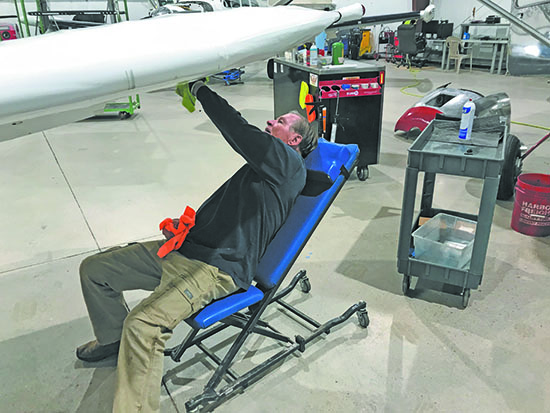
Anyone who works on airplanes—for cosmetics or maintenance—has at one time or another complained about how awkward it is to get to the belly and bottoms of the wings. The belly is often rather low, and on a low-wing airplane, undoing the many access panels on the wings or just degreasing or polishing the underside […]

Read More »

Garmin Rudder Bias: VMC Rollover Protection

Multi-engine airplanes offer more speed, more payload, more sophistication, and to many, a perceived increase in safety. Face it: In a single, if you lose an engine your options are limited to a forced landing. In a piston twin, that second engine typically won’t give you much (or any) climb and might not even be […]

Read More »

AoA Upgrades: Standalone, Integrated

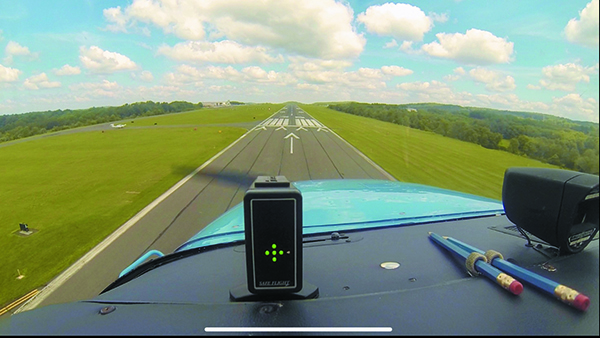
You’ve heard the arguments—more stabilized and consistent approaches and landings, more confidence while maneuvering, better aircraft control and less wear and tear on the airframe and the tires. Yes, an angle of attack system offers all these benefits.  Are there any drawbacks? We haven’t found any. So, if you haven’t installed one, perhaps we can […]

Read More »

Missing Nav Data: So Long, VORs

Phase 1 of the FAA’s plan to decommission over one-third of the nation’s VORs will be complete later this year, by the end of September. Then, Phase 2 begins immediately to continue scrapping VORs at the rate of almost one a week.  While the chances are good (but not 100 percent) that your navigator’s data […]

Read More »

IFR Training Hoods: ViBAN, Overcasters Top

The FAA calls them view-limiting devices, or VLDs, but we call them hoods. The concept is simple: In visual conditions simulate instrument conditions by restricting the pilot’s view to only the instrument panel and nothing outside. Who among us, however, hasn’t had “the hood” on and still snuck a peak outside? So, no matter how much it restricts your vision to the sides, you can always turn your head just that little bit and get a fleeting glimpse of the visual world beyond the instrument panel.

Read More »

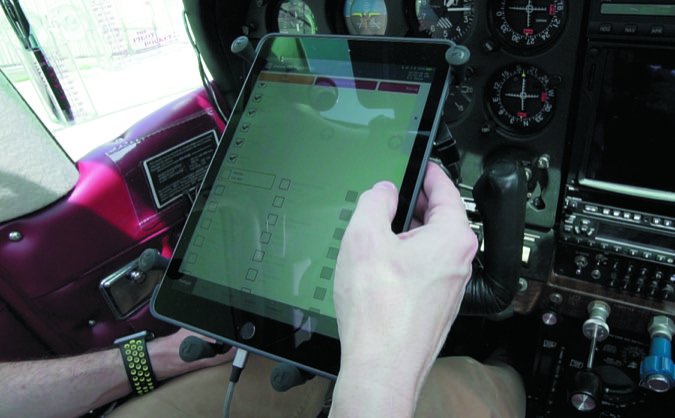
MiraCheck Copilot: A Checklist That Listens

MiraCheck Copilot runs on iPads, iPhones and works with an Apple Watch, plus a somewhate less capable version works is available for Android. You get basic functionality for free on one device, including a brief trial of the Pro version. You can buy the Standard version for $29.99 to get a few more features and support for three devices. The full Pro version is what I evaluated. It adds verbal interaction, web history and a more useful features. Pro costs your choice of $4.99 per month, $49.99 a year or $129.99 for life.

Read More »

So Versatile It Works

I extensively tested the Brightline Bags second-generation FLEX System for a couple months. Bottom line: I bought one. So did my wife.Most standard bags start with a few specific compartments for a headset, GPS or such, and have a large center section for everything else. And, thats the problem; everything else gets dumped in that main compartment. Finding what you need can be a challenge.

Read More »

Cheap Flight Timers: No Frills Functionality

Given today’s avionics and RNAV approaches, do you really need a timer? Truth is, many of the devices in our panels and on our portable gadgets already have a timer built in. Using that timer, however, can be a challenge as the sequence of commands to access it in the Garmin G1000, for instance, might not be something you’re going to always remember or find sufficiently convenient. So, we think a dedicated, standalone timer is still useful. Sure, you could use the timer function in your smartphone, on the Pebble Smart watch or the one in Garmin’s D2 pilot watch, but we think timers are best placed within the instrument scan.

Read More »

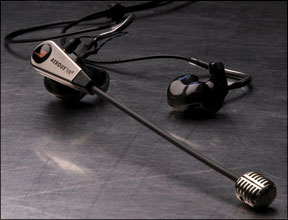
Aerous ITE Headset: Audiophile Performance

Ever wonder where can you could get a lightweight in-the-ear headset made with the utmost attention to fidelity, designed for serious audiophiles who happen to be pilots? Someone, it turns out, has actually thought of this. In 1995, Jerry Harvey created a high-fidelity in-the-ear earphone and started a company called Ultimate Ears. These appealed to performing musicians who liked their in-ear monitors, but it quickly spread to include more casual users. Harvey left Ultimate Ears in 2007 and started JH Audio to build the Aerous-no-nonsense audiophile earphones with a mic-designed for pilots.

Read More »

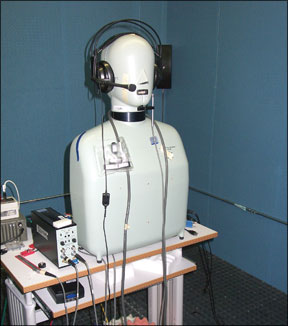
Budget Headset Tests: QFR, Gulf Coast Prevail

Just about everybody has one or more budget headsets. Perhaps you purchased one as your primary headset when you couldnt afford anything fancier or youve bought them for passengers or as spares. Having reviewed ANR and pricier passive headsets in previous issues (see Aviation Consumer May and July 2007) were examining budget headsets in this report. As in earlier reports, all of the headsets weve evaluated are circumaural-they fit around your ear against the side of your head. At the budget end of the spectrum-in this case generally less than $150-the market leans towards house-branded headsets. In this case, Gulf Coast Avionics loaned us three of their house-branded headsets and we tested a LightSPEED QFR and the AVCOMM 200P. Pilot USA was unable to supply a headset in time for our testing. In our previous review of passive headsets, we tested the Flightcom Classic 4DLX in this price range so weve recapped those results. We measured the headsets in a professional audio lab, then subjected them to flight trials by a focus group. This has proven to be a successful way to evaluate headsets because in the end, how the headset sounds and its comfort level are what count most.

Read More »

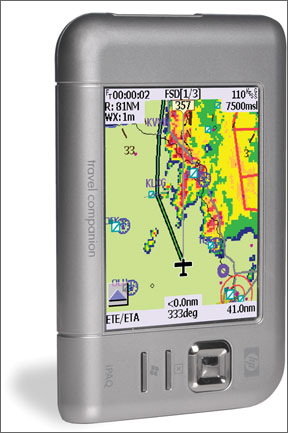
Anywhere Map vs. GPSMAP 496

Control Visions Anywhere Map and the Garmin GPSMAP 496 do pretty much the same things. They both offer GPS-driven moving maps with an extensive aviation database. Both can display datalink aviation weather and traffic. Weve reviewed both the GPSMAP 496 and the Anywhere Map suite in these pages before, but our objective this time was a head-to-head comparison. To test these devices we went flying, using them side-by-side on one flight and individually on one or more additional flights. In a features and ease-of-use comparison they each win some and lose some. The real differences, in our opinion, come down to the display and convenience. The display on the Pocket-PC-based Anywhere Map system is inadequate in direct sunlight and the plethora of external sensors, receivers, antennas and power cables Anywhere Map requires is difficult to manage. This isn’t as important if you can “install” all this in the airplane once, but it was a real factor as we installed and removed the equipment for each flight.

Read More »

LightsPEED Zulu: A Bose Contender

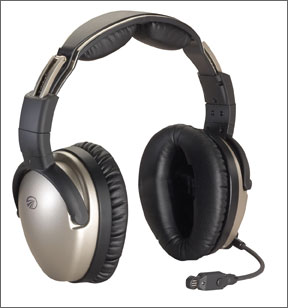
Bose created the first aviation noise-canceling headset and has always held the title of “Best Performer.” Many manufacturers have challenged the champ, but nobody has equaled Bose performance and comfort, although some have improved the features and value. Now, LightSPEED, with a reputation for solid-performing economical headsets, has introduced the Zulu that, while not clearly superior, may we’ll be preferable to many buyers. LightSPEED has clearly targeted the Bose X with the Zulu. Sound quality is as good or better and the Zulu clearly surpasses the Bose with features. The Zulu is also in the Boses price stratum, although still about 15 percent less. They even look somewhat similar. Of note to some pilots is that the Zulus mic is not reversible – the mic is always on the left when youre properly wearing the headset. The Bose mic is reversible, but requires a screwdriver to do so. The Bose is a TSOd headset; the Zulu is not. But this is of little significance to the GA pilot.

Read More »
Loading Posts