











Every day, new students enter the flight training world with a high level of naivety. Nowhere does the phrase “not all things are created equal” have a wider divide than in aviation flight training.
I researched and wrote this article in hopes of assisting readers in selecting the best flight school or independent flight instructor—aligned with their mission goals—for private or instrument tickets, though in many ways it can apply to any level of flight training. My intent is not to highlight my own work as a flight instructor.
Truthfully, I am disturbed by what I think is a growing trend in our industry: flight schools and independent flight instructors alike who seemingly take advantage of students financially to enhance their revenue stream, while at the same time providing minimal useful experience.
It’s taking how long?
I’ve been teaching people to fly for over 25 years and flying my own planes for 38 years. In addition to teaching privately in the U.S., I also taught internationally at Perkasa Flight School in Indonesia.
The FAA requires a minimum of 40 hours of flight time for a private pilot’s certificate under Part 61. However, according to the FAA, the average number of hours for people completing private pilot certification is approximately 75 hours. With the multitude of students I have instructed for the private certificate since 1999, I’ve never had a zero-time student take a checkride with more than 45 hours in their logbook, and no one has ever failed a checkride or had an accident. With good instruction, I find anything above 50 hours for the private pilot to be unnecessary, except in extreme cases. Flying isn’t for everyone.
An instructor’s goal should be to get students to the checkride in as few hours as possible, while meeting all of the certification standards. Unfortunately, there is no incentive for instructors or schools to get students to the checkride efficiently with minimal hours because face it, instruction is their revenue stream.
Two former students, private pilot Eric Roering and instrument rating student John Hartman, are good examples of a smooth, efficient flow through training. In 2024, Roering had 43 total hours logged at the time of his successful checkride. Hartman had the minimum 40 hours required for his instrument rating.
Contrast this to 21-year-old Sophia (training at a local flight school) who had 48 hours in her logbook at a cost of $9000 and had done none of the requirements for the private pilot certificate other than dual flight instruction. No cross-country flights, no night flights and no instrument instruction. Additionally, she had soloed just twice. What have they been doing with her in 48 hours? Then, for a real setback, her flight instructor left the flight school two weeks after her solo endorsement. She is now required per FAR 61.87 (p)(1) to do another solo-flight checkout with a different instructor. She estimates that the new solo endorsement alone will cost her an additional $400.
What to look for
When planning your flight instruction, stay focused and skeptical. I’ll cut to the chase and suggest a short list of questions to ask a flight school/ instructor.
• Do they have a plan? Above all else, when researching for flight instruction, be sure the school or instructor has a defined syllabus. You would never take off on a cross-country flight without a complete plan, nor should you engage in a flight training program that doesn’t have a complete plan. One of the benefits of my studies for an education degree was that I learned to write lesson plans. I wrote my private pilot syllabus in 1990 shortly after getting my own rating and a decade before getting my CFI. I wanted to capture the nuances of training—from a student perspective—while it was still fresh in my mind.
Part of the syllabus is detailed lesson plans for each of the 29 lessons. The syllabus acts as a roadmap, guiding students toward their checkride and fostering a sense of purpose. Setting goals is crucial for offering direction, motivation and a sense of accomplishment. It helps students focus their efforts and measure progress. That’s a significant key to being efficient and getting done in a minimum of 40 hours.
Sophia’s school had a loose syllabus, but she says the instructors didn’t follow, and seemingly did what they wanted when they wanted.
• Do they combine training requirements when applicable? It’s perfectly acceptable to kill two birds with one stone. The night cross-country can count as part of the three hours of required cross-country training. You could combine a cross-country flight and an instrument flight. If you did that at night, as I once did with a private pilot student, you actually kill three birds at once: night, IFR and cross-country work.
• Will your instructor be available from start to finish? CFIs coming and going is the nature of the business as many instructors are building hours to get into an airliner cockpit. And that can be costly. Back in 1999, my friend and first ever student, Rob, got his ticket with 41.5 hours. Rob’s co-worker, Barry, was also taking lessons at a flight school. By the time Barry took his checkride, he had logged 100 hours of flight time with seven different instructors. Changing instructors will be expensive, as each new instructor will evaluate a student they have never flown with before. They’ll assess takeoffs and landings, stalls and maneuvers, among other things. That repetition costs money. Seek out a seasoned instructor who isn’t going to jump ship for the airlines.
• Do they offer a wide range of experiences? Challenging a student is a must. Here I’m talking about the real-world challenges of flying into complex airspace with a landing at a Class B airport. What about flight into actual IFR conditions? Real-world experience during training is paramount.
I remember during my own training showing up for a 50-mile cross-country flight when the ceilings were 2500 feet overcast, with 10 miles of visibility across the overcast route. The CFI canceled the flight. I got angry and said, “I can fly all day in CAVU, I need you to teach me to fly in less than ideal conditions.” That is as true today as it was 40 years ago. Your instructor should present every possible scenario within program limits. I always take my students into the Philadelphia Class B airspace and land at PHL so they understand the procedures should they ever need to land at a Class B airport. It helps take the fear and uncertainty out of flying into that busy airspace. My student Eric had the experience of flying into both PHL and JFK, the sixth busiest airport in the U.S. We flew a parallel approach to Runway 4 with an airliner just off our right wing.
I insist that all my private pilot students have a minimum of three hours of actual instrument time. The purpose of exposing the student to actual IFR is not as much about teaching instrument flight, as it is to drive home how dangerous VFR into IMC can be.
A recent AOPA safety case study summarized how a 207-hour non-instrument-rated private pilot took off from Marion, Indiana, in a Cirrus and intentionally and unsuccessfully flew into IMC, killing all four on board. It’s tough to argue that students should experience flying VFR to IMC during training.
At his checkride, student Eric had his DPE exclaim that he had logged more actual instrument time than those applicants who came to him for an instrument rating checkride. That’s sad.
• Do they offer actual IMC for the IFR rating? My personal IFR training was based entirely on flying under a VLD (view limiting device) and not in actual conditions. My first IMC encounter scared me to death, and I was lucky it ended without disaster. That incident stuck with me and I vowed never to teach instruments without as much actual IMC practice as possible.
A year ago, I took my instrument student John out on a difficult IFR day. We made seven approaches into four airports all down to minimums and only saw the runway three times. We had four missed approaches. The weather was forecast to improve throughout our time aloft, but at the end of the lesson we were unable to get back into our departing airport, so we had to divert to Lancaster Airport, which had an ILS with minimums down to 200 feet, with a 400-foot ceiling. We called his wife to get a ride home. A lot of lessons were learned that day, including fuel management.
John reminded me that the first time he used a VLD was for the checkride. His entire 40 hours of training was in actual IFR. I posted details of our extreme flight on Facebook and was shocked to learn from the comments that many flight schools prohibit flight training in actual IFR conditions. My good friend and full-time CFII Stephen Hertz related to me that he met an active CFII recently who refuses to go in the clouds and never will. There is no justice for students in that.
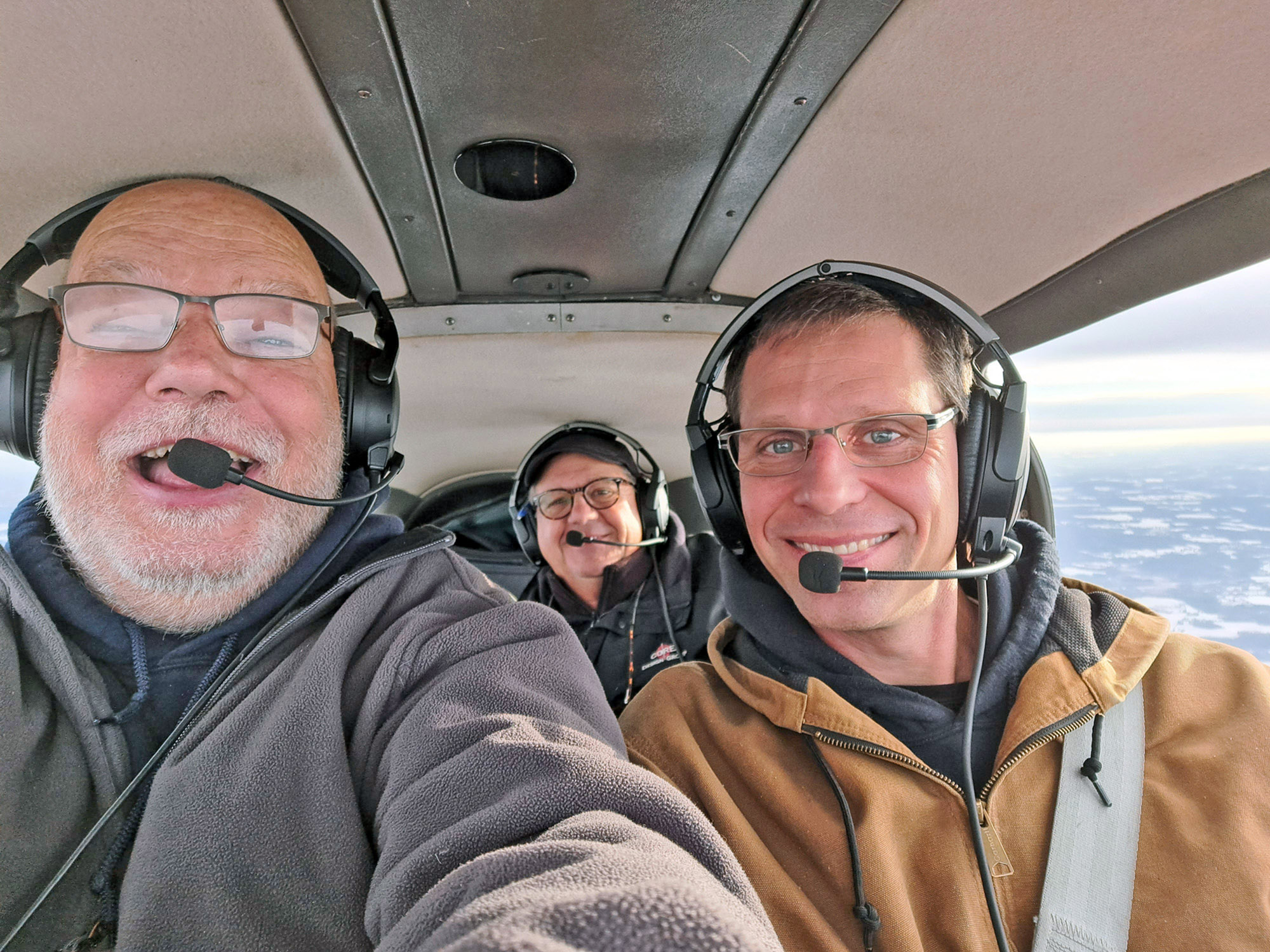
• Do they allow a ride-along? You can learn some things by simply sitting in the back seat and observing. Most people learn by doing, but there can be skills learned by watching and it’s a free learning experience.
For example, follow the sectional chart picking out landmarks along the route or make phantom calls in your head to airports along the route. There are smart exceptions for carrying passengers on training flights, including multi-engine training when an engine gets pulled back.
• What is the instructor’s experience? I am taking over 21-year-old Sophia’s dual training for several reasons. Her Mom called me and admitted she was concerned because her daughter’s flight instructor was only 21 years old. I’m not implying that all young instructors should be avoided, and there are good young teachers.
But some lack crucial teaching skills and experience to properly train students. I’m at the opposite end of the spectrum and Sophia’s mother appreciated my age and experience.