Industry News

First Word: 06/09

When the light sport idea morphed out of the ultralight industry not quite a decade ago, the idea was that the airplanes would be simple to build and wouldnt be burdened with excessive regulatory oversight. That part has largely panned out. The parallel implication was that LSAs would be cheap. That part of the dream hasnt materialized. Or has it? Cheap is relative. A new Cirrus SR22 invoices for around $600,000, give or take. A new Bonanza is three-quarters of a million. Compared to those numbers, a $100,000 LSA is, at one-sixth the price, cheap. But some buyers define cheap as under, say, $60,000. In my estimation, youre not going to see any LSAs in that price range built by a company that will survive the inevitable shakeout. So if any company proposes to prevail selling LSAs at a price point that low, my advice is don’t buy it. The quality is unlikely to be there and the company is unlikely to last. As we all know, even companies selling at the right prices are always one or two sales away from bankruptcy.

Read More »

Buying Used Homebuilts: A Few Right Choices

The claims sound almost too good to be true. A Lancair IV-P offers 270 knots on 24 GPH or a 1500-mile range with reserves. A Murphy Moose hauls 1300 pounds of cargo and 80 gallons of fuel out of 1000-foot strips and climbs 900 FPM. A nearly-new Epic LT six-seat turboprop can be yours for $300,000 less than a mid-time TBM 700. But unless youre a resourceful and patient type who enjoys the challenge of wrangling maintenance issues or flying an aircraft that demands top-notch piloting technique, you can stop reading here. The designers of kit aircraft didnt repeal the laws of economics or physics. Squeezing out more performance at lower cost comes at a price somewhere else. If youre just looking for a faster or cheaper ride, the tradeoff probably isn’t worth the gain. If tinkering appeals to you, then you need to ask yourself two questions: How much docile handling are you willing to trade for maximizing speed or STOL performance? How willing are you to assume the risks and additional oversight that comes with an aircraft built by an amateur?

Read More »

Letters: 06/09

I enjoyed your article on four-place cruisers in the March 2009 Aviation Consumer. However, I would like to set the record straight on a couple of points and provide another perspective regarding resale values and what defines “best value.” Regarding production volumes of the DA40 versus the SR20, more DA40s have been produced from startup through the end of 2008 than total SR20s through 2008, even though the SR20 has been in production three years longer. Since 2003, the DA40 has outsold the SR20 every year. Here are the statistics to support that. You commented that the purchase price for a comparable used SR20 is generally less than a DA40. As you can see from the numbers above, the higher price of the DA40 cannot be attributed to lower production volume as you supposed as there have been 20 percent more DA40s produced than SR20s. The difference is more likely driven by the markets acknowledgement that the DA40 is an overall better value than the others, resulting in higher demand. Having an airplane retain more of its original value is hardly a negative. Less depreciation equates to a lower overall cost of ownership as owners recapture a larger proportion of their original investment on sale. This factor is often overlooked by prospective owners when evaluating the true cost of owning an airplane. True value is much more than purchase price. Its also operating costs, insurance costs, maintenance costs and investment recapture upon sale.

Read More »

Avoiding Ethanol: Easy Tests Do the Trick

As the number of aircraft engines capable of using automobile gasoline-mogas-rises, so does pilot interest in using it instead of pricier 100LL. And the next time oil prices spike, as they did during the summer of 2008, interest will be greater. But the increasing alcohol content in mogas, coupled with less-stringent quality control when compared to 100LL, makes it impossible to know exactly what youre getting. That alcohol, specifically ethanol, may not be a problem if youre driving a car or truck manufactured in the last couple of decades. But for those aircraft engines approved for mogas, there’s a catch: Few of them allow large percentages of ethanol. And if youre flying an older aircraft using mogas under a supplemental type certificate, none of them allow it. To be sure what youre putting in your tanks, you need to test the fuel for its ethanol content. Blending ethanol into mogas has its roots in the gas crises of the 1970s, but really didnt get going until the late 199 0s. New U.S. air-quality rules enacted early in that decade reduced allowable carbon monoxide levels and refiners started adding methyl tertiary butyl ether (MTBE) as an oxygenate to meet the requirements. Soon, however, MTBE was blamed for contaminating groundwater and, as of 2006, it had been banned in 20 states, although no federal ban currently exists. States and localities still had to comply with air quality rules, so ethanol became the oxygenate of choice. Presently, renewable fuel standards in nine states require blending ethanol with mogas, according to the American Coalition for Ethanol. Fourteen states have incentives for marketing ethanol-blended fuels and many more have on the books various incentives supporting ethanol production. Despite questions about its economics and energy required to produce it in the U.S., ethanols presence in mogas likely will increase.

Read More »

First Word: 05/09

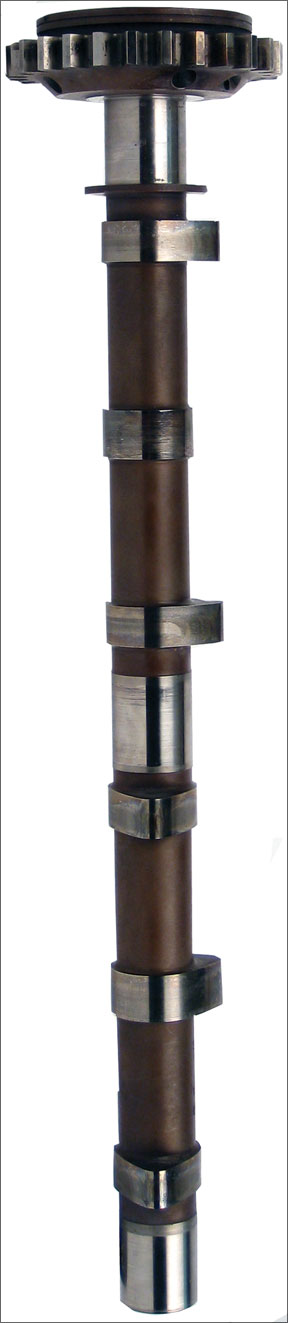
Ho-hum, another week another cylinder recall. Thats a bit of an exaggeration, I guess, but not by much. Considering the number of recalls, ADs and service bulletins that zing by, you have to wonder if weve forgotten how to make airplane parts in the is country. When I started flying in 1969, I only vaguely recall any parts call backs. Of course, I was too poor to own an airplane then and when youre in the renter loop, you don’t notice such things. And noticing or not noticing them may be part of the problem here. As I was researching the article on camshafts in this issue, I asked a couple of the engine shops I know if parts quality has gotten really bad lately or are we just noticing it more. They seemed to be of the universal opinion that things are worse than ever with regard to manufacturing shortfalls making it into the supply chain. Thats not the same as saying quality control is worse than ever because quality is, by its major definition, consistency. My guess is that parts built today are more uniformly on spec than they were 30 years ago or even a decade ago. So why all these recalls? My theory is that statistical process control has something to do with it. This method of quality control works great in the kind of volumes that the auto industry does. I don’t think its quite so hot when the volumes sink to the dozens and hundreds that GA manufacturers typically do. Even though both Lycoming and Continental have largely converted to CNC equippage, there’s still far more handwork in airplane building than in carmaking.

Read More »

Letters: 05/09

There is absolutely nothing wrong with your evaluation of three landing lights available to general aviation aircraft. (See March 2009 Aviation Consumer.) I think it will be extremely useful to many aircraft owners who have to wonder what the best option for landing lights really is. However, I am writing because I believe that my company, Laminar Flow Systems Inc., has available a Final-Light LED landing light which would have produced quite a different result, if it could have been included in the tests. I am not faulting Aviation Consumer for not including it-the Final-Light is only just now becoming available, although I showed it a Oshkosh a year ago. It comes with an FAA DER approved 8110-3 form included in the $350 to $400 price. Since there is no immediate prospect of a new test happening, I have made a video of a similar test, which included our Final-Light as we’ll as the ones AC tested, and some other combinations. You can see the video at http://snipurl.com/euzla. You can also find it on YouTube by searching “LED Landing Light Test.” I cannot pretend to the impartiality of the Aviation Consumer tests, but I will state that all the lights were tested under the same conditions. I will also be sending Aviation Consumer a Final Light in the hope that you will get a chance to evaluate it soon.

Read More »

First Word: 04/09

The more I learn about the biofuel and alternative fuel industries, the more depressed I get. But this doesnt necessarily apply to Swift Fuel, a proposed replacement for 100LL, which is analyzed on page 12 of this issue. Stay with me to follow the reasoning. Any sane person who reads much about the history and economics of the U.S. ethanol industry could only conclude one thing: Its nothing but corn state lunacy. The entire industry is heavily subsidized and is really nothing but agricultural subsidies by another name. With oil prices in the tank, ethanols high cost of production isn’t remotely competitive with gasoline and unless oil hits $200 a barrel, it probably never will be. The notion that ethanol is somehow greener that gasoline has been pretty we’ll shot to hell, too. Corn ethanols energy balance-the amount of energy input compared to energy gained-is generally accepted as a pathetic 1.3.

Read More »

Buying Used Glass: Beware the Pitfalls

Last month we looked at buys on late-model, four-seat singles (“Late-Model Cruisers: Cessna, Cirrus Are Tops,” Aviation Consumer March 2009) and were shocked at how many good deals there were on used aircraft with glass cockpits. How about a 1300-hour 2005 Cessna 172SP with a G1000 and autopilot for $157,000? We found similarly-equipped 2005 and 2004 Diamond DA40s with about 1000 hours on them for $165,000 and $159,000, respectively. Tipping the scales a bit further was a well-kept 2003 Cirrus SR22 with 1251 hours, TKS de-ice, Skywatch, Stormscope, XM-weather, digital charts, TAWS and the latest revision of the PFD software for $210,000. Looking up the food chain to Mooneys, Columbias, Barons and the like, the deals are less dramatic, but they are still huge discounts from the new prices for relatively low-time aircraft. A good example is the 165-hour 2006 Mooney Ovation 2 with a G1000, known ice and most every option for $350,000. With the economy pulling the rug out from more and more people, repossessed aircraft are hitting the market as well. Were even seeing still-new 2007 models that have been wallflowers waiting for an owner with their sticker price sinking lower and lower.

Read More »

Swift AvFuel: Too Good To Be True?

The worry about 100LL is less when it will disappear than how many more stories you’ll have to endure predicting its imminent demise. We started in 1984, first warning of the air quality issue followed by the impending loss of the lead additives, which we predicted was just around the corner. Next, it was the refiners-there wouldnt be enough to make the stuff. Then all the states would run leaded fuel out of town or the truckers wouldnt truck it. It was always something. Yet, there it still is: Genuine 100LL at your local airport. Its at least available, even if it isn’t cheap. But we swear, the stuff is going to go away and this time we mean it. The latest threat is simple economics: Declining demand may soon render avgas not worth the bother of blending, at least for some refiners. (Check back in 2015 to see how this prediction works out.) Next up as a would-be replacement is an intriguing new product that surfaced last summer called Swift Fuel-Swift being the name of the start-up company that proposes to develop the process to produce it. While other pretenders to the 100LL throne have come up short octane wise or just havent proven practical, the initial take on Swift Fuel is just the opposite. Initial tests show that it has the octane punch required to keep detonation-prone turbocharged engines from exploding, it burns cleanly, has no toxic lead and-get this-its a renewable biofuel that the inventors say can be made for $2 a gallon. If this sounds like one of those too-good-to-be-true business schemes pitched on the cable channels, it might not be. Swift Fuel is a serious industrial research program whose claims at least pass the initial smell test. But there are some niggling details that, if not show stoppers, could sprinkle a little sand in the gears.

Read More »

Cirruss New TKS: De-Icing Kicked Up

Pilots who fly a lot of weather sort themselves into two groups when it comes to the risk of flying in ice. One group-call them the “Im-willing-to-give-it-a-go” set will launch into any reasonable forecast and deal with the ice as it comes. The other group-call them the Legal Beagles-would do the same, but they get their pants snagged not so much on the actual risk, but whether the FAA will come after them for flying in forecast or “known ice” in an airplane not equipped for it. Great swaths of pulp forest have been sacrificed in the name of trying to define known ice and were not sure weve succeeded yet. What we have managed to do is create a not-so-small market slice of would-be buyers to whom an airplane legally equipped for known icing is a big deal. Ever sensitive to the whims of the market, Cirrus has created the perfect airplane for these buyers: The new SR22 line equipped with a TKS-based flight-into-known-ice package. In the past, weve viewed so-called FIKI packages as more window dressing than real substance. TKS is such an effective system that, in our view, with respect to actual icing outcomes, whether the system is certified or not is a distinction without a difference. To be sure, known-ice packages protect more surfaces and are probably more robust, but our view is that if 10 airplanes certified for known ice and 10 with so-called inadvertent systems flew the same winter systems for a year, there wouldnt be a noticeable difference in outcomes. So whats to improve? In the Cirrus view, that would be the highest fluid rates of any TKS system on a single and what amounts to significant design decisions that mold the Cirrus icing system into an integrated package. Conclusion: It works better, its easier to use and gives the pilot more control and more choices. Heres how.

Read More »

Letters: 04/09

Id like to add some experience to your report on Power Flow exhaust system article in the February 2009 issue. We installed a Power Flow exhaust on our 1976 Cessna 172M about eight years ago. Its been long enough that I cant provide any reliable performance improvement numbers, but what I read in your article is about what we experienced. A significant advantage is the ability to lean more with our Lycoming O-320-E2D. I advise all our pilots to lean aggressively. We installed an engine monitor and discovered that the only engine or flight mode that causes heat problems is high-altitude Vy climb, when the lower density of the air doesnt provide adequate cooling below 70 knots or so. This is at altitudes above the stock service ceiling of the 172.

Read More »

LED Landing Lights: Better Than Expected

Automotive technology trickles into aviation in fits and starts and with spotty success. HID lighting, for example, was practically standard equipment on some cars before it finally gained a foothold in the light aircraft GA market. Now LEDs-light emitting diodes-are undergoing a similar evolution. Weve seen them in cars and on motorcycles for years and lately, theyve found their way onto wingtip and nav/position lights. Next step: landing lights. In this article, were examining a new product recently sent to us by a company called AeroLEDs. AeroLEDs is by no means the only supplier of this technology. Whelen, for example, makes a line of LED landing lights and we know of some other similar products in development. Well do a detailed comparison of all the LED products in a future issue, but in this article, were interested in testing the concept itself. Landing and taxi lights are big draws on the airplane electrical system for a reason: You need a bunch of light to reach through the murk to find night details necessary to establish depth perception and hazard detection. Although theyre inefficient in terms of converting electricity to light, conventional incandescent bulbs are still more than bright enough to do the job, which explains why theyve endured so long. At $20 a pop, theyre also relatively cheap, if not always reliable. Can LEDs hope to compare? We aimed to find out. LEDs are one of those alluring technologies that seem too good to be true. They deliver bright, cool light with a fraction of the power required for an incandescent lamp. This, more than anything, explains why LEDs are turning up in everything from flashlights to automotive tail lights. LEDs themselves have more to do with transistors than with traditional filament-type bulbs. LEDs have p-n or positive-negative semiconductor junctions, just like transistors do. When power is applied to the junction, electrons flow and drop into so-called electron holes-they actually revert to different orbits in the junction material. When that happens, energy in the form of photons is released. Physically, the p-n junction is small and so are LEDs. An individual LED is bright, but its overall light output is small, so to approach the requirements for something like a landing light or even a navigation light, multiple LEDs are ganged together. The SUNSpot product that AeroLEDs sent to us has 16 LEDs arranged in a circular lens assembly.

Read More »