











The claims sound almost too good to be true. A Lancair IV-P offers 270 knots on 24 GPH or a 1500-mile range with reserves. A Murphy Moose hauls 1300 pounds of cargo and 80 gallons of fuel out of 1000-foot strips and climbs 900 FPM. A nearly-new Epic LT six-seat turboprop can be yours for $300,000 less than a mid-time TBM 700. But unless youre a resourceful and patient type who enjoys the challenge of wrangling maintenance issues or flying an aircraft that demands top-notch piloting technique, you can stop reading here. The designers of kit aircraft didnt repeal the laws of economics or physics. Squeezing out more performance at lower cost comes at a price somewhere else. If youre just looking for a faster or cheaper ride, the tradeoff probably isn’t worth the gain. If tinkering appeals to you, then you need to ask yourself two questions: How much docile handling are you willing to trade for maximizing speed or STOL performance? How willing are you to assume the risks and additional oversight that comes with an aircraft built by an amateur?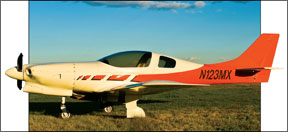
No Conforming Standard
The handling characteristics of kit aircraft can be a real surprise to someone coming from the certified world. The full-flaps stall speed for the speediest homebuilts might be what a Cessna 172 does on downwind. Control harmony (the relative forces needed to pitch, roll or yaw the aircraft) or forgiveness to ham-fisted technique varies widely.
That said, the field has come a long way and there are many options for performance tradeoffs. If you want a Lancair IV-Ps 270-knot cruise, you’ll be crossing the airport fence doing 100 knots or more. Stepping down to the Lancair ES can give you 185-knot cruise speeds with a final approach in the 75-knot range. In general, the later designs from any specific company have better handling characteristics.
You need to set your desired performance but also be realistic about your skill in flying that kind of airplane. We spoke with an owner of a Lancair Legacy, who says the Legacys numbers through the pattern are rather like the 9000-pound MU-2 he also owns.
Put a close eye on all the performance numbers, operational limitations and systems before purchase. Some two-seat experimentals have a narrow CG envelope. Just because the aircraft is set up for IFR doesnt mean it has fully redundant systems, lightning protection or the longitudinal stability to fly hands off for more than a few seconds. It may have no stall-warning system and its stall-spin behavior could be … stunning.
Some changes might suit your needs well. Some might be an NTSB report looking for a place to happen. The problem for you as a buyer is that these modifications (or errors) might be buried so deep even a detailed pre-purchase inspection wont find them. Even if you know they exist, you have no way of evaluating their long-term effects. There’s a reason these aircraft are placarded “experimental.”
Variations in the builders attention to detail, following the plans or modifications they made of their own volition can change aircraft performance. Look for excessive control friction and the quality of fit and finish. While not definitive, they give a peek into the care of construction. On a similar note, there is an appeal to something thats “professionally built.” This really means little. What you want to see is that an EAA technical counselor has inspected the aircraft. Such an entry should be in the logbooks or builders log.
Experimentals operate on a different set of airworthiness rules and the builder can do all the maintenance, including the annual inspections (called condition inspections). Unfortunately, they may not catch potential problems that a professional mechanic would. The NTSB noted that, “Incipient problems on relatively new amateur-built aircraft are apparently not being recognized by their amateur mechanics.” You may inherit a problem thats been neglected for years.
That said, most two-seat, fixed-gear designs are simple and few issues are likely to arise. When problems do crop up, you can be a lot more creative with solutions. Anyone who has spent days hunting for a nose-gear bushing for a 1963 Bonanza would envy you. They might also envy the quality of the avionics, or even simple parts like fuel-selector valves that can go into kit aircraft. These can be better than certified. Say no to auto-engine conversions, however. We believe the gains are simply not worth the headaches.
The second-hand owners of a homebuilt can do the repair work just as the builder could, but they need a mechanic to sign off the yearly condition inspection. This isn’t a big deal for common designs without radical modifications.
Beware of designs from a manufacturer thats out of business. Youve got a situation for parts or repairs akin to owning an antique. Actually, this can happen with older models of currently-produced designs. Ongoing improvement may mean there’s no replacement for that damaged aileron or nose gear.
Budget in time and money for transition training, and expect it to be required to insure high-performance homebuilts.
If youre still reading, then perhaps youre made of the stuff that does we’ll living life outside the dowdy, certified rules. There are a lot of designs out there to choose from. For the novice buyer, wed recommend staying with some of the