











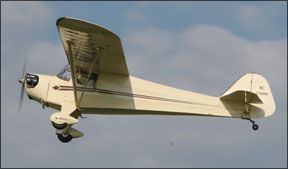
The years just after World War II must have been an exciting time to be involved in aviation. As the war wound down, manufacturers like Aeronca, Cessna, Piper and Taylorcraft were putting the finishing touches on new designs they were convinced would be market leaders. War-time training had turned out scores of thousands of pilots, most of whom it was thought would want something to fly when they got home.
At the time, the state of the art for a personal airplane was a basic, two-seat traildragger of modest horsepower and tube-and-rag construction. Wood, as often as not, was a major airframe constituent and IFR was something not even all the airlines practiced. But, as it turned out, most returning pilots just wanted to settle down and raise a family; theyd had enough flying for one lifetime.