











When the so-called Caribbean line from Aerospatiale first appeared at the Paris Air Show in 1977, the U.S. general aviation industry was booming, building mainly tried-and-true, if staid, designs like the Cessna 172 and the Piper Cherokee line. Against that backdrop, the new TB-20 was a splash of cold water. Its not that the airplane was terribly innovative-it wasnt, sporting the same Lycoming engines we had all been flying behind for years. But it had something no Skyhawk ever did: a sleek and stylish European panache. Ultimately, this didnt help much with sales, but the thing sure was-and is-good looking, what one aviation writer famously described as a Cherokee done over by Club Med. The Trinidad is the top of the line of a small family (five) of single-engine aircraft developed and built by Socata in Tarbes, France, from which the TB derives. Socata is the general aviation division of the government-owned aerospace conglomerate, Aerospatiale. Although the TBs are out of production, Socata is still going great guns with its turboprop TBM line, now up to the 850 model. The Caribbean line of aircraft includes the TB-9 Tampico and -10 Tobago, fixed-gear singles of 160 and 180 HP and the 250-HP, retractable-gear TB-20 Trinidad and -21-TC turbocharged Trinidad. In this regard, the French have largely duplicated the American marketing strategy of a model for every price and usage strata. No surprise there. The models share a common fuselage, wing and empennage, which has obvious advantages in production economies, something U.S. airframers havent always done. In practice, this means that a batch of fuselages and flying surfaces can be built and kept on the shelf until orders need to be filled. It also means that for the Caribbean series, no distinction is drawn between the airframes: The two variants co-exist within the same run of serial numbers. To date, the total worldwide TB-20/21 population tops out at about 830 airframes worldwide, with the plurality based in France. There are about 270 on the U.S. registry, according to the TB Users Group. After its promo appearance at the Paris Air Show in 1977, the TB-20 was awarded French type certification in December 1981. The first Trinidad arrived in the U.S. during the summer of 1983, with FAA approval the following year. The turbod TB-21 got FAA certification in March of 1986. Acceptance of these models can best be described as mixed. The French had been in the U.S. before with the Rallye, of which 3500 were made worldwide, and had not done we’ll with it in a market that still supported volume sales. After a couple of failed efforts to introduce the TB line, Socata established its own operation just outside of Dallas, Texas. Aerospatiale General Aviation (AGA) shared facilities with Aerospatiale Helicopter Corp. in Grand Prairie. This facility was phased out in favor of a single distributor in Florida and as of this writing, Socata Aircraft USA is headquartered in Pembroke Pines, Florida, as a wholly-owned subsidiary of EADS Socata. It still supports all models. TB-20 models built between 1977 and 2000 are so-called “Generation One” aircraft and most of those already in the field are of this vintage. In early 2000, Socata introduced the “Generation Two” or GT line, with upgrades to the original aircraft design. The GTs have essentially the same airframe, controls and powerplant as the 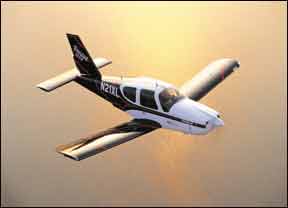
Used Aircraft Guide: Socata TB-20 Trinidad
When the so-called Caribbean line from Aerospatiale first appeared at the Paris Air Show in 1977, the U.S. general aviation industry was booming, building mainly tried-and-true, if staid, designs like the Cessna 172 and the Piper Cherokee line. Against that backdrop, the new TB-20 was a splash of cold water. Its not that the airplane was terribly innovative-it wasnt, sporting the same Lycoming engines we had all been flying behind for years. But it had something no Skyhawk ever did: a sleek and stylish European panache. Ultimately, this didnt help much with sales, but the thing sure was-and is-good looking, what one aviation writer famously described as a Cherokee done over by Club Med. The Trinidad is the top of the line of a small family (five) of single-engine aircraft developed and built by Socata in Tarbes, France, from which the TB derives.