











If a
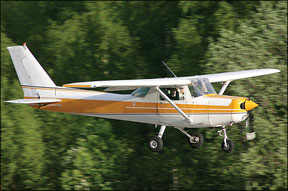
Although Cessna restarted piston-aircraft production in 1996, the 152 wasnt part of that revival. Over its eight years of production, 7584 examples of the 152, including A152 Aerobat and French-made Reims Aviation variants, were built. Today, the FAA shows more than 3800 copies presently wearing an N-number; many others are overseas, soldiering on alongside competing contemporaries from Piper (the PA-38-112 Tomahawk) and Beech (the Model 77 Skipper). More-modern competition from Diamond Aircrafts DA-20 Katana series and other manufacturers hasnt diminished their reputation as solid, basic, predictable trainers and personal airplanes.
For the potential owner in search of an inexpensive, tricycle-geared, all-metal, two-place way to get airborne, the 152 probably should be on the list. Of course, potential buyers need to know many 152s have had a hard life on the flight-training line, which could mean some chronic problems with items like nosewheel shimmy dampers, windows and doors, and interior components. Still, when properly flown and maintained, their engines are pretty bulletproof and parts are readily available.
As long as an owner doesnt mind taking some extra time-and not much luggage-to get from Point A to Point B, the 152 could be a good choice. But, like any other airplane, it has its quirks. Regardless, the potential buyer probably learned to fly in one of them, so its handling and other characteristics shouldnt come as a surprise.
History
To trace the 152s history, one needs to hark back all the way to the early years after World War II when Cessna brought its successful Models 120 and 140 to the