











Once th
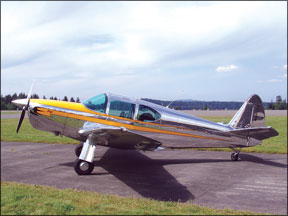
retractable. In some ways, the Swift proves the notion that there’s nothing new under the sun, for its very much the embodiment of the light sport aircraft idea, but executed with a panache the modern iteration of this idea lacks.
For the buyer considering a Swift, the question isn’t so much whether but which. Although there arent many of these airplanes in the fleet about 750 in the U.S. few aircraft have as many STCs and field approvals as the Swift. The newest Swift is almost 60 years old and the typical airplane has seen so many mods that we can easily say that no two Swifts are identical.
Model History
The Swift history is complex and has more twists and turns than a Sean Tucker flight display. Also, major aviation figures pop in and out of the picture faster than a summer thunderstorm in Florida. The story begins oddly enough with a fellow selling serum to Texas cattle ranchers.
In the mid 1920s, a Texan named John Kennedy (no known kin to the political Kennedys) opens Globe Laboratories. The company makes a serum to combat black leg disease in cattle. Kennedy sells every ounce of serum he can produce to Texas ranchers and makes a fortune. He invests his wealth in thoroughbred horses but becomes bored and looks for new challenges during the 1930s.
Meanwhile, another Texan named F. C. Merrill is looking for someone to build his novel, twin-engine “plastic” airplane. The material isn’t plastic as we know it now, but chemically impregnated plywood called Bakelite and marketed under the name of Duraloid. Duraloid is touted as impervious to weather and fungus and is fire resistant. It is also shatterproof and thus an ideal material from which build airplanes.
Next on stage is Frank Bennett, president of a Texas oil firm. Bennett is approached by Merrill and finds the money to build the airplane, but has no place to build it. The airplane is now called the Bennett Bi-Motor or the BTC-1. Bennett enlists engineers and designers from firms such as Martin and Douglas to help with the design. The first BTC-1 is constructed in San Fernando, California and is approved by the CAA in 1937.
Kennedy, still looking for investment opportunities, hears of the BTC-1 and is intrigued enough that he clears out one of his stables to construct the airplane, helping form the Bennett Aircraft Company. Although the BTC-1 does we’ll in military competition, Beech wins a contract for the AT-10 and the Bennett Airplane Company goes bankrupt in 1940. But Kennedy isn’t done with airplanes. He meets R. S. “Pop” Johnson, an amateur airplane builder who has constructed his own home-built knock-off of the Culver Cadet. The knock-off has a slightly more powerful engine and a controllable prop and becomes the basis for the first Globe Swift.
In 1941, the bankrupt Bennett Airplane Corporation is reorganized as the Globe