










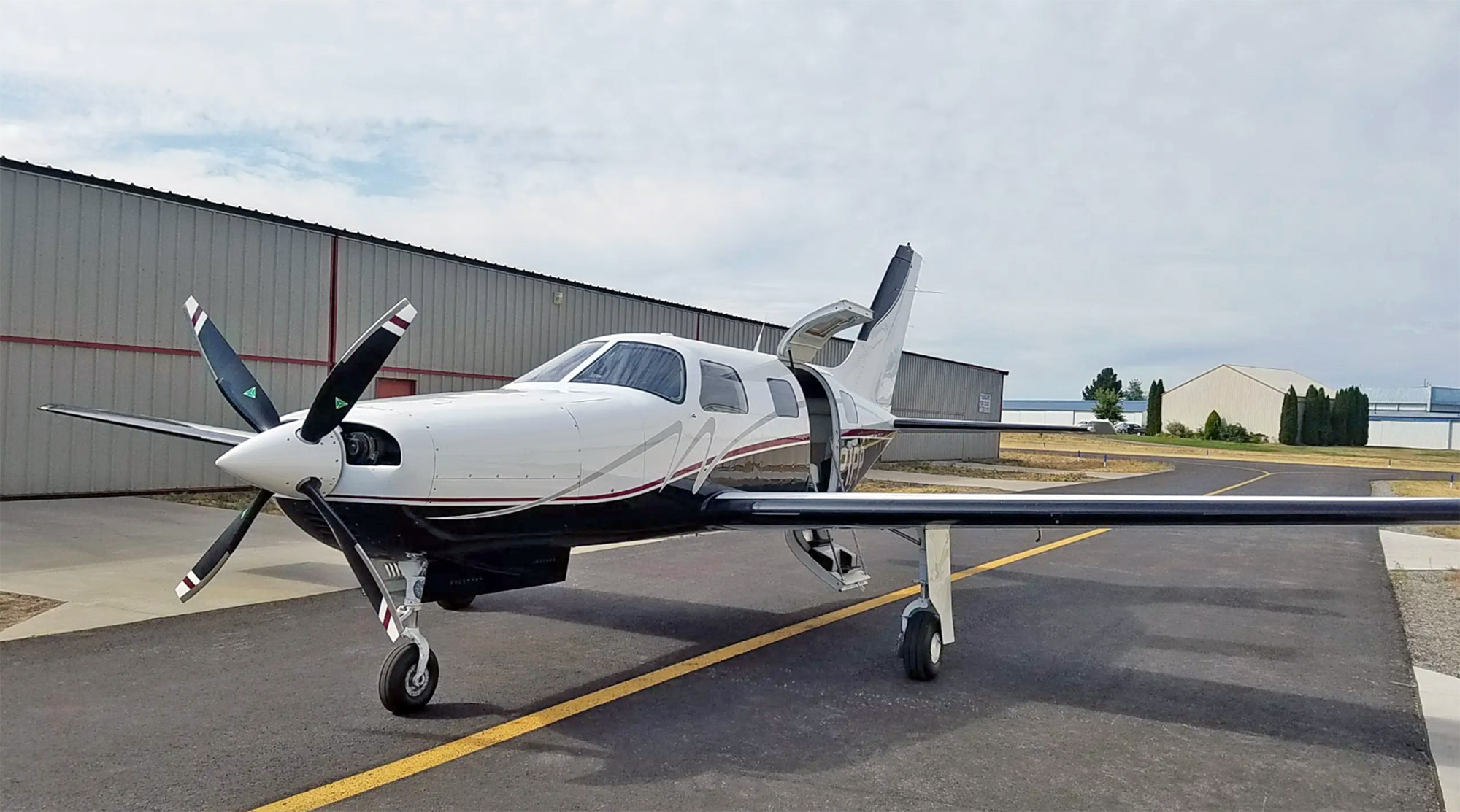
For pilots who worked their way through basic training—especially in Cherokees—Piper’s big PA-46 series might be the ultimate step-up piston single. Ramp appeal aside, the Malibu series is a convincing airplane. It’s also a serious IFR traveler that’s appealing to passengers, too, thanks to a luxurious rear cabin.
It isn’t a bad performer, either. The Malibu and Mirage can do 200 knots in pressurized comfort. With many to choose from at varying price points, these airplanes are far from inexpensive to own and operate, plus they can be unforgiving in the hands of pilots who don’t take training—and maintenance—seriously. Insurance companies understand this, so before making a deal you should get a quote for a premium and do a thorough prepurchase evaluation.
All business
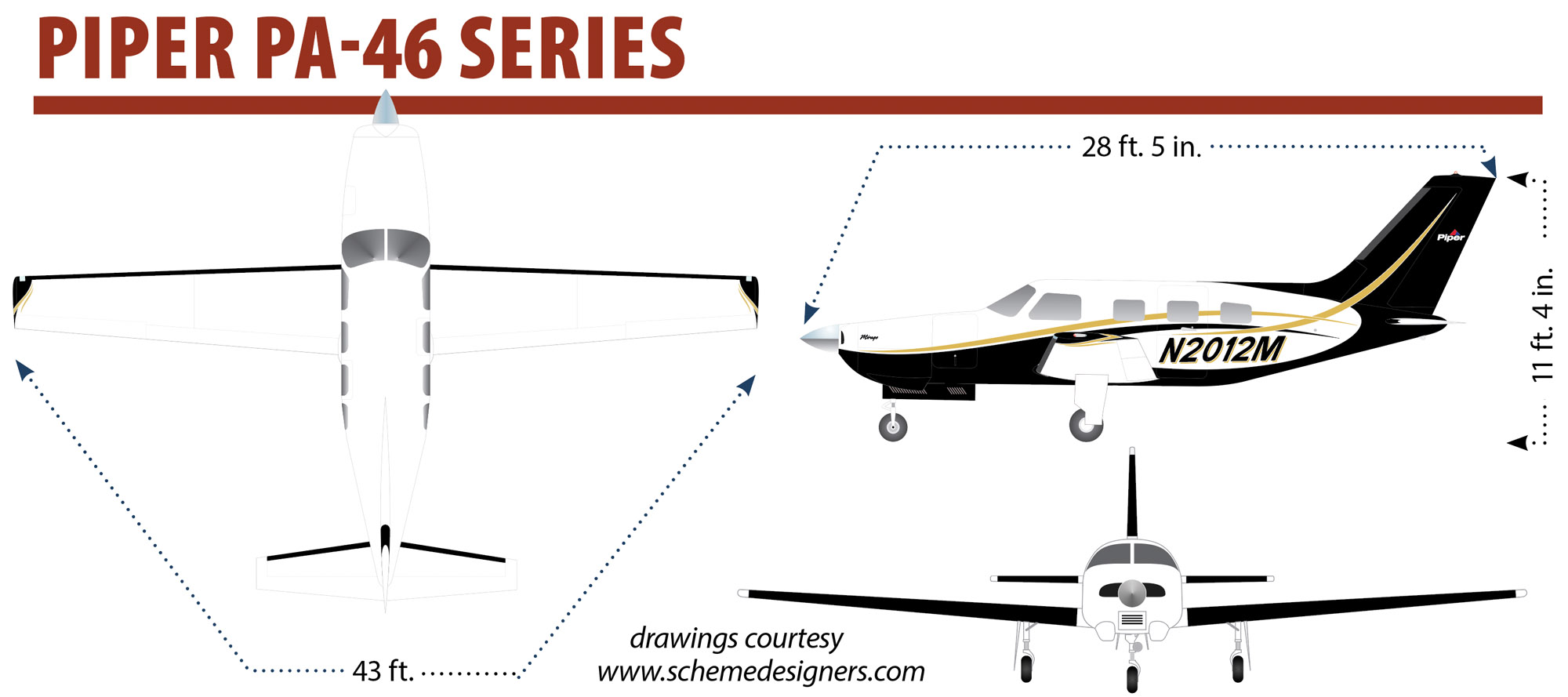
By the nature of its styling, which includes the clamshell cabin door and a beefy stance, early on the PA46 hit the ground running as a serious airplane that held its own on corporate ramps. With a 43-foot wingspan and long cowling, even the earliest Malibus made a statement.
When the plane hit dealer ramps as the PA-46-310P Malibu somewhere around 1984 (it was a clean sheet), it had a base price of $275,000, but with options the typical price was more than $320,000, or around $1 million in 2025 dollars. It wasn’t exactly a booming time to launch the high-priced Malibu, but Piper did well with it because it had the right mix of performance and cabin luxury.

The earliest Malibus were powered by Continental TSIO-520 engines of 310 HP. In 1989, Piper introduced the Malibu Mirage with a twin-turbo, twin-intercooled Lycoming TIO-540-AE2A of 350 HP. The PA-46 was always a pressurized airplane, but Piper launched the unpressurized Matrix model in 2008.
From the beginning, it was thought that buyers favored a Lycoming because of a perceived reputation for reliability and robustness. The would-be owners turned out to be correct because the Continental evolved into such a nightmare—piston pins and crankshaft bearings in particular—that in 1987, Piper asked owners to ground their planes voluntarily until the problems could be worked out. Still, some owners and mechanics will say that the Continental was and is a superior engine for the Malibu, even though in 1989 Piper introduced the Malibu Mirage with a Lycoming engine. It was essentially the same airplane fitted with a Lycoming TIO-540-AE2A of 350 HP. The new engine weighed 113 pounds more, but the maximum takeoff weight was boosted by 200 pounds.
The mirage
With the PA-46-350P Mirage, a variety of other improvements were made to deal with various system problems encountered with the Malibu. Still, there were some growing pains, to say the least. The complex nosegear, which rotates 90 degrees to fit into its bay, proved delicate. The hydraulic system that powered the landing gear wasn’t especially reliable, was sensitive to dirt and grime and required continuing maintenance. The hydraulics also ran the flaps on early models. Owners of early Mirages suffered through Lycoming’s massive crankshaft recall of 2002 and 2003 and weeks to months of downtime. The perceived reliability of the Mirage got so bad among some owners that a class-action lawsuit was filed in 2000 against New Piper and Lycoming. The suit was settled after the court failed to certify the class. Still, there were some good improvements that came with time.

When Piper introduced the Mirage, the hydraulic system and cabin door were improved, the engine cooling system was redesigned (a good thing for the fire-breathing Lyc), the seats were strengthened and the flaps were changed from hydraulic to electric operation. It also got some big-airplane-type features, including a dual-bus electrical system, internal windshield deice, standard dual alternators and vacuum pumps and an auxiliary heater for the cabin. The later Mirage eventually got Garmin’s G1000 integrated avionics to replace Avidyne’s Entegra suite. In our view, the best thing to ever happen to the Malibu’s cockpit is Garmin’s GFC 700 integrated autopilot. Some came out of the factory with S-TEC 55 autopilots, which proved to not be a good match. Earlier airplanes have BendixKing equipment, including the KFC200 autopilot. Many PA-46 models now sport the latest and greatest retrofit avionics.
These days the bottom line is to operate the engine properly understanding that it will run hot (the aircraft doesn’t have cowl flaps, though there is an aftermarket mod) and stay ahead of the maintenance. Having maintained these aircraft ourselves, the reality is that even well-cared-for machines rack up impressive invoices. While we have received reports of squawk lists on annuals reaching 25 percent of the value of the airplane, the majority of owners say that they recognize it’s expensive to maintain a pressurized single and if they stay ahead of the game, the price is not outrageous, relatively speaking, and dispatch reliability will be improved.
Performance
Malibu pilots report cruise speeds of 205 knots TAS as FL220 at 67 percent power and 210 knots true at FL250 at 75 percent. While Mirage pilots may pay more at the gas pump, they also are able to go a little faster, with typical speeds in the 220-knot range at FL230-250 at 75 percent power burning 18.8 GPH. As mentioned, the Matrix is pretty much a Mirage without a pressurized cabin. To go high, you’ll need nose hoses and O2, but the tradeoff is slightly less maintenance and operational simplicity, although later Garmin G1000 models handle the cabin pressurization/environmental chores. Still, for some pilots the Matrix (and current M350) could mean a sizable break on insurance rates—and the difference between obtaining coverage or not.
Owners of both models say they can fly 1100-nautical-mile trips with IFR reserves. More than one Malibu and Matrix owner has told us it’s a joy at any altitude, although we’ve found the control forces somewhat heavy, and the airplane doesn’t exactly leap off the runway. Once the speed builds in flight, the controls are responsive, with pitch the lightest and roll the heaviest. Many pilots will attest to it being an autopilot airplane, and that’s really how it should be flown. The PA-46’s long, high-aspect-ratio wing is good for climb and high-altitude performance, but along with it comes a low maneuvering speed.
Speedbrakes help slow down while minding the engine. Speaking of autopilots, we think the best thing that ever happened to the Malibu’s front office is Garmin’s GFC 700 integrated autopilot that’s part of the G1000 NXi. Aside from its advanced features, it finally gave the airplane the tight autopilot performance it deserves, especially on coupled approaches—something the rate-based S-TEC 55X struggled with. Garmin’s retrofit GFC-series autopilots are also good performers.
But when shopping, you’ll find older Malibus and Mirages still sporting King KFC150 autopilots and these deserve careful evaluation for flaws in performance. That’s partly because they are attitude based, which means they’re driven by the King KI256 spinning attitude gyro—an integral component that can be pricey to overhaul. Aging servos are also a concern.
But many PA-46 models have been upgraded with the latest avionics and you’ll pay the price premium. Before the G1000, some models had the Avidyne Entegra glass with Garmin GNS navigators.

Cabin dwelling, range
The PA-46 is generally a true six-place airplane with cabin-class comfort, but these airplanes don’t have stand-up cabins. The airplane’s front office isn’t exactly cavernous, either. Getting into the seats requires minor contortions through a narrow aisle between bulkheads walling off the rear cabin. Getting into the cockpit can be a challenge for tall pilots and we never liked the potential crashworthiness issue with the overhead switch panel.
Still, we think the cockpit is well designed in all PA-46 models, with well-placed gauges and plenty of room for all the avionics you could ever want, and that makes them good candidates for big retrofits. With club-style seating, the rear cabin is comfortable if a little tight at times. Rear-seat passengers complain about too little heat—fixed with the aux heater—but the air conditioning/pressurization system is quite good, when it isn’t broken. Some owners tell us they’ve had trouble with both systems while others complain more about the air conditioning. Check them out during the prepurchase inspection.
Cabin and cockpit noise are on the low side as GA airplanes go. The Continental in the Malibu is noticeably less vibey than the Lycoming in the Mirage, based on the ones we have flown. Baggage space is generous, with two baggage bays, one just aft of the engine compartment and the other behind the rear seats, making loading within limits easier. Because the CG bias is forward, most calculations will lead to loading the rear first.

The Mirage’s Lycoming engine is larger and the accessory layout is different, so the forward baggage bay in the Mirage is a bit smaller than that of the Malibu. The inclusion of an access panel in the firewall is a good tradeoff, since it makes it much easier to get at the backside of the powerplant.
Owners of all models say they can fly 1100-nautical-mile trips with IFR reserves. But we have our doubts about the fuel-guzzling Mirage matching range with the Malibu in real-world conditions. The power setting and leaning would have to be right. The -310P, with its lower fuel consumption—as much as 4 to 5 GPH when flown by the book—has nearly 25 percent better range and is only about 5 percent slower. One owner cited this as the reason he chose the Malibu over the Mirage.
On trips of any length, most owners climb rapidly into at least the high teens, but the airplane is perfectly at home up to FL250. One place it’s not at home is taking off from short runways. Initial acceleration is sluggish, although the airplane will get in and out of 3000-foot strips at sea level with relative ease. We would be sure to be on the game while operating out of 2500 feet or less. The long wings produce another undesirable trait: The roll rate at slow speeds is somewhat ponderous compared to other singles. Sharp stick-and-rudder work in crosswinds is a must.
Market
We think anyone serious about owning a PA-46 should start by joining the Malibu/Mirage Owners and Pilots Association at mmopa.com. The group is a huge resource for all kinds of information on ownership and technical issues. There’s also the Piper PA-46 Malibu & Matrix private Facebook group with over 1200 members.
As for the current used market, prices are up as we write this report in early 2025. Aircraft Bluebook suggests early Malibus might sell for around $350,000 and early model Mirages at around $400,000. They go up considerably from there, especially ones with low-time engines and newer avionics. There seems to be a lot to choose from and we found asking prices for early 2000 models in the $600,000 price point and late-2000 models closer to $900,000. You’ll save some money with an unpressurized Matrix. But there’s a price to pay for pressurization as even later-model M350s sell for well north of $1 million—an airplane still in Piper’s lineup alongside the flagship M700 and M500.
This could push some buyers into older turboprop singles and we covered that market in the November 2024 issue of Aviation Consumer.
But for those who want to gain real-world experience flying a pressurized aircraft, we think the right Mirage and a solid plan for high-quality training could make sense.