










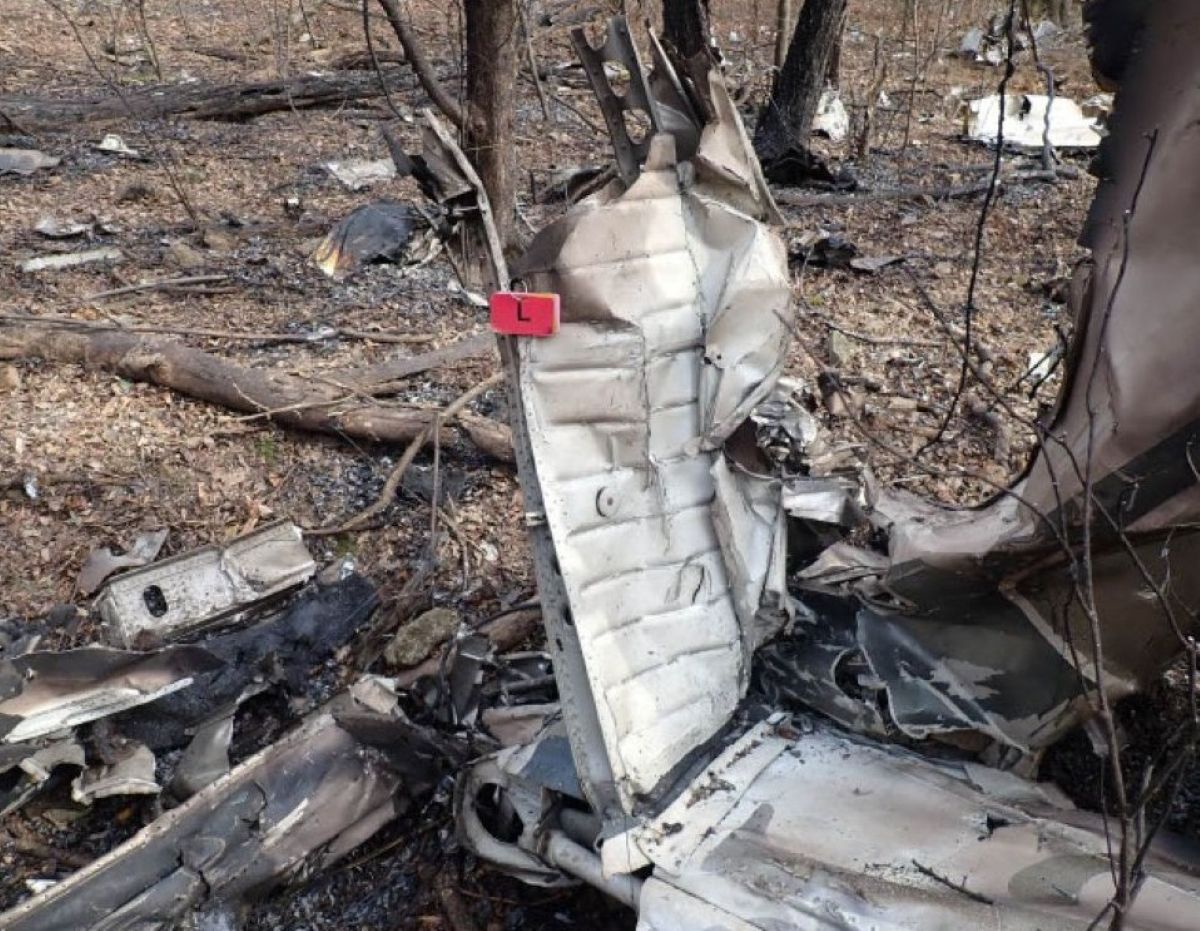
A December 2023 crash that killed aviation YouTube presenter Jenny Blalock and her father James resulted from a loss of aircraft control that may have stemmed in part from the pilot’s difficulties staying ahead of her high-performance airplane and a lack of proficiency in operating its autopilot.
Blalock’s apparent use of certain prohibited medications also could have played a role, according to the National Transportation Safety Board’s final report on the accident.
Blalock, 45, who began flight training in 2021, was known on YouTube as TNFlygirl. She regularly posted videos documenting her experiences during lessons with instructors, on solo flights and as pilot in command after receiving her private pilot certificate.
Demanding Aircraft
Her videos stood out in part because of their long-form, somewhat cinema verite style that included long takes during which Blalock occasionally commented, often plaintively, about her 1965 Beechcraft 35-C33 Debonair’s behavior and her struggles with operating its Century 2000 autopilot.
Blalock trained in a Piper Cherokee and acquired the Debonair some time after completing her check ride. She had flown the Debonair for about 18 months before the accident.
Her social media audience, myself included, watched as she experienced some of the familiar pains associated with transitioning to a complex high-performance airplane after many hours flying slow, stable, forgiving trainers. In Blalock’s videos, those pains sometimes appeared to be particularly acute.
Indeed, the NTSB report cites flight instructors who flew with Blalock and “indicated that she routinely demonstrated poor manual aircraft handling and struggled with cockpit automation, including autopilot and trim use.” Difficulty maintaining situational awareness and other problems led one instructor who flew with her to conclude she lacked the proficiency required to safely operate the Debonair. Online commenters expressed similar conclusions.
Blalock’s videos were removed from YouTube following the accident, but I still find them haunting because of the way they laid bare the risks and difficulties of flying and the ease with which novice pilots can become distracted and slip into grave situations without recognizing the danger. As several seasoned aviators have told me over the years, as an inexperienced pilot, “You don’t know what you don’t know.”
Accident Flight
On December 7, 2023, Blalock and her 78-year-old father departed Knoxville Downtown Airport (KDKX) in Tennessee on a 430 nm flight to Saline County Regional Airport (KSUZ) in Benton, Arkansas, for planned avionics work on the Debonair. The weather was clear and winds were light on the planned route of flight.
According to the NTSB report, there was nothing noteworthy about the flight in terms of headings and communications until the aircraft reached 6,500 msl and began the level cruise phase. At that point, according to ADS-B data, the Debonair began to climb and descend repeatedly with fluctuating airspeed.
The problem grew worse over a time span of about 25 minutes, the NTSB said in its report, “with altitude deviations up to 1,500 feet and significant fluctuations in airspeed. An air traffic controller advised the pilot that the airplane was left of course; although the pilot acknowledged the controller, the deviations continued to worsen and the pilot stopped responding to radio calls.”
During the final oscillation, the aircraft descended at a rate of more than 10,000 fpm with ground speed rising to 228 knots before the airplane hit the ground. The NTSB said “faint emergency transmissions were later received from the pilot and passenger as the airplane continued to descend.”
According to the report, the “increasing altitude and heading deviations, loss of communication, and rapid uncontrolled descent were consistent with a loss of airplane control.”
Investigators found no evidence of mechanical problems of other anomalies that would have affected normal operation of the aircraft, but noted that the “ fragmentation and fire damage precluded a complete evaluation of the airplane’s flight controls and autopilot system.”
Possible Pitch Trim Error
Based on the airplane’s stable heading during the early part of the flight, the NTSB said it is likely that Blalock was using the autopilot. It is possible that she mis-trimmed the airplane, which resulted in oscillations “that were exacerbated by the pilot’s application of force on the control yoke.”
The NTSB report continued: “These kinds of pilot-induced oscillations can occur when manual yoke or pitch trim inputs are in conflict with the autopilot’s pitch control inputs, leading to delayed, or out-of-sync, corrections, rather than a smooth, constant altitude hold. The airplane’s vertical profile as evidenced by the ADS-B data, was consistent with these kinds of pilot-induced oscillations. As the oscillations became stronger, the pilot may have ultimately been unable to control the airplane’s pitch, even with the autopilot disengaged, resulting in the loss of airplane control.”
Toxicology results indicated that the pilot had used medications including trazodone, alprazolam, and buspirone, which “may cause psychomotor and cognitive impairment such as slowed reaction time, diminished situational awareness, and sedation.” Due to the severity of the pilot’s injuries, investigators could measure drug levels only through tissue samples, which prevented reliable analysis.
“Overall, the pilot may have been experiencing impairing effects of medication use or an associated underlying condition at the time of the accident, and such effects may have diminished her ability to render effective control inputs,” the NTSB said. “However, available medical and circumstantial evidence was insufficient to establish whether such effects contributed to the accident, particularly given the pilot’s demonstrated baseline proficiency in the high-performance airplane.”
The NTSB said the probable cause of the accident was the “pilot’s failure to maintain airplane control, which resulted in pilot-induced oscillations and a subsequent loss of control and impact with terrain.”
Takeaways
While it might be easy to apply the “won’t happen to me” label to this accident, doing so is counterproductive. I think every pilot—at least those who are being honest with themselves—can list a few errors they made early in their flying careers that could have been deadly and were completely avoidable.
The transition from basic trainers to complex, high-performance airplanes, while a time of celebration for many pilots, is among the most demanding and potentially dangerous scenarios in general aviation. The combination of higher speeds, sensitive, complex systems, and less-forgiving flight characteristics can challenge pilots to the point where the slightest distraction can trigger disaster.
Staying ahead of an airplane that is perhaps 50 knots faster than the one you flew previously can be difficult, and an autopilot can be a wonderful tool for easing the cockpit workload. Using one properly, though, requires training and continued practice.
Even after hours of dual instruction in its use, I needed a 440-mile cross-country solo from Dayton, Ohio, to Sussex, New Jersey, with the operator’s manual open on my lap before I felt truly confident using the S-Tec 30 in Annie, my Commander 114B.
Mind Your Trim
The element of the Blalock accident that hits closest to home is the possibility that the pilot was overcome by the force of excessive nose-down trim and could not recover the aircraft.
Unless you have fought against an errant trim tab, it can be hard to imagine those tiny control surfaces wielding the power to kill, but they do. Poor trim and excessive speed have been at the root of many fatal accidents in aircraft of all types, and no matter what you think, it can happen to you.
During the first few months of getting to know Annie, I managed to take off once with excessive nose-up trim that I had applied while inadvertently pushing the new-to-me electric trim switch in combination with the push-to-talk button. Don’t ask. I think it happened when I flubbed my departure announcement, got nervous, and squeezed the yoke hard while correcting the call. Somehow I pushed both buttons.
During the takeoff run, I was halfway through calling out “airspeed’s alive, 50 knots” when the airplane suddenly, severely rotated and lifted off. The stall horn immediately started to wail as the top of the cowling filled my sight picture—absolutely horrifying.
It took all of my strength to push the yoke forward, regain control, sort of, and keep the crosswind and P-factor from driving the limping airplane into the trees lining the left side of the runway. Luckily, in a moment of clarity, I glanced down at the trim indicator and realized what was happening.
As I pushed the trim switch forward, the control forces eased. It seemed to take forever, but the episode was over in about 10 seconds. The airplane gained speed and began to climb normally, and I continued to my destination as if nothing had happened.
I often wonder how the social media commentary would have sounded if things had gone much worse that day.