










Register

Recurrent Training: Finding Quality

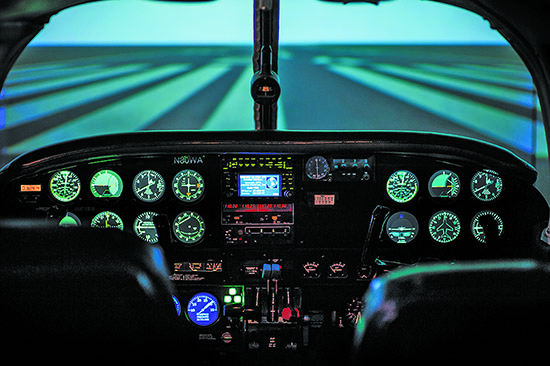
That’s a Piper PA-34 Seneca simulator at Recurrent Training Center (RTC), a simulator-based training facility in Tampa, Florida. On The Cover: That’s a Noble Flight Simulation Cirrus Cockpit AATD of the type used in conjunction with dedicated Cirrus Pilot Proficiency Program recurrent training courses. It’s but one solution for recurrency in a complex TAA (technically advanced aircraft) like a Cirrus. These days, insurers are placing more training demands on pilots of complex singles, twins and turbines, so we offer tips on buying the right training that fits the way you fly, starting on page 20.

The combination of insurers watching accidents and resulting claims go down as the amount of recurrent training taken by pilots goes up has slowly but steadily caused more and more aircraft owners to discover that they must take some form of annual training to insure their machines. We’ll look at insurance requirements, how you can meet them, how you may be able to personalize required training and how you can cut your risks with personalized training even if your insurer does not require it, yet. 

We’ll break down our observations on the need for and finding recurrent training into three parts: first, piston twins and cabin-class or pressurized piston singles; then complex piston singles; and finally fixed gear piston singles, although we consider the Cirrus and Lancair/Columbia hot rods to be akin to complex singles because of their performance. 

Rick Durden

Senior Editor Rick Durden has written for Aviation Consumer since 1994 and specializes in aviation law. Rick is an active CFII and holds an ATP with type ratings in the Douglas DC-3 and Cessna Citation. He is the author of The Thinking Pilot’s Flight Manual or, How to Survive Flying Little Airplanes and Have a Ball Doing It, Vols. 1 & 2.