











by Jim Cavanagh
Aircraft performance-cruise speed, climb rate, payload, fuel consumption, range, roll weight, stall speed-is always in the grip of one harsh and unyielding constant: weight. A heavy car may be a good thing if it smoothes road response but a heavy airplane is never good. Designers sweat bullets to reduce empty weight, nipping ounces here and there, always in the quest of better performance. But airplanes, like people, gain weight over the years through the addition of equipment, dirt, hydraulic fluid, orphan wiring, paint touch-up, pilot paraphernalia and paperwork. Owners are shocked to find that so-called in-service weight gain can easily add a dozen or more pounds to empty weight.
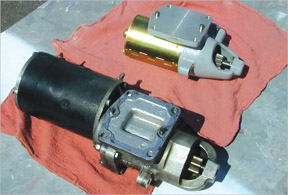
With one exception, aftermarket products havent meaningfully addressed in-service weight gain. The single exception is the advent of lightweight starters which of themselves knock as much as eight pounds off the empty weight, an enormous savings that airframers and engine makers rarely find without nibbling bits and pieces throughout the entire airplane. B&C was the first company to manufacture lightweight starters for aircraft. Billy Bainbridge started the company in 1980 and his clientele were the cream of the aerobatic crop-pilots who needed the most performance they could get to find a competitive edge.
Removing eight pounds from the front of the engine gave them a lighter gross weight and a wider CG on airplanes that were overly built-read heavy-in the first place to withstand unlimited maneuvers. Since serious competition aircraft were licensed Experimental, it wasnt long before the day-to-day homebuilder began looking to save some pounds and B&C started to grow.
Today, the lightweight starter market has become highly competitive and there’s a product for nearly every engine . This field has matured in recent years and because owners have so many choices, weve examined the market. Heres our overview.
The decision most owners will face is this: If a starter tanks, should you repair the old one or make the switch to a new lightweight model? Or, at overhaul, should you refurbish an old starter upgrade to a lightweight model? In both cases, we think the upgrade will almost always be worth the expense.
Product HistorySmaller companies were modifying automobile starters for use on homebuilts, but nothing matched the quality, fit and look of the B&C product. Of course, to achieve this, it took money-B&C starters werent and still arent cheap. They were priced moderately more than the Delco and Prestolite starters offered by Lycoming and Continental, but the weight savings sealed the deal. Unfortunately, they werent certified and as the companys reputation grew, spam can owners wanted to knock weight off of the front of the airplane and began installing them via Form 337 field approvals, if they could get it by the local FSDO. B&Cs success prompted Tom Williams to approach the business with his own product, which eventually evolved into the Sky-Tec starter. Using a basic automotive starter motor with an adapter cast to fit on a Lycoming engine, Williams entered the market at a price $200 lower than B&C. The starter didnt look quite as pretty-it was sand cast rather than investment cast and the paint was rough-but it worked. It fit on the engines with the same hardware, perhaps slightly modified and it didnt have the heavy automotive “butt” that homebuilders had to deal with. The price was hard to resist and when compared to the other modified starters available to the Glasair, Lancair and RV crowds, this starter soon gained a significant market share. Today, there are four aviation starter manufacturers and virtually all of them are making lightweight starters. In fact, the term lightweight will soon work itself out of the vernacular. The old Delco and Prestolite starters that weighed so much are still being supported, but Delco Remy is out of the aviation business.
The Prestolite line was acquired by Electrosystems, which was acquired by Kelly Aerospace and now ceases to exist as a brand name. These starters were reborn as Magnaflite to establish a new product identity to go along with their new lightweight motor. Since all starters now employ new technology and all starters are lightweight compared to the old units, the terms “lightweight starter” has now become simply “starter.”
The starter “majors” are B&C Specialties, Inc., Sky-Tec, Inc., Lamar Technologies, Inc. and Kelly Aerospace, Inc. Of the four, B&C and Sky-Tec went into business for the sole purpose of building lightweight starters. Lamar Technologies has been building electrical components for aircraft since 1982 and has components for more than 40 types of aircraft. Kelly got into starters by acquiring Electrosystems and evolved its market from what remained of the Prestolite line. The company manufactures a number of aircraft electrical, fuel and turbo components.
All of the old starters are supported, at least for now, by a number of repair stations or with parts from the manufacturers. And when you send a starter in for servicing, remember that you can have a perfectly good repaired starter without going through the expense of a yellow tag rebuild. With the new technology, lighter weight and new warranties, making the switch to a new starter is a no-brainer. In addition to weight savings, lighter starters also perform better.
Starter TBOHow long should a starter last? Like all things related to airplanes, it depends on use and the guy sitting in the left seat. A starter draws a lot of power from the battery. If the starter has an electromagnet rather than permanent magnets found in modern starters, the magnets themselves absorb power, robbing it from the available cranking power.
This is why most of the new starters use permanent magnets. The exception is Sky-Tecs Hi-torque starters, which use electromagnets because theyre usually installed on engines that put too much demand on a fixed magnet. More cranking power is needed for helicopters, for example, as they have no flyweight to stabilize the rotation.