











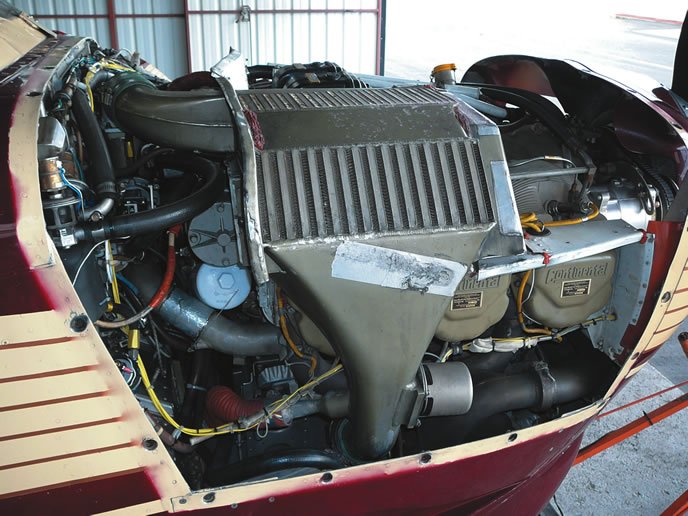
The idea of stuffing more air into an engine to increase its power output is anything but new. Mechanically driven superchargers have been compressing ambient air and feeding it to engines since at least 1885, with their exhaust gas-driven offspring, turbosuperchargers (often shortened to turbocharger or turbo), since 1905. The first turbos were installed in combat airplanes in World War I to increase their performance at altitude.
While feeding compressed air to an engine means it can burn more fuel and develop more power, there are, of course, limits to this good thing. When a gas is compressed, it gets hotter. Hotter air coming into the engine means the fuel/air mixture is hotter and the heat increase during combustion means that the engine will be running closer to its detonation limits and cylinder head temperatures and pressures will be higher, potentially reducing cylinder life if CHTs cannot be kept in line.