











If anyone has really figured out why some engines corrode and others don’t, we havent been favored with the explanation. Were told by engine shops we periodically contact that engine corrosion has reached epidemic proportions and that more owners than ever who should have reusable cams and cylinders at overhaul are seeing them trashed by rust instead.
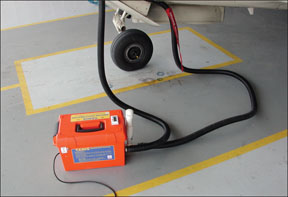
This trend has ignited a dual-pronged interest in engine corrosion control. One is aimed at improved oils and additives-we reported on that topic in the April 2006 issue of The Aviation Consumer-and the other is whats best defined as active corrosion prevention by gadgets called aerators or engine dehydrators. Theoretically, these work by pumping dry air into the engine and cylinders to flush out acidic moisture-laden gasses that would otherwise condense when the engines metal innards cool. Engine dehydrators claim to turn the engines insides from a steam bath into the Mojave Desert. But do they actually work?
Three VersionsWe found three engine aerators on the market, including a new offering from Tanis Aircraft Services, which is we’ll known for its engine pre-heater products. Two of the products-and the only type we tried-use chemical drying agents to provide the dry air. A more sophisticated model has an electric condenser element similar to a household dehumidifier. That model is made by Aircraft Components, Inc., which also makes the chemical-based Engine Saver model we tested here.
The Engine Saver ($285 directly from the company) has been on the market the longest and youve probably seen the ads for it. Its the one that looks like a two-liter soda bottle strapped to a metal base with plastic hoses for pumping dried air into the engine. The principle couldnt be simpler. The bottle is filled with a couple of pounds of silica gel beads of the same sort used in the cylinder desiccator plugs we evaluated in our April report. The beads are clear but a small percentage dyed blue turn pink when theyre too saturated to absorb more moisture. The material is thus known as indicating gel.
An electric pump in the base of the Engine Saver drives a small volume of air through the desiccant material and into the engines oil breather pipe. According to specs supplied with the Engine Saver, the pump runs for an hour to initially flush the engine of moist vapor then runs periodically to keep the engine flooded with dry air. It has onboard temperature and humidity sensors to control the cycling, typically between seven and 15 minutes on-depending on ambient humidity-and 15 minutes off.
Why not just run it continuously? Because chemical driers like the silica gel used in the Engine Saver can absorb only so much water before becoming saturated and ineffective. They can be reactivated by baking the drier in a 275-degree oven for a few hours. But given the need to dump the desiccant-slippery little beads that roll everywhere except where you want them to go-into a baking pan, the less baking, the better. Cycling the drier is a compromise between high volumes of the driest possible air and longer desiccant life.
The Tanis Engine Dehydrator-$425-works on the same principle, although the design and operation is different. The silica gel is contained in a fiber net bag and placed in the bottom of what appears to be a sturdy plastic tackle box with a double lid. The drier material is placed so it blocks inflow and outflow, forcing air driven by a fan through the silica. The Tanis dehydrator is a recirculator; it blows dry air into the oil filler pipe and draws it out of the oil breather at the back of the engine.
Tanis uses a much higher volume of air than the Engine Saver gadget does and also has larger hoses, which we found easier to attach to the engine oil breather line, but a bit more difficult to snake into the oil filler. Although high flow dries the engine more rapidly-and our data showed this-it also tanks the drier sooner, meaning you’ll have to bake the stuff to restore it more often.
Tanis solution to this quite clever: a built-in heater under a grate upon which the bag of drier sits. The idea seems to be this-it wasnt clear in the instructions-while youre out flying, you flip the devices switch to the “reactivate” position and the heater runs while youre away. When you return, flip it back to the blower position and resume the cycle. The Tanis box also has a digital indicator in the lid, displaying the relative humidity and temperature of the recirculating airflow through the engine.
SetupWe set up the driers as instructed and ran each for 24 hours, using the Continental TSIO-360 in our Mooney as the lab rat. Before attaching the engine driers, we flew the airplane and heated the oil to normal operating temperature. To measure performance, we used five Lascar digital dataloggers which measure temperature, humidity and dewpoint. One kept track of ambient conditions, two sampled the air from a cylinder on each side, one was in the exhaust pipe and a fifth deduced crankshaft conditions through the oil filler pipe.