












An owner of a vintage Cessna has the rugged mission of hauling work-crew supplies in and out of rough runways and it’s causing real issues with nosewheel shimmy, even after replacing the damper with an OEM part.
“My mechanic has twice replaced the nosewheel shimmy damper with a Cessna replacement but eventually I’m back to where I started—with nosewheel vibration and shimmy,” he told us. Our suggestion is to step it up with an aftermarket replacement.
Cessna’s damper generally works well, but over time it wears out and it’s time for overhaul. One good replacement option comes from McFarlane Aviation (www.mcfarlaneaviation.com). In our past reports, the company said that a Cessna damper generally fails at 17,000 cycles and requires overhaul. The shaft, McFarlane realized, is too thin and will bend under loads from excessive speed or braking, and the component developed spots (called galling) on the shaft. This changes the cross section of the rod, and the interior bore of the cylinder walls will develop long scratches and gouges from the edges of the piston. The hydraulic fluid will not compress, so it finds a way out of the cylinder under temperature changes, usually around worn O-rings. Eventually, most of the parts will be worn out and need replacing—more often when overlooked during regular maintenance or under extreme operating conditions. McFarlane’s damper has a quad-ring seal, temperature- and altitude-compensating fluid orifices, a larger diameter piston rod and a new design that allows the fluid level to be checked without removing the component from the nosewheel. In its design, every weak area of the Cessna damper was addressed.
McFarlane developed its shimmy damper with a four-sided O-ring with more surface area and doesn’t spin or twist inside the cylinder. The company’s original prototype proved to them that the unit could undergo thousands of cycles (300,000-plus) without needing servicing, plus the dynamic tests revealed that the damping started virtually immediately when a force is applied to the nosegear.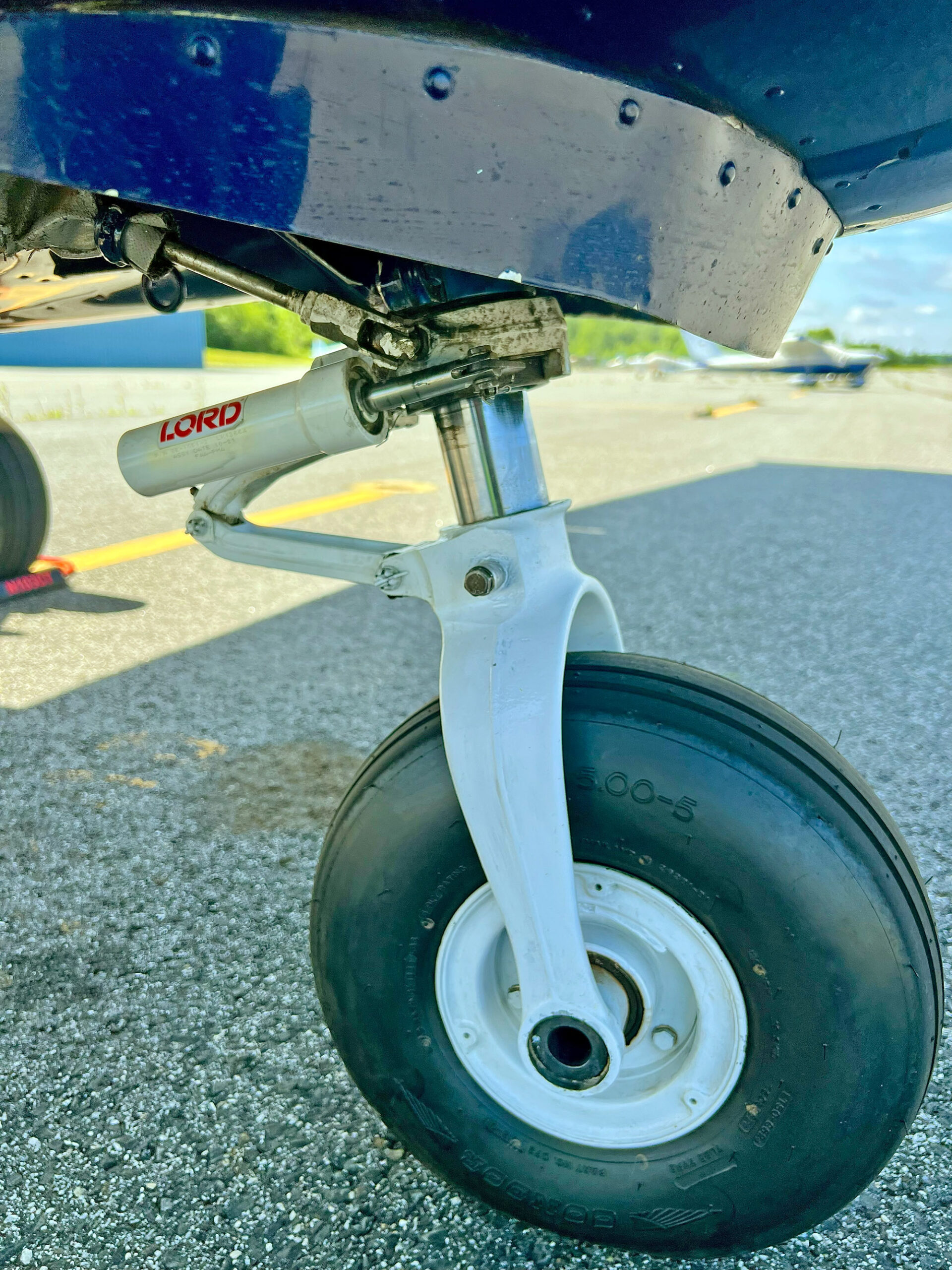
For comparison, the stock Cessna damper is quite small and doesn’t hold much H5606 fluid. This means that any fluid loss is major. Some techs say that putting in a few drops every few hours is normal. Adding more fluid than this? It’s likely time for a rebuild. The problem here is that the price of the replacement parts make it questionable—the pushrod alone is nearly $1000.
Benefits McFarland had not expected included the absence of leaks throughout the test period, the lack of servicing needed for the fluid and the longevity of the part. Our field research confirmed similar results.
The Lord dampers (www.parker.com) are cylinders with a rod and fully bonded elastomeric material, and what’s unique is it doesn’t use fluid. The piston is really a rubberish compound that applies constant pressure against the cylinder wall. A long-lasting and proprietary lubricant allows controlled slippage that resists forces in both directions. There is increased friction when the piston changes direction, providing more intense damping. The Lord damper can last at least 10 years and could surpass 300,000 cycles (proven before failing under accelerated testing). When it does wear out it is non-serviceable and cannot be rebuilt, so plan on a shotgun replacement.
Nosewheel shimmy comes on fast, and it might not happen at all speeds. One thing you can do is keep the weight off the nosewheel with back pressure on the controls. Aftermarket damper replacements from Lord and McFarlane are around $1000.