











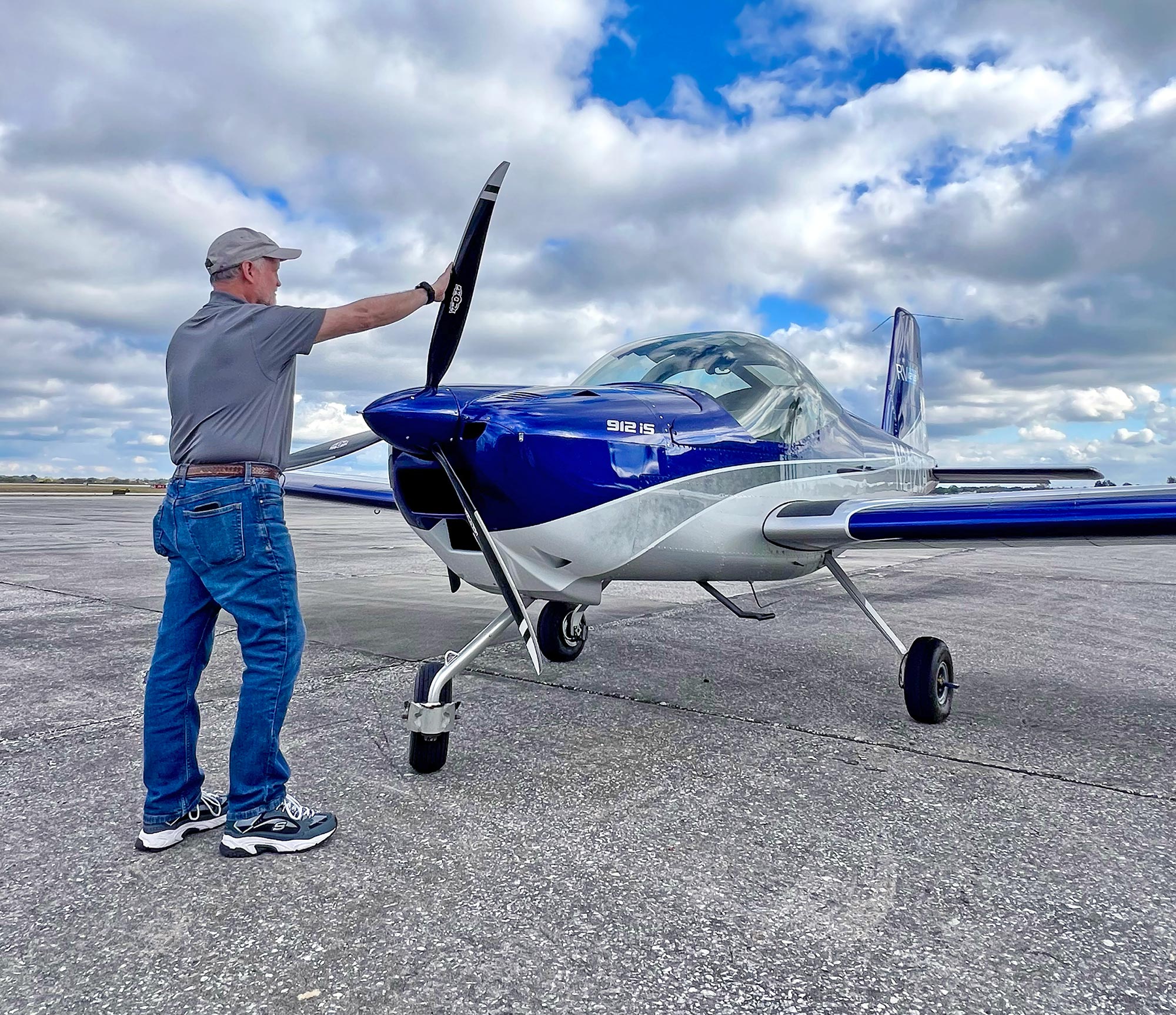
Light sport step-downs
I enjoyed your report on stepping down in to the world of LSA models in the April 2025 issue of Aviation Consumer. While I’m not quite at the age of having to part with my piston twin, I am looking ahead at ways to keep flying in my golden years. You make solid points about the Van’s RV-12iS being a good alternative—and I like all the modern tech that’s built in because I have all of that capability in my IFR twin.
But what’s the point of all that stuff—IFR GPS, dual axis autopilot with approach coupling and synthetic vision—when the airplane doesn’t even have a heated pitot tube? I’m not saying I expect the plane to have the same go-anytime mission as my twin, but I would want the ability to punch through layers and shoot an approach when the field goes IFR.
The question to you is why hasn’t the FAA recognized that these LSA models have the equipment to work in the IFR system but has limited them to VFR only? Keep up the great work—Aviation Consumer is the only airplane magazine I read cover to cover every single month and it represents real aviation journalism.
—Steve Flaherty, via email
Thanks for the encouraging words and for reading. As for the LSA category, you need to flash back to the early days when these airplanes were intended to be simple, low-performance VFR machines. While we weren’t looking, technology caught up (especially in the experimental avionics market) and the same capabilities we have in our certified IFR aircraft made the way into some (not all) LSA models.
You can use models like the RV-12iS and others appropriately equipped for IFR training, but you can’t legally fly them in the clag. All eyes are on the FAA’s MOSAIC, where there might ultimately be some changes to LSA operation.
Standby power
I read the standby alternator article in the April 2025 Aviation Consumer, which included B&C, Freedom Aviation and Basic Aircraft products ram air turbine units. But I noticed that similar systems for experimental kit aircraft weren’t covered.
One has to wonder if any such non-certified systems would not be a “safety enhancement” that the FAA would encourage. Our owner’s group has been trying to get approval for the Lycoming IO-360 and IO-390 accessory drive alternator unit for over 10 years. No dice—they make it a time-consuming and an expensive exercise. What gives with the FAA? Wouldn’t such a system provide suitable backup for the second EIS instead of another battery?
—Marc Wiese, via email
We’re also surprised there aren’t more approved backup systems and we agree the FAA should consider some of the experimental systems you’re referring to under it’s NORSEE (Non-required Safety Enhancing Equipment) policy. We didn’t cover experimental systems in the article because while we sometimes review non-certified products in Aviation Consumer, we leave the heavy lifting up to sister pub KITPLANES magazine.
Engine crisis
Interesting counterpoint in the April 2025 Aviation Consumer article about walking away from piston power in favor of turbines. While that’s certainly a good option and lots of owners buy turboprops and jets for more reliability, it’s in a financial league way beyond my tax bracket.
However, what you didn’t mention was something Larry Anglisano wrote about in the same issue and that’s the evolving Rotax engine tech. In his report on the Rotax 916 iS installation in the Van’s RV-9, he pointed out that we need more alternatives like this in favor of the same old offerings from Continental and Lycoming, where prices are the highest the market has ever seen.
Sure, these engines aren’t exactly simple from a systems standpoint, but they’re proving to be reliable and deliver serious amounts of performance. I’d stick one in my plane any day.
—John Peterson, Gibbsboro, New Jersey
You don’t say what kind of airplane you would stick it in, but you can bet a 916 iS it won’t be an easy drop-in install for all the reasons it isn’t for the RV-9 project. Still, we agree the 915 iS/916 iS are the engines to watch moving forward.