











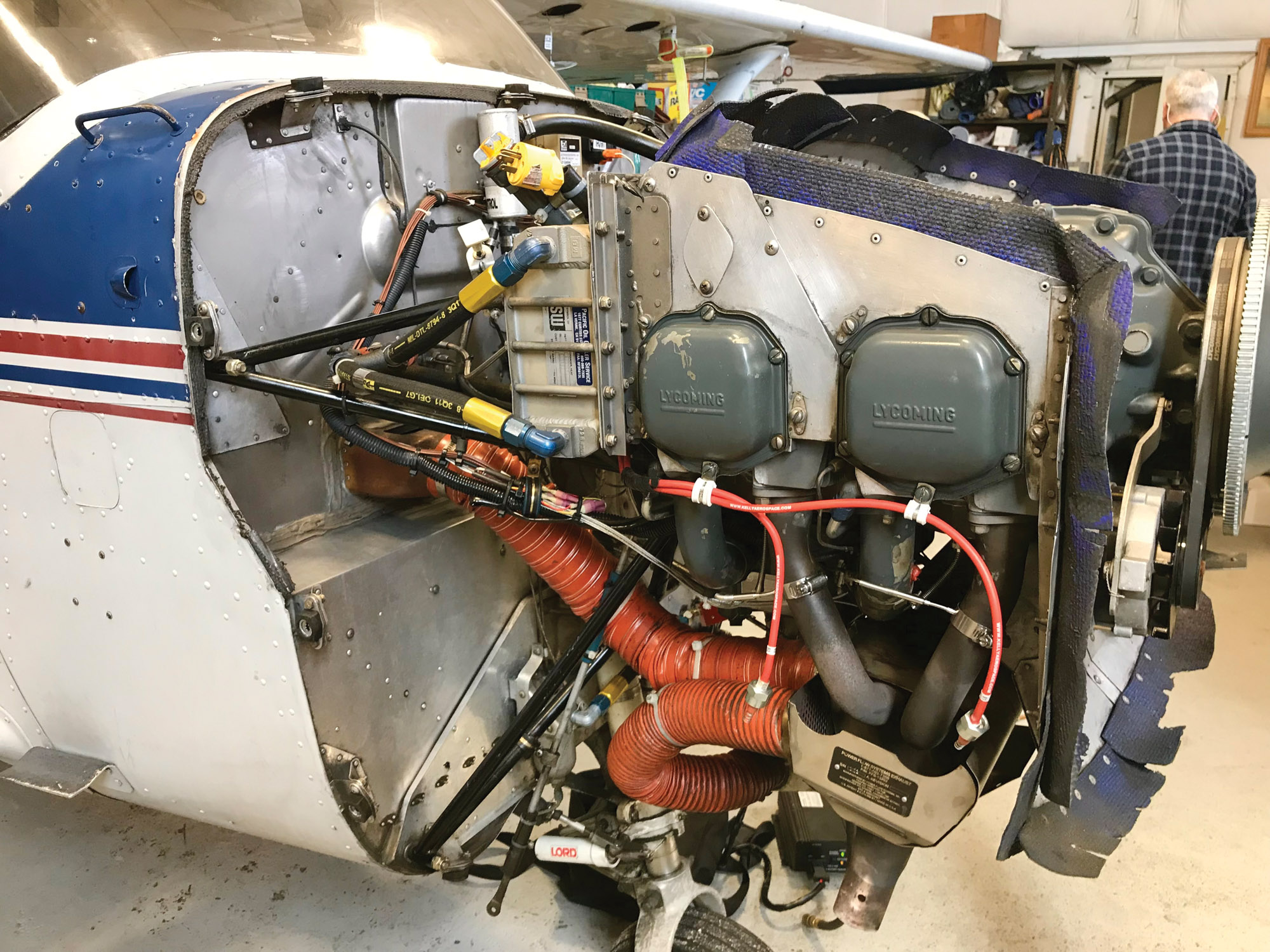
The rust in there
I need your advice on an airplane that I am close to buying, but what gives me pause is the amount of time it’s been sitting. Worse, is that it has only flown a few hundred hours in over 10 years.
The aircraft has been stored in a hangar (unheated in a moderately damp climate) and my potential partner thinks the Lycoming O-360 is probably loaded with rust. Should we be concerned?
—Harold Chambers, via email
We would be careful and wouldn’t think about buying the airplane until a trusted mechanic looked it over (including the airframe) well. We would be shocked if there wasn’t any—if not widespread—corrosion in this engine. We’re talking cylinder walls and cam.
You don’t say exactly where it was stored but humidity and temperature fluctuations play a big role. Our first step, outside of a compression check, would be to do a lengthy ground run and oil change—heat the old oil up before sending a sample out for analysis. If it comes back with iron (several hundred parts per million)—as it no doubt will be—you know there is circulating rust. Also, do a complete check of the oil filter media, plus you might even pour the removed oil into a clean bucket with a screen-equipped funnel and look for debris. You might even run the oil over a magnet.
As we’ve reported plenty of times, it’s easier than ever to do a cylinder wall borescoping and send the images to a trusted source for a look. This won’t tell you much about corrosion that may be on the piston rings. On a small Lycoming, about the only way to check the cam and lifters is to pull one bank of cylinders off to gain visual access to the cam. If you only want to remove one jug, remove a front jug because the front-most cam lobes and lifters are usually the first to go.
Keep in mind that surface-layer rust may not be a safety-of-flight problem, but deep rust pitting of steel parts can be the prelude to spalling and/or fatigue cracking. Rust can also drive up overhaul costs significantly—which are already at eye-widening levels. If pits are more than roughly five-thousandths of an inch deep, some parts (the camshaft, for example) will not be repairable. Sidewall corrosion of cam followers will probably necessitate total replacement of those items, and some gears or other steel parts may have to be junked as well.
Heard enough? We can go on—but start with a good oil analysis and cylinder borescope and let us know how it looks.
Panel for planning
I enjoy Larry Anglisano’s Panel Planner 101 column and finally have one for some advice. I inherited (don’t ask) a Cessna that has what looks to be the original Cessna navcomms, VOR heads, vacuum and static flight instruments and a Cessna transponder that actually seems to work, at least ATC hasn’t complained but then again, I haven’t flown it in ADS-B airspace.
The question I have is twofold: Are the Cessna radios worth keeping, and how much of an investment might it be to get the panel up to current-day VFR standards? Thank you for a great magazine that I read cover to cover every month.
—Bill Kneeley, via email
Bill sent a photo of his panel and it is indeed all original, with ARC/Cessna RT-485A digital radios, an RT-459A transponder and the original-equipment gyros and flight instruments.
While there are some shops that still work on these old radios (and instruments), we wouldn’t exactly call them long-term keepers and shops tell us that parts are becoming scarce. Remember that support was starting to become a problem 20 years ago and it’s more of a challenge now.
Plan B might be to upgrade the transponder with something reliable and maybe something like a uAvionix skyBeacon or tailBeacon ADS-B Out system with LED lighting. It’s a decent twofer upgrade that satisfies the mandate so you can fly in any airspace. As for the radios, there’s nothing wrong with keeping them if they work. We might keep one and add a GPS/comm unit so you can navigate and have modern communications. Also, be sure to have a shop do a pitot/static inspection to make sure the static system and associated instruments don’t leak.