











For a couple of years before the General Aviation Revitalization Act of 1994 (GARA) was enacted, almost every alphabet group involved in general aviation was beating the drum pushing for its passage.
Essential, we were told, as a means of keeping the greedy lawyers at bay while opening the doors for a new golden age of GA with more than 2000 new piston aircraft a year being promised by Cessna alone.
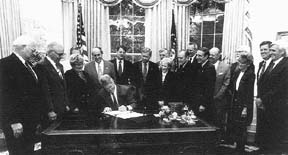
And so Congress passed GARA and the President signed it. The law of the land now generally cuts off the airframe and component manufacturers liability tail, meaning they cant be sued for personal injuries or death caused to GA aircraft occupants beyond 18 years from delivery or installation.
So, did it work? Five years after GARA, where do we stand? Is it a success story of taming the product liability tiger, or was it a governmental handout of aircraft buyers money to the manufacturers of grand proportion that now keeps owners and FBOs from getting affordable insurance at policy limits that make sense? Nailing down the truth is all but impossible and depends largely on whose philosophy you happen to embrace.
GARA Benefits
In the plus column, its undeniable that GA piston manufacturing was boosted substantially by Cessna restarting its production lines after GARA was enacted. Beech, Piper and Mooney were making some aircraft during the time Cessna took a hiatus, but their production is up, too.
Jobs in the GA industry have grown, with Cessna alone adding about 6000 GA jobs between 1994 and 1998 and Piper tripling its workforce from 400 to about 1300. Lancair and Cirrus didnt even exist as production aircraft makers in the early 1990s. More than 25,000 jobs have been added after GARA throughout the industry. All told, there are now 150,000 jobs nationwide in general aviation, according to the General Aviation Manufacturers Association (GAMA). Yet even GAMA admits these numbers are soft, given the difficulty of measurement.
Lawsuits against manufacturers are down substantially since 1994, with the few that are filed these days mostly being dismissed at an early stage. GAMA also claims that the products law has boosted R&D by 150 percent with new products being brought to market that wouldnt have seen the light of day without GARA. This is a tough claim to prove or disprove, however. Many execs in the industry say GARA did stimulate the inflow of capital, but few can point to concrete examples and admit the robust economy may be the real reason for new investment.
From the Dark Side
Comments from the Dark Side, those plaintiffs tort lawyers who make a living from crash litigation, arent so rosey. No surprise there.
None of them relish the trial problems created by having an empty chair for the airframe manufacturers in court. That used to permit each of the remaining defendants (pilot, FBO, A&P, etc.) to deflect blame from themselves by pointing to faults by the manufacturer who is now protected from liability and isn’t even present. They also point to a number of GARAs shortcomings as evidence that the GA flying public was sold a bill of goods to bail out the manufacturers. Although suits against manufacturers are down, claims against owners and FBOs arising from accidents arent.
That means the financial burden of defending against these lawsuits and paying any settlements or judgments falls on the insurers of the pilots, owners, FBOs and mechanics. Given the risk-spreading nature of insurance, that means that all of our premiums are increasing due at least in part to this extra burden.
And insurers are quick to agree that while in recent years liability policy limits of $3 million and even $5 million were available for GA pilots, you can hardly find such insurance at any price. Bottom line: If youre an owner who has accumulated substantial wealth in your middle age, more of that wealth is exposed to a lawsuit, thanks to GARA.
Beyond the immediate effect on all owners wallets as they dig down to pay more for insurance, the GARA opponents point to the failed promises of the manufacturers. Back in 1994, Russ Meyer, the guy in charge at Cessna, stated boldly that within a couple of years after passage, there would be 2000 piston aircraft a year rolling off Cessnas lines.
That hasnt happened. Not even close. Cessna just last year hit the 2000th aircraft total in the five years since GARA and in 1999, the company built fewer than 900 piston singles. To be fair, thats nothing to sneeze at and an improvement over the industrys lackluster fortunes in the early 1990s.
But compare these results to the number of aircraft produced in the heady days of the 1970s, when 17,000 piston GA aircraft rolled off the lines. Arguments in support of GARA claimed that 100,000 jobs had been lost in GA since the boom days, implicitly due to the scourge of a products liability explosion. In other words, to Congress, GARA was a jobs bill. Yet even with the liability tail clipped off, there’s been nothing like a return to the bloated employment days of the 1970s. Critics of GARA also call the manufacturers to task for failed promises of price cuts on new aircraft, in dollars normalized over time, if they were relieved of the products liability burden by GARA.
Although there’s some dispute about whether the products liability cost component in a new aircraft of the 1980s was as low as 25 percent or as high as 50 percent of its total price- supporters and detractors of GARA use different figures- new aircraft are priced at the same or higher levels than were those rolled out before GARA.
Despite what must be significant savings in defense costs by manufacturers and fewer jury judgments, post-GARA, those savings arent being passed on to the consumer.
He Said, She Said
Everyone in this war of words has a vested interest and that doesnt make it easy to sort out the conflicting claims. Complicating things, too, is the lack of hard facts and figures: The manufacturers don’t want to disclose their employment data, or their products liability cost experience or projections, which is understandable.
Some of the figures tossed about by GARA opponents are obviously off the mark, sometimes by an order of magnitude, which is like putting an elephants foot on the grocery scale while you weigh out a pound of coffee beans.