










If economic recovery requires the restoration of confidence, we have a suggestion: Just bottle up the bounding confidence that the developers of aerodiesels have that Jet-A engines are the future and distribute it to the general population. Although the aerodiesel market has, at best, stumbled along looking for serious traction, the unswaying conviction of those in the diesel industry seems to be that Jet-A piston engines are an inevitability. According to our count, there are six active projects in the aerodiesel arena: Austro, Centurion (formerly Thielert), DeltaHawk, SMA, Gemini and Zoche. (Remember them?) Heres an update on each.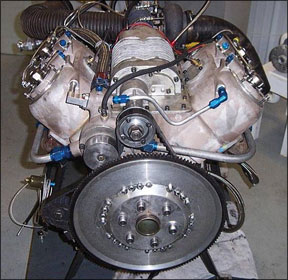
Car vs. Airplane
What we found most interesting about the current state of the aerodiesel market is that its four to two in favor of purpose-built aircraft engines rather than engines adapted from the auto segment. The automotive crossovers are Austro and Centurion, both of which are adapted from widely successful Mercedes Benz automotive diesels. SMA, DeltaHawk, Gemini and Zoche are all clean-sheet designs developed specifically for aircraft.
Thus far, the only remotely successful aerodiesel is the Thielert (now Centurion) 1.7 and 2.0 liter diesel series which Diamond enabled by adopting it for the DA42 Twin Star and the DA40 TDI.
And if remotely successful isn’t the right term, perhaps elusive is the better word. Diamond owners encountered show-stopping maintenance and economic issues with the Thielert engines which led in part to Thielert falling into bankruptcy last spring. Fed up with dealing with outside engine suppliers, Diamond formed Austro on its own and just completed certification of its own aerodiesel loosely based on the MB 2.0 liter Centurion is now using. (See the March 2009 Aviation Consumer for a full report.) With hundreds of Thielert engines still in the field in Diamond aircraft in various states of serviceability, we asked Centurion what its market outlook is.
Centurion
Earlier this year, Thielert changed its name to Centurion as part of a wider rebranding and retooling. Via e-mail from Centurion, we were told that the company is no longer relying on funds from the German government. Further, the company said it never stopped manufacturing engines and is shipping both new engines and parts, with limited warranty of two years.
Further, said Jasper Wolffson, Centurions new CEO, the company is continuing R&D, with improvements in the control service unit and a completely redesigned clutch and gearbox to extend service life to 600 hours. These new components are expected to be available later in 2009. (Currently, the gearboxes and clutches have to be removed and inspected at 300-hour intervals.)
Wolffson said via e-mail that Centurion believes it has a robust future market with stable demand in the retrofit market, where Austros new AE300 appears not be a player yet. Given that it has an installed base of more than 2000 engines-many in Diamond aircraft-Centurion believes the cost of converting those to Austro engines will be too great and that it will continue to own that market. Austro