









Although we didnt expect to see it, that great summer sweat-fest that is EAA AirVenture yielded some powerplant developments that were both eye catching and encouraging. (And neither did the sweat materialize; Oshkosh was unseasonably cool and dry for the entire week-at least by our standards.)
We saw three significant developments that are worthy of note: Lycoming came out of the ground with not just a new engine, but an entire suite of new developments that represents a fundamental sea change for a company that has been technologically somnolent for at least a decade.
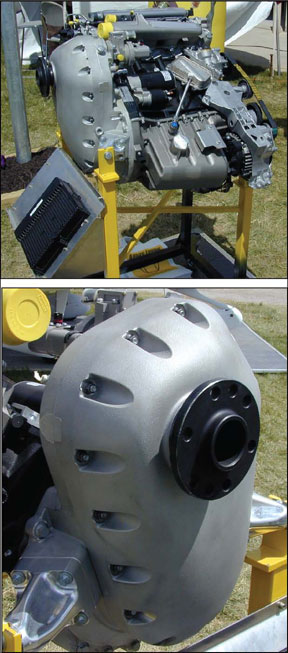
Diamond says its serious about its Austro engine project and it meant to show it with a production mock-up of the new AE 300, which its driving forward to certify in Europe before the end of the year. Austro is essentially looking to become the next Thielert-but without the financial implosion-and its doing so at a breakneck clip. We got our first detailed look at the engine.
Last, Rolls Royce showed up with the dream engine everyone wants but no one could ever seem to build-the under-200-pound turboshaft engine with efficient fuel specifics and about 400 HP. Have we died and gone to heaven, or are we just hallucinating again?
Lycoming
Some months ago, we opined on the obvious: Lycoming needs to overhaul its long-in-the-tooth engine line in general, but specifically the IO-540 series, whose fuel specifics don’t match the competition from Continental and whose rough running has been the source of more than the occasional complaint.
We also noted that this is no easy task, not so much from the technical standpoint, but as a business decision. New cert products are expensive and on the engine side, OEMs have shown an understandable reluctance to embrace even incremental changes in tried-and-true engine designs unless they appear to deliver compelling benefits. The OEM community has all but rejected Continentals PowerLink FADEC introduced a decade ago. Only one company, Liberty Aerospace, is using it. With great fanfare, engine giant Rotax, under the Bombardier flag, introduced a pair of technologically advanced V-6 powerplants in 2003. It found no takers and the project seems to have sunk without a trace.
But Lycoming is no Rotax and its initiatives revealed at OSH are nothing if not bold. In what appears to be round two of TCMs FADEC idea, Lycoming showed us IE2, a fully electronic engine based on the IO-540, but, if successful, will migrate to its other models as well. The IE2 is as close to a clean sheet engine as