











For those of us to whom a half-million bucks for a new airplane is a non-starter, older airframes-maybe 40-year-old airframes-are the only option. And even those can cost the better part of $100,000. For that kind of money, a would-be buyer assumes these expensive purchases will be supportable with parts, accessories and upgrades for the foreseeable future. And for the most part, a telephone call and a credit card payment are all thats needed to get a specific part to your mechanic in a matter of days, if not hours. But that isn’t always true and it may become less true as our airplanes get older. And even when a part is available, in some cases you may find that the hit to the credit card is breathtaking, if not prohibitive. Last year our three-member ownership group discovered some of the limitations of the parts supply system for our 1977 Cardinal RG. We had a door blow open in the wind, something thats not unusual for a Cardinal, unfortunately. There was quite a bit of damage to the door hinge and the door itself. Our mechanic was able to get all the parts quickly, including the door skin, which surprised him because Cessna doesnt stock door skins for Cardinals. Instead, it retains the tooling and produces them as needed, a common practice for parts that arent commonly requested and not a bad procedure when it works. One little problem: The door skin didnt fit the curve of the door. A call to Cessna got an assurance that they would make another one, but when they tried, they discovered that the tooling for making the door skin was broken. Cessna now had to figure out how to fix a tool that was designed more than 30 years ago. To make a long story short, it took almost four months and a call to the president of Cessna to get a properly crafted door skin. To Cessnas credit, once we complained loudly enough, they asked our mechanic to send the entire door to them. They then made the skin, attached it to the door and shipped it back, only charging us for the original door skin. But this got us to wondering how prevalent a problem this is in the industry, and how the various manufacturers are handling it.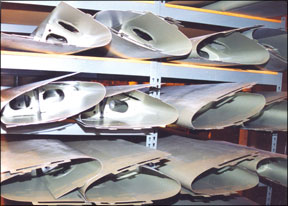
Factory View
Its doubtful that any of the legacy manufacturers envisioned supporting fleets of 40- and 50-year-old airplanes back when they were designing what many of us fly today. They followed the automotive model, which envisions replacing the entire vehicle within some finite time. The factories have responded with varying