











In case you havent noticed, the compact fluorescent bulb-once the darling of the green energy set-is dead meat. Its soon to be displaced by cheaper, brighter and more efficient light emitting diode technology. The same has happened in automotive lighting and many new light sport aircraft have LED nav and landing lights. Legacy certified aircraft would probably have more LED technology too, if the FAA hadnt worked so hard to chill the market by raising expensive certification hoops. Nonetheless, a few hardy companies have created LED products-landing and taxi lights and nav lights-for the aftermarket. The market has actually expanded slightly since we last examined these products a year-and-a-half ago. Moreover, we expect to see more products for the certified market during the next couple of years, mirroring the emerging trend in all segments of the lighting market. For this report, we tried seven LED products, all but one being pitched as landing or taxi lights. Our impression is that companies have improved the performance of LEDs to the extent that theyre no longer just curiosities. However, they remain expensive-as much as 20 times more than an incandescent bulb intended for the same application. However, even at those prices, a LED landing light might make sense for some owners.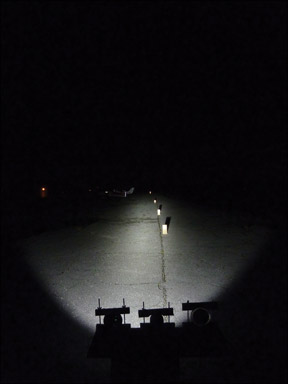
LED Tech
Recent breakthroughs in LED manufacturing have brought prices down, improved efficiency and output and also increased the range of colors the lamps can output. Unfortunately, the industry standard GE 4509 PAR 36 that the vast majority of airplanes have as landing lights is neither the most reliable nor best bulb going. (PAR refers to parabolic aluminized reflector and the 36 is actually the lamp diameter expressed in increments of 1/8 inch, thus the PAR 36 is 4.5 inches in