Safety

406 MHz ELTs: ACK and Kannad Lead

From our perch, we see high-priced 406-MHz ELT interest bottoming out. Maybe its because Transport Canada has backed off on an initial threat of mandating 406 MHz beacons for any aircraft operating in Canadian airspace-at least for now. This mandate was a driving, if shallow, motivation for U.S. operators to drop a couple of grand on new ELT technology. But even without the Canadian mandate, going 406 is something we all should plan for at some point. Many owners are in denial that distress signals from old 121.50 MHz beacons arent satellite-monitored anymore, cant be tied with on-board GPS for transmitting wreckage coordinates or even that the device in the tail might be over 40 years old. There are a handful of good reasons to invest in a 406 ELT and some well-worn excuses not to. Maybe you always fly IFR, or never in the sticks, or always in earshot of a listening control tower. But given the improvements in 406 technology, we think the investment is worthy.


Read More »

APSs Upset Training: Practical Survival Skills

In a 2007 study going back more than 50 years, a Boeing safety group identified inflight loss of control as the number one source of airline fatalities. The 2008 Nall Report tells a similar story for general aviation. Loss of control inflight, or LOC-I in the argot of those who study aircraft accidents, includes a host of hazards ranging from garden-variety stalls to control surface hardovers and encounters with wake turbulence. LOC- I accidents happen to the spectrum of civilian pilots, from students to airline veterans. The stubbornness of LOC-I as the single largest cause of fatal accidents has a great deal to do with the way that we train. While the airlines have incorporated a number of loss-of-control scenarios in their training, general aviation hasnt really addressed the issue.

Read More »

Aircraft Insurance Industry – A Buyers Market: But Its About to Swing

The good news about aircraft insurance is that for most owners, insurance has never been more affordable or more available. The bad news is that most people in the business think that the pendulum is about to swing back the other way. What got us here? Ironically, the 911 attacks had something to do with it as does the current economic malaise. Demand is slack, there are more providers than ever and companies are willing to deal. But, as always, it wont last. Following the 9/11 attacks, insurance rates for most aircraft increased dramatically. The amount of the increases depended upon the market segment, with many big iron operators seeing their rates double overnight. Most light aircraft owners saw less of an impact, but as a result, 2002 and 2003 were some of the most profitable years for the industry in recent history.

Read More »

Free Flight Planners: Fltplan.com, FreeFlight

The first iterations of Fltplan.com had a clunky, Web 0.5 interface, but it was fast, flight plan filing was reliable and it sported a couple of unique features, such as seeing recently-assigned ATC routing between the airports. It quickly became a favorite of corporate flight departments and freight dogs. The user interface has improved (somewhat). While it still caters somewhat to the corporate flight world, we think Fltplan.com is the best all-in-one website to create and file a flight plan and grab FAA-legal weather. To really use the website, you’ll need to create a (free) login name, and appropriate aircraft and pilot profiles. This is a quick process where you can select from a long list of existing aircraft profiles or customize your own. With that done, you can either create a quick airport-to-airport plan or enter something with custom routing. Seeing recent ATC routes is a great plus, but if youre traveling far you’ll likely see jet routes rather than Victor airways. Once youve built a quick plan, you can see headwind/tailwind factors and times at different altitudes. That data also appears in a nav log if you print one, so you can refigure times we’ll if your planned altitude doesnt work out in the real world. Additional slick features include tight integration with departure and approach charts, a Takeoff and Landing Data (TOLD) card, a system to fax the destination FBO directly and a well-organized weather page. Flight plans can also be saved in a format for upload into your G1000 or GNS 430. The site will also do flight tracking and offers some fee-based services such as eAPIS filings.

Read More »

Is BRS Always a Life Saver? Not Exactly

At a Wall Street analysts forum in 2007, the CEO of Ballistic Recovery Systems, Larry Williams, told the audience why he thought the all-plane parachute made sense: “In 2005, there were just over 1600 [accidents] involving general aviation airplanes in this country that resulted in 556 deaths. Now, if you offset that with the fact that were saving 199 people, all of the sudden, parachutes start to make sense.” Except that its not that simple. As of this writing, BRS has claimed to having saved 233 lives, but thats counting every occupant on every successful parachute deployment as a saved life. A quick look at the record shows that death was far from a certainty in many of the parachute deployments. A subtler knot in the logic that BRS has saved 233 people is that having a parachute installed affects the delicate balance of risk versus utility in aircraft. We know from experience and interviews that there are pilots who will take on conditions such as rough weather with the chute that they wouldnt take on otherwise. We can only guess that some of the CFIT accidents in the Cirrus were influenced by the faulty assumption that the pilot will always have enough time to pop the bddn chute before auguring in. But the risk equation is more complex than that. Situations such as single-engine at night over mountains or low-visibility takeoffs are risky only because the consequences of an emergency are high, even though the likelihood of failure is extremely low. Having an ace-in-the-hole to cover that unlikely event will shift the go/no-go call for some pilots. We believe those pilots will get more out of their airplane with a negligible increase in real risk. So BRS may be overstating its positive impact on lifesaving, but also understating its positive impact on aircraft utility.

Read More »

Cataract Options: LASIK Plus Intraocular

As the pilot population ages, one medical condition afflicts everyone and a second afflicts many. Presbyopia-the inability of the eye to accommodate for close-in focus-is a curse of middle age, setting in for most people between the ages of 40 and 50. The second condition-cataracts-afflicts most of the population, but not everyone requires treatment for it. In our October 2008 issue, we covered the leading choices for pilots facing cataract surgery. Generally, the FAA has no problem with cataract surgery, although the procedure must be reported. Longtime reader, eye surgeon and AME Dr. Steven Siepser wrote us recently to note that our October article overlooked some options for pilots facing cataract procedures. “The fourth option for cataract surgery,” he writes, “is the use of an accommodating intraocular lens combined with laser vision correction for unencumbered maximum visual performance.” Laser vision correction isn’t a treatment for cataracts, but it does reshape and change the focusing power of the cornea, usually resulting in improved vision without glasses. As with cataract surgery, the procedure passes FAA muster, requiring a report to the FAA to explain the outcome. Barring any complications, it has no impact on medical issuance. The most common form of laser correction is laser in-situ keratomileusis or LASIK. The surgeon uses a microkeratome to lift a thin flap of corneal tissue, then an excimer laser is used to reshape the underlying corneal tissue. Cataract patients can also be candidates for laser correction, according to Siepser.

Read More »

Aviation Insurance Myths: Idiocy Isnt Covered

Test your knowledge of aviation insurance practices. Which of the following statements is true? If you take off 250 pounds over gross, youre in violation of the FARs and your insurer wont pay any claim resulting from an accident related to the overgross condition. On a long cross country, you blithely forget a weather briefing and fly straight into the icing layer from hell. You end the flight (alive and scared) in a farmers muddy cornfield. Your insurer wont pay. Last, you forgot that your annual was due last week, but only after you landed gear up. Your insurer wont pay. The answers? Probably false, even though the fine print in your insurance contract clearly allows the insurer to deny a claim, in many circumstances-perhaps the majority-they pay the claim anyway. Why? Several reasons. One is that laws governing contracts like insurance policies from state to state and some regulators take a more customer friendly stance than do others. Second, the aviation insurance business is a small (and shrinking) segment. A company with a habit of denying claims will soon find its business going elsewhere.

Read More »

Logbook Software: AircraftLogs.com Rocks

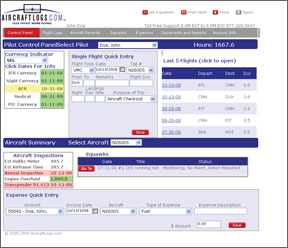
Task one in looking at logbook software is figuring out what you want to log and why. If youre not detail-oriented and only care about when your last BFR or IPC was, then anything more than a Post-It on the corner of your computer monitor is probably a waste. If you need to track duty time, watch the numbers for pilots and aircraft in a school or business, track time for tax reasons or are in the grind of pursuing higher ratings, logbook software can be a godsend. We reviewed over a dozen systems to keep the numbers in the right columns. Here are our top picks to meet the variety of needs out there. This website is geared mostly to corporate users and flight departments, but has a lot of utility for private aircraft owners as well. Its strength is in tracking aircraft time as it meets all the FAA requirements for electronic logbooks for aircraft-including electronic signatures. Why is this useful? First, if your shop is willing, they can access any of your aircraft records at a glance and cut down their admin time by signing you off electronically. Second, part of the service is scanning in all your aircraft documents and backing them up (you can also upload more on your own at any time). Also, ADs and Service Bulletins are automatically retrieved by the system, warnings flags for time-limited parts and inspections pop up automatically … the list goes on.

Read More »

Insurance Meltdown, Too? Not Exactly

The depressing drone of bad economic news yielded one little nugget that especially caught the attention of many owners last month: AIG, the insurance giant, was overleveraged and on the ropes. Deemed too big to allow to fail, the federal government engineered a hasty bailout package that has since ballooned in cost. What does this have to do with the AIG policy on your Skyhawk? Or your USAIG policy on your Bonanza? Is the insurance business about to tank along with the stock market? Not exactly, but thats not the same as saying AIGs well-regarded aviation insurance division hasnt been nicked by the credit crisis. It has, but only as a result of a general loss of confidence in certain businesses in general. For a detailed report on this, click on the podcast link at right, which appears on our sister publication, www.avweb.com. In that audio segment-no MP3 player required, by the way-you can hear an explanation from our aviation insurance guru, Jon Doolittle.

Read More »

Rescue Me: Accusat is Our Top PLB

Emergency locator transmitters (ELTs) are one piece of equipment airplane owners love to hate. They don’t work very we’ll and they always seem to need replacement batteries. Beginning next year, the government will cease satellite monitoring of 121.5 MHz ELTs, making what didnt work that we’ll to begin with instantly all but useless. Rather than invest as much as $4000 in a new 406 MHz ELT, one option owners have asked us about is carrying one of the new 406 MHz, GPS-enhanced portable locator beacons or PLBs. Theyre relatively inexpensive, have a good record thus far and can do double duty as an ELT and a rescue-me beacon for the car, the boat or outdoor activities of all kinds. While this makes sense, there are some limitations. Read on.

Read More »

VLJ Insurance? Yes, With Lots of Training

The long-awaited age of the VLJ has begun. The Eclipse 500 and the Cessna 510 Mustang are the vanguard of the new movement. Eclipse is now building almost one new jet airplane each work day. Cessna delivered 45 airplanes in 2007 and is ramping up to build two Mustangs a week. There are already close to 200 VLJs out there. By this time next year that number will have more than doubled, and soon other manufacturers will be swelling the ranks of Jet-A consumers. One of the looming worries for VLJ builders and potential owner-pilots is what the cost of insuring these jets will be, or if it will be available at all for budding jet pilots.

Read More »

Better Hypoxia Training: Rob Bests a Chamber

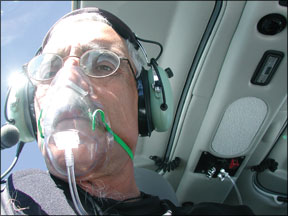
We sometimes think that another word for hypoxia ought to be denial or, at the very least, the phrase “false sense of well-being” should morph to “self-delusion.” In the aviation press, we have beaten the hypoxia topic to a pink pulp, because it lends itself so readily to the pointing of a boney finger at the profoundly stupid things pilots sometimes do. In this regard, hypoxia is the multi-headed beast-we can be dumb about ignoring its dangers, dumb about ignoring training meant to mitigate the risk and really dumb when it actually happens. And how often is that? We don’t really know, because even if an accident is caused by hypoxia, the post-mortem may offer only speculative conclusions. In many GA accidents, the true cause may drift downwind with the smoke from the wreckage simply because light aircraft forensics are so inadequate.

Read More »