









Safety

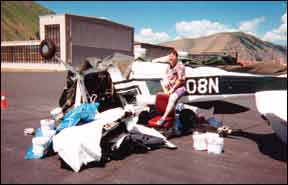
Insurance Valuation: Too Much, or Too Little?

Flying is one of the fastest ways to burn money in this life. Airplanes are expensive and helicopters even more so. For most light airplane owners who fly less than 100 hours each year, owning the airplane actually costs more than operating it. And in recent years, many airplanes are depreciating much faster than they are being physically worn out. Buying the right amount of insurance to match the aircrafts value is trickier than it used to be, but is still the only way to protect an expensive investment.When deciding how much physical damage coverage to buy, there are two considerations, depending upon what happens to the airplane.

Read More »

G1000 Training: Garmins PC Sim Excels

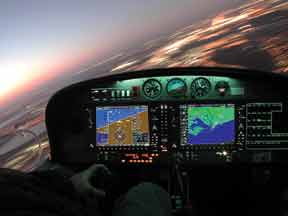
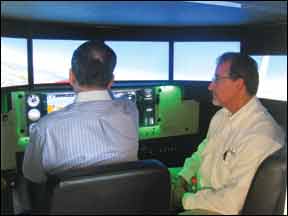
Garmins G1000 electronic flight display has so dominated the market that its spun off its own cottage industry of products meant to teach people how to use it. And believe us, given the G1000s complexity, the need is hardly overstated. Indeed, some flight schools charge several thousand dollars just to check out pilots transitioning into the G1000, and thats after theyve done computer-based orientation. The idea behind the training products is to give the would-be G1000 pilot the lay of the land before actually getting into the airplane. All of them-there are about a half dozen-do that to varying degrees at varying price points, each driven by a particular training doctrine. Depending on how you learn, there’s a product for every purpose.

Read More »

Flight Schools That Work: Top Service for Top Dollar

If youre looking a feel-good piece about how flight training is on the rebound and were on our way back to viable flight schools running side-by-side with every mom-and-pop FBO, youre reading the wrong article. (Actually, youre probably reading the wrong magazine.) Flight training never had a reputation as a cash cow, and the current economic climate hasnt helped that situation. But there have always been, and still are, flight schools that run in the black. In fact, in just the past few months, we came across a couple not just getting by but expanding despite all the dire numbers of the current economy. We decided this was worth a critical look. Did these folks have some secret formula for success, or were they dumping resources into a temporary bubble that will collapse under its own economic impossibility before the year is out?

Read More »

Picking Progressives: The Right Lens is Key

Your 45th birthday is a memory. You caught yourself squinting at the gauges on a recent approach to minimums. The near-vision test on your last medical? You passed it-barely. You have presbyopia, or old eyes. This term probably made sense 120 years ago, when 40 was old, but the term persists. Its the result of the loss of elasticity in the crystalline lens in the eye, which allows us to zoom focus on near objects. Because its the lens getting stiffer, not the focusing muscles getting weak, no amount of exercise will resolve the problem. The problem gets worse with age, no matter what you do. To better understand your options for progressive lenes, take a look at your vision in general. If youre nearsighted and wearing distance-only glasses, you may have excellent near vision without your glasses and be more comfortable without glasses for reading than with progressives. That works fine at home, but not in the cockpit, so progressives are still a necessity.

Read More »

Still a Soft Market But Not For Long

Insurance rates for most general aviation aircraft are lower than they have been in many years and some industry insiders believe that we are on the brink of a sea change. Even in this wildly cyclical business, old timers agree that this “soft” market is the deepest and longest lasting that theyve ever seen. With prices as low as they are, this is a challenging time for underwriters. Predictions about where the market will go, how far and how quickly run the gamut.

Read More »

Top-Value CO Detectors: BW GasAlert, SafeTest

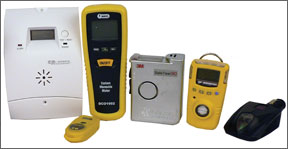
If youre absolutely determined to kill yourself in an airplane, you’ll have to find a better way to do it than gassing yourself with carbon monoxide. The world is so awash with CO detectors across a range of prices and capabilities that we cant imagine many owners havent at least considered these gadgets. And the good news is that all of them work quite well, even, you might be surprised to know, the $4 cheapie stick-on detectors that all your friends tell you are a joke. (They arent.) How real is the risk of your exhaust or a perforated heater doing you in? Its real enough, although not the level of risk that should keep you awake at night. On the other hand, given the choices in detector technology, there’s no reason you cant eliminate the risk entirely or at least tamp it down.

Read More »

Smile, This Flight is Being Recorded

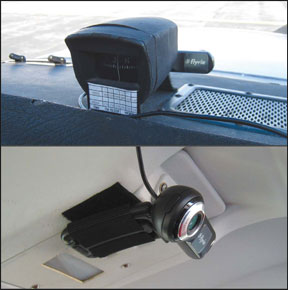
Its easy to pick out a couple of pilots talking: Look for the folks bending their hands through the air trying to recreate a visual for that death-defying turn to final immediately followed by three consecutive touchdowns from one landing attempt. Technology can now put more fact into these fish stories or offer a better way to debrief exactly what happened right before the CFI hollered, “My airplane!” These three solutions hit different, but overlapping, missions. None are cheap, but all do the job they set out for. The NFlightCam is small and to-the-point, so we will be too: The thing works great. The camera is actually a ContourHD 1080 wearable camcorder thats less than four inches long and weighs about five ounces. NFlightCam replaces the standard mic with a circuit and cable to record cabin audio from the intercom. Thats plugged into any headset jack and can be connected inline so you can use a headset in the same outlet.

Read More »

Spot or Spider? Apples vs. Oranges

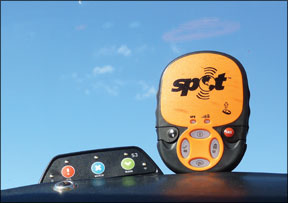
If the basic idea behind the ELT-you crash, it tells the world where you are-was laudable, the performance of this technology has been anything but. Even the new-generation of 406 MHz ELTs havent proved much better and are hardly flying off the shelves. From this conundrum emerges a niche market for portable satellite vehicle tracking devices and personal messengers. This technology has been around for awhile in the transportation industry, but lately it has made inroads into the sporting and outdoor markets with a device called the Spot Satellite GPS Messenger, which recently introduced its second generation model. Another company, the New Zealand-based Spidertracks, has been marketing its own satellite tracker called the Spider S3.

Read More »

Survival Systems: Unforgettable Training

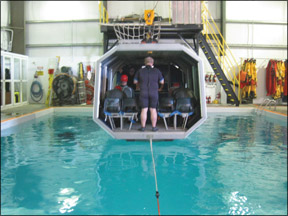
Denial can be a useful thing when it comes to getting the job done. Ive done my fair share of flying overwater and out of gliding distance to land, and just rationalized that the odds were slim of ditching and Id figure it out when it happened. The reality was that I didnt have a clue what being immersed in an aircraft would be like. I had no plan, and that meant that if the aircraft did anything other than stop upright and floating, I probably was going to the bottom wearing a 3000-pound aluminum suit.The point of egress training like we sampled at Survival Systems Inc. is to give you that plan.

Read More »

LSAs for Training: It Works for the Wary

Part of the grand promise of Light Sport aircraft and the Sport Pilot license was it would reinvigorate flight training, bringing busloads of new pilot starts attracted to cheaper flying with fewer requirements (like a medical certificate). Soon after the dream of LSAs in the hands of students made some hard landings in reality we started seeing complaints that light sport designs were too lightly built for the rigors of flight training. Now that were several years into the process and have some real numbers to work with, weve decided to give this a closer look.

Read More »

406 MHz ELTs: ACK and Kannad Lead

From our perch, we see high-priced 406-MHz ELT interest bottoming out. Maybe its because Transport Canada has backed off on an initial threat of mandating 406 MHz beacons for any aircraft operating in Canadian airspace-at least for now. This mandate was a driving, if shallow, motivation for U.S. operators to drop a couple of grand on new ELT technology. But even without the Canadian mandate, going 406 is something we all should plan for at some point. Many owners are in denial that distress signals from old 121.50 MHz beacons arent satellite-monitored anymore, cant be tied with on-board GPS for transmitting wreckage coordinates or even that the device in the tail might be over 40 years old. There are a handful of good reasons to invest in a 406 ELT and some well-worn excuses not to. Maybe you always fly IFR, or never in the sticks, or always in earshot of a listening control tower. But given the improvements in 406 technology, we think the investment is worthy.

Read More »

APSs Upset Training: Practical Survival Skills

In a 2007 study going back more than 50 years, a Boeing safety group identified inflight loss of control as the number one source of airline fatalities. The 2008 Nall Report tells a similar story for general aviation. Loss of control inflight, or LOC-I in the argot of those who study aircraft accidents, includes a host of hazards ranging from garden-variety stalls to control surface hardovers and encounters with wake turbulence. LOC- I accidents happen to the spectrum of civilian pilots, from students to airline veterans. The stubbornness of LOC-I as the single largest cause of fatal accidents has a great deal to do with the way that we train. While the airlines have incorporated a number of loss-of-control scenarios in their training, general aviation hasnt really addressed the issue.

Read More »