









Maintenance

Corrosion Treatments: Well Worth The Trouble

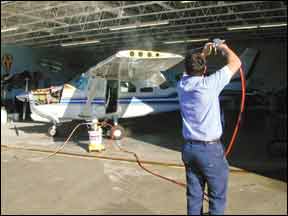
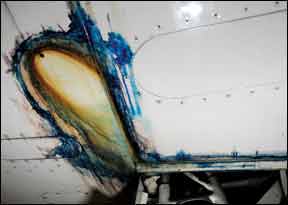
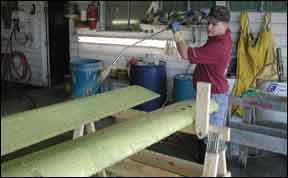
Corrosion is like aging; it does its damage slowly and is easy to overlook—until major systems begin to fail. Unlike aging, we know how to stop corrosion in aircraft. It’s cheap insurance against a slow destruction of your airframe. The downside is a cleaning up your airplane for at least a few weeks, and possibly several months. You also might discover corrosion damage that would have passed unnoticed for years and now appears as loose rivets and joints. We’re not sure revealing lurking damage is a downside, however. We’d rather stop the spread and know the full extent of any degradation here and now. This is where owners of fiberglass aircraft get to turn to the next article with a smug expression on their faces. The rest of us who fly aluminum birds should read on.

Read More »

Bulletproof Engines: Are There Any?

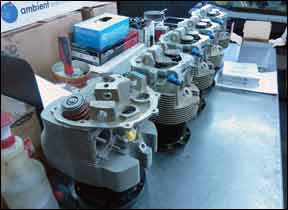
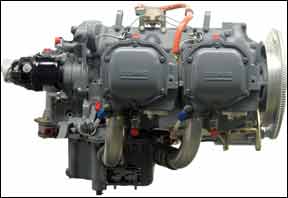
Next to $5 avgas, the cost of routine engine maintenance and overhauls takes the biggest bite out of the aircraft ownership budget. You can always choose not to paint your airplane or live with ratty seats, but if the engine tanks, you’ve got an 1800-pound radio stack you can’t even use because there’s no way to spin the alternator. Our owner reports on various models consistently confirm what we’ve always known: Some owners spend a lot less on aircraft maintenance simply because they own airplanes equipped with engines we have often considered bulletproof. This concept is, itself, a misnomer. Nothing in aviation is truly bulletproof, but it’s fair to say that some engines have a better service history than others and, conversely, some are simply money pits. That’s not to say they don’t perform, but it’ll cost you more and reliability will suffer.

Read More »

Letters: March 2012

In spring, I had a new Garmin GTN750 installed in my 1983 Mooney 201 and was amazed by the unit’s performance. The only thing missing was fuel management capability and as a result, I had the fuel flow option added to the existing EDM-700 and wired into the GTN. Since this was my first exposure to fuel flow monitoring, I didn’t know what to expect in terms of reliability and accuracy. And what I experienced in the field blew me away. I was expecting a reporting accuracy rate of perhaps 96 percent, but was pleasantly surprised to find the accuracy greater than 99 percent. At each fill-up, I compare the fuel loaded onboard with what the unit stated as actually having been used and the numbers are always within a few ounces.

Read More »

Fuel Tank Reseal: Thankless, Expensive

One of the unfortunate side effects of slow aircraft sales has been an erosion in the maintenance base. Many smaller shops have disappeared and some of those that remain are either losing the ability to do some kinds of work or are just declining to accept it.One maintenance procedure on the chopping block has been the resealing or repair of wet wing fuel tanks, especially in Mooneys, but in a few other models as well. At best, repairing weeping wet-wing tanks is a dark art, at worst, it’s something some owners say they have to have done several times to stop the leaks, if even the leaks can be stopped.

Read More »

Letters: February 2012

I read your synopsis on our data in the cockpit; how discouraging. (See Aviation Consumer, December 2011.) May I ask a question and make a comment? First, I think I vaguely remember reading some time ago that a portion of the aviation fuel tax had been set aside and saved up to fund the NextGen system, and that these funds were diverted to other uses not even within aviation. Am I correct or mistaken on this, or did something similar to this happen?

Read More »

AeroFusion Additive: Didn’t Work for Us

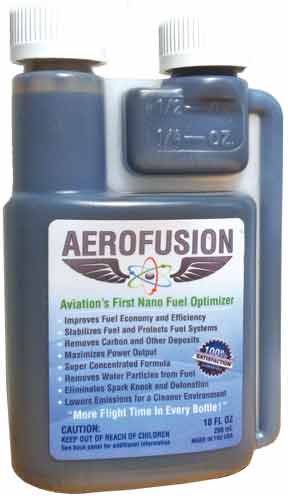
Everyone wants it to be true; let there be a long-lost secret that reverses aging, cures the flu overnight or squeezes 50 more miles out of every tank of gasoline. Trying fuel additives is rather like buying the occasional lottery ticket. You know the odds tower against you, but what if this one is a winner? When we met Keith Lange at Oshkosh last summer, he enthusiastically offered us two bottles of AeroFusion to test and review. He did so without qualification or condition, and we got the feeling he honestly believed in his product. He sells it with a 100-percent money-back guarantee, which not something you’d do if you expected unhappy customers. We said we’d give it a try.

Read More »

AeroFusion Additive: Didn’t Work for Us

Everyone wants it to be true; let there be a long-lost secret that reverses aging, cures the flu overnight or squeezes 50 more miles out of every tank of gasoline. Trying fuel additives is rather like buying the occasional lottery ticket. You know the odds tower against you, but what if this one is a winner? When we met Keith Lange at Oshkosh last summer, he enthusiastically offered us two bottles of AeroFusion to test and review. He did so without qualification or condition, and we got the feeling he honestly believed in his product. He sells it with a 100-percent money-back guarantee, which not something you’d do if you expected unhappy customers. We said we’d give it a try.

Read More »

Letters: January 2012

I read your article on navcomms in the December 2011 issue with interest. However, I think there is a bit of a slant toward the all-in-one avionics box with your magazine and I don’t really agree with it. While I admit that glass is wonderful to replace the attitude and heading indicators (electronic HSIs are even better), I’m not a big fan of GPS-only navigation data. GPS can be jammed, even if it hasn’t happened yet. There is no backup to GPS if the system goes down.

Read More »

ReKrete Floor Cleaner: Lose the Oily Mess

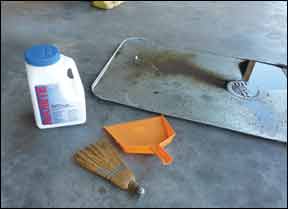
Hangar floors exist at two ends of the same spectrum: the sublime dream of shiny gray epoxy under a bright fluorescent glare or the dingy reality of unloved, ashless-dispersant-stained concrete. Turning the latter into the former can be done, albeit at great expense and effort. But there might be something in between, thanks to a new product called ReKrete, a waterless cleaner designed to eliminate oil staining from concrete floors. At $30 for a 10-pound tub, it’s a lot cheaper than $250 worth of epoxy. But does it work?

Read More »

Rotax Overhauls: Simple Options

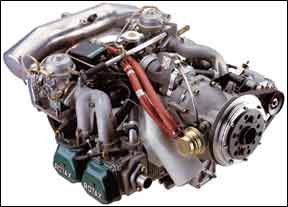
When Diamond introduced the two-seat Katana to North America in 1995, it might as we’ll have been powered by alien technology. The 81-HP Rotax 912F3 was about as familiar to aircraft mechanics as brain surgery is to a plumber. But all that has changed. Rotax has made serious market inroads and with the advent of light sport aircraft, it has become more familiar to maintenance shops and an overhaul infrastructure has sprouted. In North America, there are two sources for full overhauls. Rotech Research in British Columbia owns the North American territory and in Sebring, Florida, Lockwood Aviation Supply is a Rotech dealer for overhauls.

Read More »

Rain-Repellent Cleaners: All Kleer, LP Are Tops

Single-engine airplanes don’t have windshield wipers and neither do a lot of twins. While it’s true that prop and airblast blows the water off, that process can use a little help and that’s where windshield cleaners and polishes come in. There are literally many dozens if not hundreds of these products, some intended for glass, some for plastic and some both. To keep this inquiry under control, we’re testing only those cleaners that claim some degree of rain repellency, on the theory that if you’re going to clean your windshield, you might as we’ll do it with something that makes it easier to see through when it’s raining.

Read More »

American Champion: State of the Art Classics

For as bad as the aviation boom-bust cycle is for companies that make airplanes, it’s just as bad for the people who buy them. The euphoria that goes with pocketing the keys to a brand new airplane has to be tempered by the reality that the company that built it maybe teetering toward bankruptcy. Is there a better business plan, one that envisions modest production and flexible size and that can survive the test of the worst economic downturns? There are at least a couple of examples that suggest this can work. The family-owned Maule Air is one, shipping 30 or 40 airplanes a year to Cessna’s 500, but lately a lot less.

Read More »