




Editorial

First Word: 07/09

As this issue ships off to the printer, Im just back from London, Ontario where I test flew Diamonds new Lycoming-powered L360. It went just as I expected it would-the airplane flew well, performed as the company said it would and I landed it without breaking it. I had flown the proof-of-concept version of this airplane in Austria four years ago when Diamond was deciding whether to proceed with diesels or the gasoline engines, or both. The company did what the market told them to: They dropped the Lycoming version and steamed full ahead with the diesel version, then powered by the Thielert 1.7 Centurion engines. Given that the Thielert engines turned out to be a maintenance nightmare, did Diamond jump the gun on diesels and make the wrong decision? Heres why I think they did not. Although Diamond has inarguably proved that there’s market interest in diesel engines, what it has not yet proved is whether diesels are up to the task. But that process had to start somewhere or otherwise, as Dick Rutan once colorfully said, we would still be traveling cross country peering at the hindquarters of oxen. Despite the withering setback that the Thielert fiasco represents, Diamond is still way out in front of everyone else and it has more meaningful diesel experience than any airplane manufacturer on the planet.

Read More »

First Word: 06/09

When the light sport idea morphed out of the ultralight industry not quite a decade ago, the idea was that the airplanes would be simple to build and wouldnt be burdened with excessive regulatory oversight. That part has largely panned out. The parallel implication was that LSAs would be cheap. That part of the dream hasnt materialized. Or has it? Cheap is relative. A new Cirrus SR22 invoices for around $600,000, give or take. A new Bonanza is three-quarters of a million. Compared to those numbers, a $100,000 LSA is, at one-sixth the price, cheap. But some buyers define cheap as under, say, $60,000. In my estimation, youre not going to see any LSAs in that price range built by a company that will survive the inevitable shakeout. So if any company proposes to prevail selling LSAs at a price point that low, my advice is don’t buy it. The quality is unlikely to be there and the company is unlikely to last. As we all know, even companies selling at the right prices are always one or two sales away from bankruptcy.

Read More »

First Word: 05/09

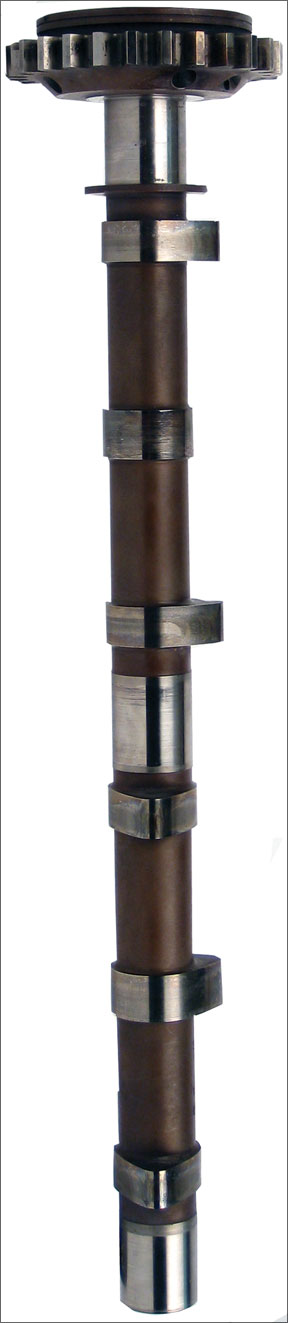
Ho-hum, another week another cylinder recall. Thats a bit of an exaggeration, I guess, but not by much. Considering the number of recalls, ADs and service bulletins that zing by, you have to wonder if weve forgotten how to make airplane parts in the is country. When I started flying in 1969, I only vaguely recall any parts call backs. Of course, I was too poor to own an airplane then and when youre in the renter loop, you don’t notice such things. And noticing or not noticing them may be part of the problem here. As I was researching the article on camshafts in this issue, I asked a couple of the engine shops I know if parts quality has gotten really bad lately or are we just noticing it more. They seemed to be of the universal opinion that things are worse than ever with regard to manufacturing shortfalls making it into the supply chain. Thats not the same as saying quality control is worse than ever because quality is, by its major definition, consistency. My guess is that parts built today are more uniformly on spec than they were 30 years ago or even a decade ago. So why all these recalls? My theory is that statistical process control has something to do with it. This method of quality control works great in the kind of volumes that the auto industry does. I don’t think its quite so hot when the volumes sink to the dozens and hundreds that GA manufacturers typically do. Even though both Lycoming and Continental have largely converted to CNC equippage, there’s still far more handwork in airplane building than in carmaking.

Read More »

First Word: 04/09

The more I learn about the biofuel and alternative fuel industries, the more depressed I get. But this doesnt necessarily apply to Swift Fuel, a proposed replacement for 100LL, which is analyzed on page 12 of this issue. Stay with me to follow the reasoning. Any sane person who reads much about the history and economics of the U.S. ethanol industry could only conclude one thing: Its nothing but corn state lunacy. The entire industry is heavily subsidized and is really nothing but agricultural subsidies by another name. With oil prices in the tank, ethanols high cost of production isn’t remotely competitive with gasoline and unless oil hits $200 a barrel, it probably never will be. The notion that ethanol is somehow greener that gasoline has been pretty we’ll shot to hell, too. Corn ethanols energy balance-the amount of energy input compared to energy gained-is generally accepted as a pathetic 1.3.

Read More »

First Word: 02/09

The effective demise of Superior Air Parts in early January will fundamentally shift the market for engine parts that overhaul shops depend on for their survival. I say “effective” demise because Superior still exists as a company, albeit an insolvent one without much to sell. When Lycoming came along and bought all of Superiors assets, the crown jewels were the PMAs and STCs used to manufacture Lycoming and Continental replacement parts. Those mere slips of paper represent years of investment and without them, Superior doesnt have much left. Lycoming wont say what its plans are until the sale is approved, but its hard to imagine theyll license Superior to make parts. At press time, Superior told us it would continue its XP engine program and may resume its experimental builder program, but how many buyers will have confidence in Superiors future?

Read More »

A Heavenly Wedding: Pilots and Paper

This months review of Garmins new GPSmap 696 once again raises a perennial conundrum. The bones of it are sketched in Joseph Matalons letter on the opposite page. Why, in an age of instant wireless communication where half of us have Blackberries surgically implanted in our skulls, do we persist in being so hopelessly wedded to paper in the cockpit? We say we want electronic charts, but many-probably most of us-haul around big bags full of paper charts, just in case. Charts that require constant revisions, or so we have convinced ourselves to believe. Whats going on here? You could argue that its belt-and-suspenders syndrome. The electronics are great, but what if they go dark? Ill be stuck, right? Viewed through the prism of risk management, this is a silly argument. First of all, the likelihood of one of these systems failing to produce a chart at a moment when it really matters is slim to none. “Really matters” means you absolutely couldnt survive without the paper chart.

Read More »

First Word: 11/08

To the sheltered masses, the words “safety” and “skydiving” might not seem to belong in the same sentence, but skydivers are the ultimate self-preservationists. You don’t get to try it again if you get the first jump wrong. (Please spare me the utterly original clever comment involving perfectly good airplanes.) There are a handful of technological aids that help in trimming the risk, such as audible altimeters and a gadget generically known as an automatic deployment device. All it does is deploy your reserve parachute for you if you forget to do it yourself, youre injured or otherwise incapacitated. These devices cost about $1200 and I have always used one in my skydiving, while a friend of mine never has. He says its irrational to spend that much money to mitigate a tiny slice of risk. Hes right. Heres why.

Read More »

First Word: 10/08

Not that long ago, I was introducing some folks from Cirrus Design to the Maine delicacy known as the lobster roll, having just finished a flight in their new Cirrus SR22 Perspective. We were talking about growth of our industry called general aviation and how niche projects usually work and grand visions almost always crash and burn. Ive flown most iterations of the Cirrus from the vacuum-system SR20 through the SR22 Perspective. An SR20 in 1999 was billed as Lexus quality, but it had the fit and finish of a 1979 Toyota Corolla. Those days are long gone and the Perspective is every bit a Lexus. The thing is: Whos buying these things and will they keep doing so? The SR22 is a capable machine, but starting at $590,900, with another $70K in options, its an exclusive club even within a niche. A clue came from a friend of mine who just flew the Perspective and is likely to buy one-just as soon as he can sell his MU-2. A Mitsubishi MU-2 to a Cirrus is a big step down, especially considering his usual trip is more than 1000 miles. But the savings in fuel, insurance and training make it worth the hit for him.

Read More »

First Word: 09/08

In the busy run-up to OSH, we routinely get snowed under by pre-show press releases, so this year, we wised up and began covering the show a week before it started. I produced a bucket of podcasts for our sister publication, www.avweb.com and during these interviews, one question came up repeatedly: What are you hearing? Implicit in this query are two others: Is GA about to crump because of high gas prices and the soft economy and will show attendance evaporate as a result? Going into the show I didnt think that would be the case and it wasnt. EAA now reports that attendance was only slightly below the 2007 gate and the number of international attendees actually showed a healthy increase.

Read More »

First Word: 08/08

Sometimes it seems like success in this industry is about finding the niche market within the niche market. Or perhaps its about creating niche markets where they didnt even exist. Heres one Im coming to believe exists, but I don’t see anyone aggressively hunting: The LSA for serious transportation. The idea practically runs afoul of the whole point of light sport, which is primarily recreational flying, but this idea makes sense down in the trenches. Im seeing it with my local flight club that owns a 30-year-old Cessna 172 thats in need of some significant refurbishment. Putting a pencil to the numbers, we realized we could dump a bunch of bucks in the Cessna, buy a late-model steam-gauge Cessna to replace it, or buy a new LSA. We looked hard at what the plane was used for and found it rarely had more than two people aboard and was used for training, local breakfast flights, and short-haul visits for family or business.

Read More »

First Word: 07/08

Like most aircraft manufacturers trying to build a community of customers, Eclipse Aviation sponsored an open house/homecoming event for Eclipse owners in May. The company used the event-cleverly called E-rrival-as a backdrop to announce that its officially taking orders for the Eclipse 400 single-engine concept jet that made for some interesting buzz at Oshkosh in 2007. At the same time, Eclipse CEO Vern Raburn wrote position holders still awaiting their Eclipse 500 twinjets that the company was again raising the price of the airplane. And the escalation was hardly nickels and dimes. Raburn told buyers-in-waiting that the 500s new price would be $2.15 million, up a whopping $450,000 or 25 percent over the last quoted price. Hard to believe that when this airplane was announced, it carried a price tag of $837,000-less than the cost of a Piper Mirage at the time. Of course, everyone knows how the game is played. Prospective owners buy early positions, help fund the development of the airplane and even if they don’t accept it in so many words, they assume substantial risk. Buyers also know-or at least should know-that come-on prices will escalate. The risk is how much.

Read More »

First Word: 05/08

As the late Ronald Reagan once famously said, there you go again. This time its Parker Hannifins Airborne division shotgunning yet another a service letter to thousands of owners “requiring” them to remove Airborne dry vacuum pumps. My use of quotes around the word require is purposeful. Although Parker Hannifin has zero legal authority to require owners to do anything, the tone of the letter is clearly meant to frighten owners into complying with the companys demand. Ive received a couple of calls querying about this from owners obviously alarmed-or annoyed-by it. Several years ago, Parker tried a similar tactic by sending a letter explaining that aircraft equipped with dry vacuum pumps were “required” to have a backup vacuum source before flying in IMC when, of course, no such requirement exists.

Read More »