New Aircraft

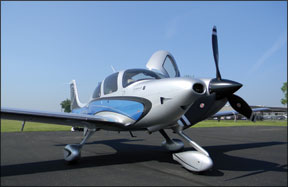
Cirrus SR22T G5: Fast, Efficient Traveler

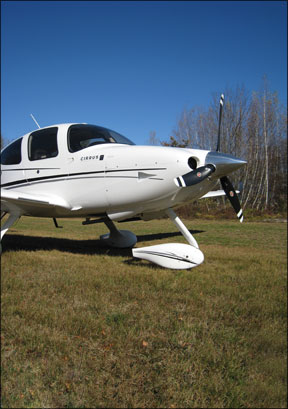
The fifth-generation Cirrus SR22 isn’t an entirely fresh model. Instead, it’s a compilation of advanced features and improvements that Cirrus has added to the aircraft over the past few years. Whether it’s the new paint and interior styling options, more advanced avionics that come standard, or the bold new gross weight increase, Cirrus’ dedication to improving and advancing the product line proves why the SR22 has consistently outsold every other certified piston single. As we go to press, production order slots for the new SR22 G5 are sold out we’ll into the fall of this year—encouraging in an otherwise declining aircraft sales environment. We recently visited Cirrus headquarters in Duluth, Minnesota, plucked a new SR22T G5 turbo model from the flight line and hauled it halfway across the country—a mission the aircraft easily delivers with comfort, efficiency and utility.

Read More »

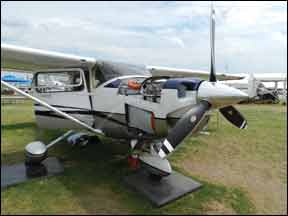
Cessna’s New Diesel: SMA SR305’s OEM Debut

If SMA’s Jet-A burning piston powerplant looked promising when it appeared in 1998, it soon became the little engine that couldn’t. A decade ago, interest in aerodiesels was lukewarm at best and SMA found no major OEM takers, either. But at AirVenture 2012 this year, Cessna’s announcement to offer the SMA diesel in the Skylane might finally get the SR305 out of the starting blocks. We knew Cessna was interested in diesel engines because two years ago, then-CEO Jack Pelton told us the company had tested all of the above-ground diesels, which included the Thielert and SMA offerings and we’re sure they at least examined the Austro and Delta-Hawk. Although it seems obvious why Cessna picked the SMA in hindsight, it wasn’t always that way.

Read More »

Cessna’s New Diesel: SMA SR305’s OEM Debut

If SMA’s Jet-A burning piston powerplant looked promising when it appeared in 1998, it soon became the little engine that couldn’t. A decade ago, interest in aerodiesels was lukewarm at best and SMA found no major OEM takers, either. But at AirVenture 2012 this year, Cessna’s announcement to offer the SMA diesel in the Skylane might finally get the SR305 out of the starting blocks. We knew Cessna was interested in diesel engines because two years ago, then-CEO Jack Pelton told us the company had tested all of the above-ground diesels, which included the Thielert and SMA offerings and we’re sure they at least examined the Austro and Delta-Hawk. Although it seems obvious why Cessna picked the SMA in hindsight, it wasn’t always that way.

Read More »

Tax Considerations: Biz Aircraft Deductions

With the 100 percent bonus depreciation rule in effect, 2011 was a good year to buy a new aircraft for business use. But to claim the benefits of the bonus, you need to get your filing details in order and not overlook the record keeping necessary to justify the bonus claim. Further, to avoid getting afoul of the IRS, it’s critical to understand what business use really is. As for 2012, the bonus will be 50 percent, but if combined with allowable expensing elections, you can still claim a sizable chunk of depreciation to reduce your tax burden and make the cost of a new airplane for business use more appealing than it otherwise might be.

Read More »

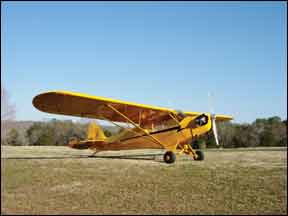
Three Cubs: New LSAs vs. the J-3

This thought experiment is irresistible: What if the clock were wound back 50 years and William T. Piper got a look at the modern crop of light sport airplanes that bear the name of his beloved Cub? Would he be pleased? Our guess is that he would not be, although Walter Jamouneau would be. Jamouneau was the engineer responsible for improving the Taylor E-2 and evolving it, eventually, into the J-3. Its not that Piper was a purist and would be offended by what the likes of Legend and Cub Crafters have done to his classic everymans airplane. Its because Piper was, above all else, a salesman and in his day, the $1325 price was what would make the thing sell (and did) and thus become the iconic conception of light aircraft.

Read More »

LSA Price Trends: Just Too High?

A brief query to the WABAC machine unearthed this gem on light sport aircraft from the Aviation Consumer archive: “Some think the combination of lighter, cheaper airframes and simpler pilot certification will yield a boom in private flying.” We think its reasonable to say that almost everyone thought this, but if you now think the boom sounds more like a faint squeak, you arent alone. The LSA groundswell has yet to form and judging by comments from our readers and video viewers, the cost of the airplanes has something to do with it. Maybe a lot to do with it.

Read More »

Aircraft Partnerships: Find the Right People

On the surface, co-owning an aircraft just makes sense. Most airworthy privately-owned light singles fly less than 100 hours a year-in many cases far less. Regular use is better for the aircraft and better for amortizing the fixed costs (hangar, insurance, databases) per hour of flight. More users should mean more bang for everyones buck. Unfortunately, several owners also mean more opportunities for conflicts in time, resources, flying style, opinion and even personality. Being connected to anyone by your checkbook can put a strain on the best relationship. There’s no magic formula for creating the right partnership. But our survey results hit the same key points with metronome-like regularity: Good partnerships have clear expectations between partners of similar economic standing, and they have written rules or bylaws to settle disputes.

Read More »

Tecnams Rotax Twin: Budget Performance

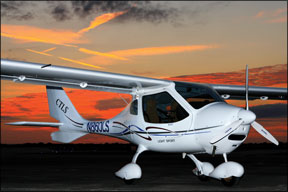
Despite being one of the bigger players in LSA market, Tecnam Aircraft isn’t we’ll known in the U.S. The company has actually been building aircraft and aircraft parts for over 60 years, and has 3000 aircraft flying worldwide. For comparison, Cirrus Aircraft and Diamond Aircraft have each delivered slightly over 4000 airplanes to date. Tecnam is reorganizing in the U.S. with a new website (www.tecnam.net), an expanding dealer and support network and a new aircraft: the Tecnam P2006T light twin. The P2006T (That name doesnt quite roll off the tongue, does it?) has specs more like a single than a twin. Its gross weight is only 2601-50 pounds more than a Cessna 172SP-and cruise speed is in the 140- to 150-knot range. The really novel item is that the P2006T sports two Rotax 912 S3 engines. The S3 is the certified version of the Rotax found in most LSAs. Each engine puts out about 100 HP.

Read More »

Cessna 162 Skycatcher: The Future Alpha Dog LSA

In the wildly edgy television series, The Wire, there’s a classic line for a would-be challenger: “If you come at the King, you best not miss.” Somehow, that seems to apply in the light sport market as a multitude of manufacturers wait and wonder what Cessnas going to do with its Skycatcher LSA. The wait part is over and the wonder soon will be. Cessna is now poised to deliver the first of its 162 Skycatchers by the end of 2009. During 2010, it will ramp up production to begin delivering the first of more than 1000 aircraft it says are on order. We got our first look and demo flight prior to AOPA Summit at Tampa, Florida, in early November. The aircraft presented to us what Cessnas Kirby Ortega called “P1,” or the first production compliant airplane. In other words, what you see is what you get, minus some wiring harnesses left over from last-minute testing. The airplane was built in Wichita, although the entire wing assembly-complete with control surfaces-was built at Cessnas Shenyang, China, contractor. The first production version flew in China in mid-September.

Read More »

Using LSAs for Travel: Practical But Not Perfect

Fuel prices may be in a momentary decline, but the handwriting is clear: The cost of owning even a fixed-gear, four-place single is slipping away from more and more pilots. Light sport aircraft (LSAs) are heralded as a possible solution, but what happens when you need to go several hundred miles? Are these “hobby planes” up to the task? The question isn’t whether you can travel in an LSA-people have taken ultralights around the world, so, of course, you can. The question is whether they have reached a level of utility close enough to a four-seat single that the tradeoffs are minimal and the gains are worth it. In our view, this analysis comes down to four things: comfort, efficiency (for both fuel and time), payload and adverse-weather capacity. We asked owners and operators for their thoughts and then put our findings to the test. One January afternoon, we borrowed a new Remos GX from Tommy Lee of Adventure Flight in Springdale, Arkansas, and took off for a meeting in Houston, Texas, just shy of 400 miles away.

Read More »

Late-Model Cruisers: Cessna, Cirrus Are Tops

It was the best of times, it was the worst of times. Were not talking about Dickens 19th century London, but last week in the used aircraft market. Its the best of times if youre looking for a late-model used aircraft of any kind, the worst if youre trying to sell anything for top dollar. Stated another way, if you made a note to yourself to start shopping for a used model with glass after theyd been on the market for five year, now would be a good time. The market is awash with good deals on recent model aircraft and many of them have full glass for under $200,000-the downward pressure on prices is obvious. High inventories and brokers willing to wiggle improve buying prospects.For this article, were focusing on entry level four-place cruisers, specifically the Cirrus SR20, the Cessna 172, the Piper Archer and the Diamond DA40 Star. There are even better deals in the step-up Cirrus SR22, but we’ll focus on that later. About five years ago, brokers we occasionally talk to surmised that as Cirrus, Cessna, Columbia (now Cessna), Diamond and others pumped new aircraft into the market, this flood of new airplanes would inevitably put downward price pressure on the used fleet. We seem to have crossed this dividing line, thus the used models that had been appreciating or holding their value, now no longer do. Values of older used aircraft havent yet paralleled the sort of depreciation thats standard for cars, but with fewer buyers, they simply don’t retain value as they once did. The trend seems to represent an unusually good buying opportunity for owners looking to upgrade to something newer. Some surprisingly recent model aircraft are selling for prices we wouldnt have dreamed of two years ago. For our purposes, “recent” means 1997 forward-thats the year Cessna came back into the market. Two years later Cirrus introduced the SR20, then Diamond rolled out the DA40 Star.


Read More »

SR20 vs. DA40 Cirrus Prevails

Cirrus Design and Diamond Aircraft Industries are success stories in this business because they took chances. Diamonds DA20 opened the door for composite aircraft in certified, light GA, and then Cirruss SR20 and Diamonds DA40 blew it wide open. But the first generation of both the SR20 and DA40 were just starting points. Cirrus is now on its third generation SR20 (G3) and Diamond has been selling its refined DA40 as the DA40 XLS and CS. Both aircraft make good choices if youre looking for a new, budget, four-seat single. If you think “new” and “budget” shouldnt rest in the same sentence, we hear you. But there are good arguments for buying new if you can, and not everyone in that category wants to drop half a million on a high-performance speed demon. We looked at the concept of budget from three angles: mission flexibility, aircraft efficiency and options to buy just what you need, but no more. In this hard light, the latest SR20 is tough to beat.

Read More »