










Cirrus Safety: Doing the Right Stuff

We have kept a close eye on the safety record of the Cirrus SR series since the beginning. Things weren’t so good at first—excellent training has paid off.

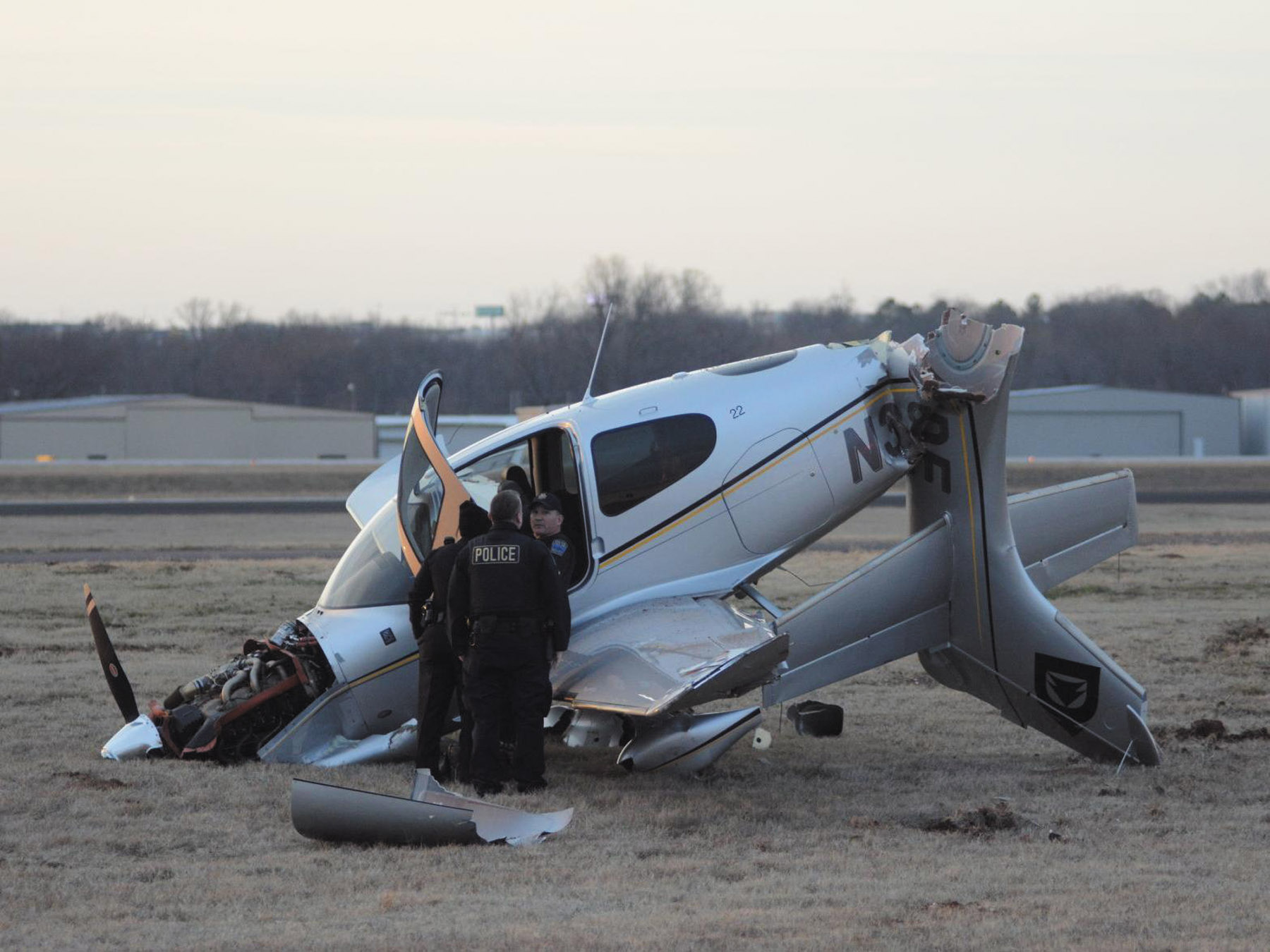
Cirrus safety - crashed airplane
Hardly a fair introductory photo, given that the accident rate for Cirrus aircraft has steadily declined. What is more important here is that the photo (NTSB) reflects the crashworthiness of the SR line. The cabin was not compromised during the impact sequence, despite forces strong enough to break off the empennage, and there was no post-crash fire.

Last year, (2024) there were more than 10,000 Cirrus (cirrusaircraft.com) SR-series airplanes in service worldwide. During that year, there was a grand total of six fatal accidents of Cirrus SR22s, also worldwide. Notably, there were no fatal Cirrus SR20 accidents reported anywhere in 2024.

When we tried to break that accident data down to a rate per 100,000 hours of operations—the typical yardstick for general aviation accidents—we ran into the issue that there is no definitive number for hours flown per year and Cirrus declined to give us the number it uses.

We saw data ranging from a low of a million hours for the fleet last year (about 100 hours per airplane, low considering that the SR20 is a popular trainer) to over 3 million hours, or 300 hours per airplane. Going with what we consider is a conservative number—2 million hours for the fleet—that gives a fatal accident rate for the SR series of less than 0.3 per 100,000 flight hours.

Of course the rate for the SR20 was zero per 100,000 flight hours for 2024.

With well over 8000 SR22s in service, and assuming 200 hours annually per airplane, the fatal rate for the SR22 works out to be on the order of 0.37 per 100,000 hours of flight operations.

Larry Anglisano photographed the 2020 Cirrus SR22T after flying it around New England. Our recent coverage of the 2025 Cirrus SR G7+ models—now standard with Garmin’s Emergency Autoland that Cirrus calls Safe Return—got us thinking about Cirrus safety in general. While we’re convinced that the new G7+ models have more safety backstop than any other GA piston-powered airplane, there are plenty of early-gen Cirrus models that don’t have as much tech built in.

McSpadden Report

We then looked at the AOPA Air  Safety Institute’s (www.aopa.org) McSpadden (formerly Nall) Report for accident data for the most recent year available—2022. That report showed an overall fatal accident rate for fixed- wing, non-commercial aircraft as 0.79 per 100,000 hours of flight—more than twice that of the SR22. It reflected an overall, slow decrease in the rate over the previous 10 years, with a high during that interval of 1.19 fatal accidents per 100,000 flight hours.

In our opinion, even allowing for a degree of uncertainty in the data, the aggressive approach that Cirrus Aircraft has taken toward user operational safety and training has been paying off. We also recognize the ongoing safety and training programs offered by the Cirrus Owners and Pilots Association (COPA) (cirruspilots.org) and Cirrus owners and pilots themselves to establish and remain dedicated to an overall recognition of the need for intensive initial and recurrent training and associated safety culture for all pilots flying Cirrus aircraft.

This happy state of affairs was by no means always the case. We’ll take a look back at the Cirrus accident history and what Cirrus and COPA have done over the years to see what has been effective in a continuing drop in the fatal accident rate.

An integral part of Cirrus initial and recurrent training is the use of realistic simulators. In March of this year, manufacturer ALSIM announced that it had just delivered the first two of its ALSIM ALSR G7 simulators to Cirrus for use in its Cirrus Training Centers (ALSIM photo).

History

When we at Aviation Consumer first reviewed the original Cirrus offering—the SR20—in 1999, we spent some time evaluating the crashworthiness of the design. We were struck that Cirrus had worked with NASA to do full-scale crash testing during development. We liked that the cabin had two doors to facilitate emergency egress and included a roll cage to protect the integrity of the cabin space, which would maximize flail space for occupants and reduce the risk of them hitting, or being hit by, the instrument panel or other cabin components.

Of great importance to us, there was no control yoke for the front seat occupants to hit during an impact sequence, only what Cirrus referred to as half-yokes—akin to sidesticks—that were not directly in front of those occupants. We thought that the new Cirrus line would lead to other manufacturers steadily getting rid of control yokes. That’s what we get for being optimistic. The seats were designed to absorb high impact and included specialized foam to attenuate vertical loads. Cirrus initially offered four-point, inertia-reel restraint systems for the front seats—it has since gone a step better with airbag seatbelts.

We liked that Cirrus had obviously done their homework on fire crashworthiness and so fuel was stored between the wing spars, well outboard of the fuselage. The fuel lines were behind the front spar, adding additional protection in the event of a crash. Finally, during a hard (or parachute) landing, if the gear flexed so far that it impacted the wings, it will be inboard of the fuel cells. Historically, good crashworthy design has meant fewer fatalities and serious injuries in impact events. As we read Cirrus accident reports over the years we noted that post-crash fires were relatively uncommon.

Stepping into an unknown area for us, we spent a lot of time learning about the Cirrus Airplane Parachute System (CAPS), a ballistic, whole-airplane parachute system that was pretty much unheard of outside of the ultralight aircraft world. We were unable to estimate the value of CAPS, but liked the courage to be innovative that Cirrus displayed. We came away from that visit to Cirrus and flying the SR20 feeling that CAPS gave a pilot a Plan D when things were going down the slot and the pilot’s Plans A, B and C hadn’t worked.

The latest iteration of the Cirrus SR22, the G7. With avionics more capable than many bizjets, cruising speeds over 200 knots in the flight levels and 310 HP up front requiring the ability to use the rudders during a go-around, checking out in a Cirrus is not a matter of a few trips around the pattern with someone who happens to be a CFI.

2004 Safety Review

Some five years later, in 2004, Aviation Consumer did an in-depth review of Cirrus safety, something we’ve continued to do periodically. At that time the overall fatal accident rate for the SR series (the SR22 had come out in 2001) was about twice the industry average of 2.6 per 100,000 flight hours. That was of concern to us, as well as to Cirrus when we spoke with its personnel. It seemed to us that they were determined to do something about it.

The fatal accident rate for the SR series dropped from that point—although, unfortunately, a lot of people saw the early numbers and never stopped claiming that Cirrus had a lousy safety record. It’s always been tough to live down an early questionable reputation in the general aviation world.

By 2013 the fatal accident rate had dropped to 1.01 per 100,000 flight hours, less than the industry average (which had also dropped) of 1.2.

At the time, we talked with Cirrus personnel who told us—and we agreed—that the accident rate improvement was due to major revisions in the Cirrus training curriculum and sizable emphasis on using the CAPS. We thought that the early fatal accident rate was a combination of a new design in the general aviation world, complex (although capable) avionics and field training that did not match the capabilities and demands of the aircraft and its potential missions.

In the early years it was not uncommon for pilots who were in a jam that could almost certainly be salvaged by pulling the CAPS to elect not to do so—and died.

Macho Factor

We expressed our concern about the macho factor when it came to CAPS use and pulled up some history from U.S. Army aviation in the early 1920s when pilots were issued parachutes but didn’t use them—concerned that they’d be labeled as chickens or inferior pilots if they couldn’t bring the aircraft back for a survivable landing. It took some intensive training and regulations with bite to them for Army (and Navy) aviators to use their parachutes when things went south.

The same thing happened in the late 1940s with the advent of the ejection seat. By then, the military had the training end of things figured out and fewer pilots rode disabled airplanes to impact.

Cirrus was up against the same issue with CAPS—only now it was increasingly in a world of social media where pilots and pilot wannabees were willing to skewer pilots who pulled the CAPS and saved themselves and their passengers.

We reviewed an accident where two pilots managed to spin a Cirrus into the ground from nearly 10,000 feet rather than pull the CAPS. We could just imagine the conversation in the cockpit as the pilots were unable to recover from the spin but still refused to pull the CAPS. “No, don’t pull, people will make fun of us.” We were sadly reminded of the not so funny fighter pilot line, “It’s better to be dead than embarrassed.”

Cirrus—and COPA—stepped up to the plate and created training programs emphasizing CAPS use. We heard “pull early and often” stated somewhat tongue-in-cheek, but the word began getting out, although an accident from a few years ago indicates there’s a way to go. An SR22 pilot experienced an engine power loss. He was talking to ATC, advised of the issue and refused to declare an emergency. He was vectored toward the nearest airport. When it became clear he couldn’t glide that far ATC asked if he were going to pull the CAPS. He said that he wasn’t and was going to land in a field. He hit trees instead and died.

Go-Around

By 2014 Cirrus was also emphasizing go-around procedures and skills. Especially with the higher-powered SR22, our review of accidents showed that nearly all go-around loss of control (LOC) accidents wound up with the airplane rolling left and crashing off of the left side of the runway. One in Lamoni, Iowa, was sadly typical: The pilot bounced the landing and decided to go around. Once he’d pushed up the throttle, the airplane rolled left until the left wing hit the ground. There were no survivors—there was a post-crash fire. Pilots were clearly not using enough rudder during a go-around.

During our 2014 conversations with Cirrus their personnel indicated that they were concerned about downstream training as the used aircraft market for Cirrus was hot. Being pragmatic, and in our opinion, creative, Cirrus developed the Embark program for buyers of used/pre-owned Cirrus aircraft.

While researching this article we spoke with Rob Haig, Cirrus’ vice president of flight operations and chief pilot. He described how Cirrus initial training for new owners and Embark for buyers of used Cirrus aircraft has evolved as Cirrus learns from users what they need and constantly reviews accident data to spot trends that can be addressed. As we have seen accident reports involving buyers of used Cirrus aircraft crashing not long after having received a “checkout” from a CFI that has not received specialized Cirrus training, we think the money Cirrus spends on Embark is well worth it.

Embark

The Embark program is free to pilots who qualify. The buyer of a used Cirrus SR-series airplane who enrolls in the program is provided access to the Cirrus Approach Learning Portal—a massive library of Cirrus specialized training material. Once enrolled the buyer has two months to complete flight training with an authorized Cirrus training partner—generally a Cirrus authorized training center or Cirrus Standardized Instructor Pilot (CSIP). Training lasts as long as three days, is done in the owner’s aircraft and follows a strict syllabus that is focused on introducing the pilot to the aircraft. One pilot per airplane may take the complimentary course.

We observed that by getting the new Cirrus pilot tied into the Approach portal, the pilot has time to review meaningful information at her or his own rate and thus maximize the value of the pilot’s time with a specialized instructor.

Haig told us that the company has found that training is most effective for pilots who “buy into” the program. He said that Cirrus strives to create a system where pilots want to get involved because many people have noted that pilots who are involved with training, social activities connected with their aircraft and the owners association, COPA, have a lower accident rate than those who don’t get involved.

Accident Causes

As we prepared this article, we looked for commonality between Cirrus accident causes. Not surprisingly, for non-fatal accidents, they are primarily landing-associated. A Cirrus is not hard to land; however, extra speed on final is not a Cirrus pilot’s friend. Touching down fast, flat or on the nosewheel often leads to pilot-induced-oscillation. Cirrus recognizes this and emphasizes it in training.

For fatal accidents, the big hitters continue to be engine power loss, VFR into IMC and, for the SR20, spins. Pulling the CAPS can, in our opinion, turn those from fatal to minor or no injury accidents, and our review of accident reports leads us to the conclusion that one of the reasons that the Cirrus fatal accident rate has dropped to its current low level is because of the good training that is provided for CAPS use. While we still see fatal accidents where we think a CAPS pull would have saved the day, the number has decreased.

Conclusion

As we’ve followed Cirrus safety for some 20 years, we are of the firm opinion that the training provided by Cirrus and COPA is responsible for the drop in fatal accident rates and that the efforts that Cirrus and COPA have made to make training attractive and as painless as possible for Cirrus owners have resulted in more of them taking initial and recurrent training, which has kept more of them alive.

Rick Durden

Senior Editor Rick Durden has written for Aviation Consumer since 1994 and specializes in aviation law. Rick is an active CFII and holds an ATP with type ratings in the Douglas DC-3 and Cessna Citation. He is the author of The Thinking Pilot’s Flight Manual or, How to Survive Flying Little Airplanes and Have a Ball Doing It, Vols. 1 & 2.