










Register

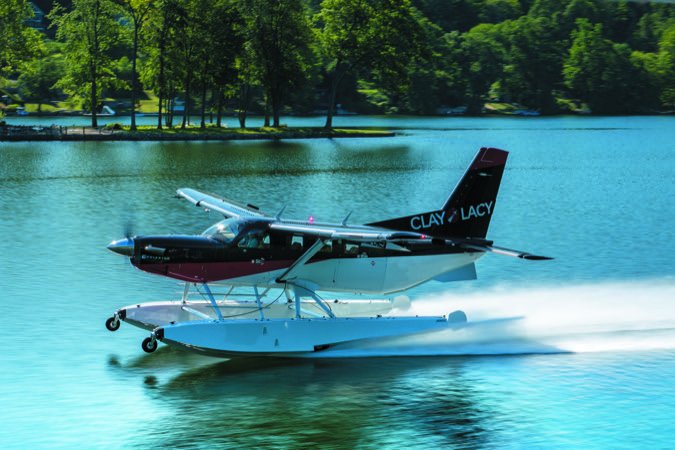
Quest Kodiak Series II: A Workhorse Refined

A clean-sheet design with STOL capability, the Kodiak initially catered to humanitarian groups that needed to get in and out of tight and unimproved strips. It carries a sizable payload (upward of 3500 pounds and roughly 2500 with floats), seats up to 10 people and most important, it runs on Jet-A for operating in places where 100LL is impossible to get, and of course to up the ante in reliability and operating simplicity. Quest chose the 750-HP Pratt & Whitney PT6A-34. It has a 4000-hour TBO-which at the time was the most widely produced single-stage variant of the PT6A-making worldwide field support even easier.

Spend a short time with a Quest Kodiak 100 on the ramp and inevitably someone will call it a Cessna Caravan. Granted, they’re both PT6A-powered high-wing haulers that stand tall and burly, plus they can both carry water floats and cargo pods. But look more closely (better yet, fly it) and it’s obvious the Kodiak is unquestionably its own airplane.

The latest Kodiak 100 Series II has a change in personality from earlier versions, which in my view lacked some refinements that buyers expect in an airplane that’s north of $2 million, and closer to $3 million when equipped with the Aerocet two-piece carbon fiber amphib floats. That’s the configuration I spent a day flying off the pavement and the water for this report.

Larry Anglisano

Editor in Chief Larry Anglisano has been a staple at Aviation Consumer since 1995. An active land, sea and glider pilot, Larry has over 30 years’ experience as an avionics repairman and flight test pilot. He’s the editorial director overseeing sister publications Aviation Safety magazine, IFR magazine and is a regular contributor to KITPLANES magazine with his Avionics Bootcamp column.