











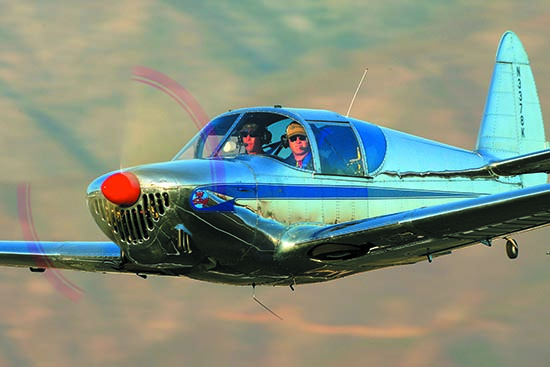
You flew a Diamond DA-40 Star because it has a stick and superb handling; you took aerobatic instruction because you wanted more than just plain vanilla aviating. Now you’re thinking hard about focusing on an airplane that is outside the mainstream—vintage, antique, dedicated aerobatic machine or a warbird—but you’re unsure where to start and how far you can realistically go. Can you get insurance if you buy something that is rare? Can you find someone who can give you a solid checkout? Will you be able to find someone to maintain it? Are there parts available?
For the sake of convenience we’re going use the term “vintage” to refer to anything outside of the mainstream of nosewheel, civilian airplanes built after World War II. That includes any aircraft built before late summer 1945, all warbirds—aircraft that were used by the military (including civilian models bought off-the-shelf)—and all tailwheel aircraft. Yes, that’s a big hopper, but we’re going there because these aircraft either require more skill to operate than non-vintage machines or are more challenging to maintain or are more difficult to insure or are types the public will pay money to see on display or flying in airshows or some or all of the above.