











It seems safe to say there is something of interest to everyone at the annual Consumer Electronics Show (CES), and over the past several years, the wares on display increasingly have attracted aviation and personal-mobility enthusiasts.
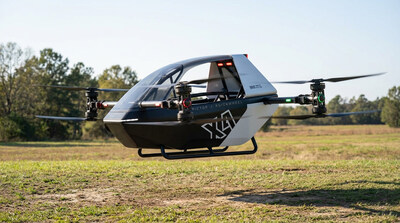
This year’s airborne object of desire January 6-9 in Las Vegas was the Rictor X4—an electric vertical takeoff and landing aircraft that the manufacturer calls the first “hop-on-and-take-off” ultralight eVTOL.
Less Regulation
Because of its ultralight status under the FAA’s Part 103 regulations, the single-seat rotorcraft, with a planned launch price of $39,900, could be flown without a pilot’s certificate or airworthiness certification.
While such an apparent lack of stringency might make the aircraft seem excessively risky, its intended audience, including young, budget-conscious recreational flyers, often outside the general aviation mainstream, sees the possibility of affordable freedom.

“Our goal is not to compete with giants in the complex manned aviation track, but to pioneer a completely new, accessible market for ‘light aerial mobility,’” said Liu Feng, CEO of Rictor parent company Kuickwheel Technology. “The X4 rivals the private aircraft of high-end enthusiasts, but we’ve made it radically more affordable and simplified its usage.”
Familiar Design
The X4 uses eight propellers paired in a four-axis configuration that is familiar to remote-control drone enthusiasts. The design is meant to maximize payload, which is about 220 pounds, while maintaining sound levels of less than 65 decibels.
A proprietary algorithm adjusts power to the aircraft’s eight motors to counter wind disturbances and maintain stability. A redundant battery system allows safe landings in the case of battery failures. The X4’s propellers and airframe fold to fit into a typical pickup truck bed.
Simpler Approach
While numerous flying car and eVTOL prototypes and concepts have appeared at CES during the last few years, from companies including FlyNow Aviation, DTA Aircraft, Pivotal, and others, they tend to be larger, and more complicated and expensive than the X4. Some models have hybrid power systems, carry two people, and are expected to have six-digit prices. Their endurance and range take them far beyond the X4’s expected flight duration of 20 minutes, but they appeal to a different audience.
Rictor, a longtime maker of electric bicycles, scooters, and related equipment, said it has focused on keeping the X4 as simple and accessible as possible. The company is taking $5,000 deposits from prospective buyers and plans to begin deliveries during the second quarter of 2026.