











Do your friends snicker because you fly a Mooney and that turbine bully on the runway blasted gravel into your pitot tube? Feeling a little puny? Cant bear another flying season as the butt of jokes from real pilots who fly real airplanes?
Get your chin up off the runway and put your tail in the grass, because aviation gratification is just sixty grand away when you claim a new or recent model taildragger. Theyre out there: The American Champion line, Maule, Aviat Husky and the sort of new but still wildly expensive Cessna 180/185 or Piper Super Cub.
Most of these models are generally thought to be utility airplanes and they are that. But they also qualify as high-priced fun flyers for pilots bored with the white bread world of nosewheel airplanes. (For the cheaper spread, see our first report in the June Aviation Consumer.)
Super Cub
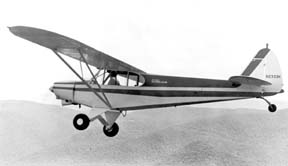
Like a small fortune, the Piper Super Cub is an oxymoron. But the fortune applies if you want to enter the Super Cub elite. The Cub began its run in the Roosevelt administration; Eleanor even flew one. Eventually, its power was upped to 150 HP (Lycoming O-320) with a Sensenich fixed-pitch propeller and that remained the engine for the rest of its production run.
Conversions exist for larger engines, but its the rugged simplicity of this airplane that draws notice. The airplane changed little over the decades. Later models built in Vero Beach, when Piper was writhing in its death throes, were prone to corrosion that appeared in the steel tail tubing. Thats not an uncommon ailment in older taildraggers, but corrosion also appeared in wings, where its generally less likely.
Piper flirted with the much-maligned Blue River covering process which is basically Ceconite with water-based latex. By itself, it cant be blamed for the corrosion problems but a batch of poor quality steel tubing reportedly added to the problem.
Production sputtered to a stop in the 1980s along with the rest of general aviation, but the PA-18 was still in demand. Super Cub production limped through the early 1990s on a special order basis but finally petered out. A total of 8500 were built.
Like older Cubs, the Super Cub is highly prized and brings big prices. Even in the worst of times, Super Cubs have spiraled up in price if not value. Finding a Super Cub under $40,000 is a trick-expect high airframe times or the smaller engines with the lower price. Lots of good ones list in the $50,000 to $60,000 range. A like-new 180 HP Super Cub commands $125,000, while low-time stock 150 HP models sell for $105,000.
Haul Away
The Super Cubs job is to haul heavy stuff into rough neighborhoods. From Alaska to Zanzibar and all the letters in between, the Super Cub with its fairly wide CG range, carries two 170-pound people, 36 gallons of fuel and still has about 250 pounds left over in the useful load.
STCs are in the works to up the gross weight from 1750 pounds to 2000 pounds, a limit thats been ignored so often its almost academic. Without the FAA looking, and often when they are in jaw-dropped amazement, Super Cubs have operated at gross weights in excess of a ton, which is one of the reasons so many have cracked up over the years.
The pilots usually live to tell about it-and to sue Piper-which may be why the model doesnt appear on New Pipers product list, although the company still supports it. Better sources for Cub parts are Univair (888-433-5430) or Cub Crafters (509-348-9491). The Cub Crafters number will get you Jim Richmond of the Super Cub Pilots Association, a source of Super Cub lore.
Hauling isn’t everything; an airplane has to please the pilot to become a legend and the PA-18 has devoted, almost fanatical, followers. Theyve proven it can land on the side of a mountain, ice floes or over a lumpy hay field in Nebraska. To beat a Super Cub in a short field takeoff contest, you’ll need to get off the ground in fewer than 30 feet.
Throttled back and quiet, it allows the pilot to enjoy a summer sunset without drinking a fortune in avgas. The reliable Lycoming O-320 (and O-360) engine can even burn mogas. STCs are available through Peterson Aviation (308-832-2050) or EAA (920-426-4843). If youre looking for cross-country speed, the Super Cub is not the airplane for you. The Cub is loaded with lift and by every owners account a delight to fly. But Cubs are not fast. If you want Cub discomfort yet a good cruise speed, try the Aviat Husky.
Husky
The Aviat Husky, an airplane certified in the 1980s, looks like it was designed 50 years earlier. Its a tandem, stick-and-rudder two seater thats fairly fast but with a poor useful load. On the positive side, a new one costs the equivalent of three used Cessna 172s. The 1998 base price of the A-1A Utility is $104,485.
The major difference between the two models (A-1 vs. A-1A) is a higher gross weight in the A-1A. Get past the sticker trauma and you’ll find an airplane thats a giggle to fly and its clever design makes for easy routine maintenance, although we wouldnt say cheap.
The Husky was designed by Frank Christensens team (of Christen Industries fame; now Aviat) and is built in Afton, Wyoming, home of the Pitts factory. The Husky shamelessly copies some of the looks of the Super Cub. Theyre both all-metal airframes covered in fabric and both climb almost as fast as their prices. But thats about where the comparison ends.
The Husky has the venerable 180-HP Lycoming O-360 engine swinging a two-bladed Hartzell constant speed. Those ads showing the Husky blasting off almost vertically don’t stretch the truth much. However, until you get the hang of flying a STOL-type aircraft, the Husky wont seem to want to come down. Convincing a former Cherokee pilot to slow the airplane to abnormally slow approach speeds (55 MPH, Vso is 44 MPH) is a challenge. The Husky wants to land and turn off in just about the same spot. With 30 degrees of high-lift slotted flaps that produce more lift than drag and spades to boost aileron effectiveness right through the stall, the Husky can be safely flown at 50 MPH.
Its such a sturdy airplane, you wont be shy about dropping it into a rough field. With all that short field ability, youd think that it would sacrifice speed at the top end. It doesnt. The Husky is fast. Not Mooney fast but considerably faster than the Super Cub. Plan 130 MPH at 65 percent power and 9 GPH. With 50 gallons of usable fuel, it has decent range.
Unfortunately, without room to stretch, you might not tolerate the cabin long enough to burn the gas. (The seats arent adjustable, except for seat cushion thickness.) Leg room is awful, in our view. The firewall is right in front of the rudder pedals, so you cant stretch out, although backseat comfort is better and headroom isn’t bad. Cabin heat in the front is good, but by the time the heat wafts to the rear past all the various leaks, there isn’t much left. Like most taildraggers, over-the-nose visibility from the backseat is poor. Front seat forward visibility on the ground is fair, in our opinion.
Dual controls (stick, rudder, brakes and throttle) are standard. However, propeller control, mixture, carb heat, flaps, radios, starter switch and fuel selector are accessible from the front only. CFIs wont like the prop control and flaps up front. Too bad; the Husky wasnt designed as a primary trainer.
The trim wheel is on the left side under the pilots armpit, accessible to either pilot but somewhat awkward, particularly when wearing heavy clothing. Turning the wheel changes tension on a bungee which alters stick position.
Instruments are compacted into a small panel, leaving little room for radios or knees so radios have to be stacked under the panel. Instruments add about 20 pounds of unwelcome weight. Fuel gauges are simple to the point of amusing. Two clear plastic hoses poke out of the two wing tanks and are looped through the cabin. Its crude yet accurate; you see no gas/you got no gas.
Plow Horse Handling
The Husky flies like a spirited plow horse. Butchered metaphor aside, there’s a lot of wing, with drooped tips. Ailerons are controlled by cables that snake up the struts like on an old Cub. The ailerons are boosted by spades, so roll rate is positive, but not light. Rudder is effective even in crosswinds and at slower speeds.
The Husky has a demonstrated crosswind component of 15 MPH. Since it can land in less than 300 feet, you can usually create your own runway into the wind. We found it well-behaved in crosswinds, if a bit heavy in pitch. Touch and goes will keep the students left arm busy with throttle, prop, carb heat, microphone button, trim, flaps-all with the left hand. Lazy pilots need not apply.
Aviat supplies a modest POH that resembles a last-minute high school term paper but a nice cover so it earns a C+. The accompanying Lycoming performance manual was reprinted on a cheap copier and rates a D. If you want reading material, buy a Mooney. Then again, the airplane is so simple you can figure it out on the first trip. Manuals just take up useful load, of which the Husky-despite its moniker-has little.
Frankly, this airplane cant haul sea shells to Shinolla if you fill the tanks. Gross weight in the A-1 is 1800 pounds-50 pounds more than a Super Cub. The 1998 A-1A has upped the GW to 1890 pounds. Equipped with EDO 2000 floats, the Huskys GW climbs to 1980 pounds but the empty weight gets pulled up as well, so useful load doesnt improve.
Our A-1 test airplane had an equipped empty weight of 1297 pounds, leaving 503 pounds for fuel, people and bags. Throw a 200-pound pilot up front with full tanks and youre done. If you have dreams of flying onto the marge of Lake LeBarge with your sled dogs and shootin iron, the Husky cant legally do it. Advice: If hauling is important, get a Maule or a Cessna 180.
Being an in-the-field kind of machine, the Aviat engineers designed in access panels everywhere. The entire cowling comes apart in sections held in by screws and winged Camlocs. Smart thinking continues with a nose bowl that comes apart in two pieces. A+ in that department. This airplane can be field stripped by a pilot wearing mittens and using a Swiss Army knife. The floor is wood painted black. Get it muddy? Clean, sand and repaint. Nice.
Brakes are a little too good for tailwheel pilots accustomed to older worn out binders. Flying solo from the front, the pilot needs to be aware of the Huskys usual forward CG. A slam-it-on, lock the brakes touchdown can lift the tail off the sod. If buying a used Husky, check for prop strikes. Once on the ground, however, the Husky is quite stable.
Aviat paid close attention to the cover job. The buyer can choose either urethane or butyrate dope fabric finish. The factory finish was superb. Rigging, however was off a bit and we needed constant right rudder in all maneuvers. The dealer-unaware we would evaluate the airplane for publication-was quick to correct the discrepancies and owners report generally good customer service.
Champion Line
Two ways to build an FAA-approved airplane: Design it yourself and get it certified or buy someone elses certificate (and liability) and start building. The Aeronca Champ is an example of the latter.
For 50 years this two-seat, tandem, easy to fly taildragger wandered from one foster factory to another, renaming itself along the way. Modern derivations include the beefier Decathlon and the workhorse Scout. Today, all the 7- and 8- series Champ/Citabria type certificates are owned by American Champion of Rochester, Wisconsin. (800-223-9381)
Using the same fuselage master jigs from the original 1945 7AC Champs of the 1940s, the factory turns out three Citabria models: the Aurora, Adventure and Explorer, plus the Scout and Super Decathlon. The basic Champ-like fuselage, with modifications, is the foundation upon which the customer has the choice of hanging several engines and lots of options. Wing dimensions also change among models.
All the American Champion series are two-seat taildraggers of aerobatic ability, except the Scout, which is utility. The smallest is the Aurora; base price $59,900, powered by Lycoming O-235 118 HP engine blessed with a 2400-hour TBO. This is the basic 7ECA Citabria we all fell in love with in the 1960s, except now it has metal spars instead of wood.
Performance is modest: 116 MPH with a useful load of 500 pounds. With full fuel, not much is left for humans, radios and baggage but it carries a little more than the Husky for a little more than half the price.
Strap on a Lycoming 160-HP O-320 with a fixed pitch propeller and youve got either the 7GCAA Adventure or the 7GCBC Explorer. The Adventure, with a base price of $66,900, is $3000 cheaper than the Explorer. For less money you get a foot less wing. Both carry 35 gallons of fuel, but the cheaper Adventure gives better cruise speed: About 135 MPH versus 131 MPH. Prices quoted are from the factory without options. Adding spades, radios and whistles you should be able to stay under the $100,000 mark for the Explorer.
Also, the longer winged Explorer sports flaps, while the Adventure doesnt. One Citabria instructor we flew with noted that the flaps arent particularly effective anyway, so they arent missed.
The Explorer has a significantly higher gross weight-1800 pounds-than the Adventure at 1650 pounds, although the company has applied to the FAA to up the Adventures gross weight. Useful load for the Explorer is 600 pounds; for the Adventure it currently drops to a relatively useless 475 pounds, which would discourage bringing an instructor larger than a child along for lessons. In all Citabrias, two pilots with parachutes quickly hit the weight and aft CG limits.
We queried several aerobatic instructors about this loading dilemma. The consensus: If you do weight and balance computations, you’ll never fly. To further stir the pot, those weights are based on a bare-bones aircraft. Add lights, radios, glider tow hooks, belly pan, intercom, spades, ELT and your useful load becomes grim.
But then you can whip out the checkbook and upgrade to either the Super Decathlon (8KCAB-180), base price $88,900 or the Scout (8GCBC-180), base price $86,900. Whats the difference? The Super Decathlon, with its inverted fuel, makes its living upside down. The Scout earns its keep dropping into short rough fields.
We test flew a well-equipped 160-HP Explorer. To operate in the aerobatic envelope, we could only take 15 gallons of fuel. We were under gross but pushed the aft end of the CG envelope. First off, the seat comfort is extraordinary and the front is adjustable. Visibility is excellent from the front, fair from the rear. Large side windows and the optional sunroof helped. Cabin heat was adequate on a 60-degree day.
Solo is from the front seat only where mixture, radios, flaps and trim are located; not a good arrangement for instructing. Combined with the welded steel tubing fuselage, tight door and window fits give the impression of submarine security; the cabin needs better ventilation. A quick release on the door (accessible only to the student up front) allows for the ultimate exit in case of emergency.
As much as we loved the seat comfort, it was dispelled by the rear sticks proximity in the full aft position to the instructors-how to put this-primary determination of gender area. What were the factory people thinking here? We asked and they said the FAA requires a 1-inch clearance between the rear stick in the full forward position and the back of the front seat when its in the full aft position.
In order to get the rear joystick into the full aft position-a fairly important task-the rear passenger or instructor has to inch up the seat back or take it in the groin. An unannounced snap roll could snap the rear guy unconscious.
Discomfort aside, this stick arrangement has contributed to one accident where a pilot strapped a briefcase to the rear seat then on landing couldnt get the stick all the way back and ended up flipped over on the ground.
A Champ with Guts
The Explorer flies like a Champ with more power. Acceleration was quick and the takeoff roll was easy to control but the throttle was stiff and lacked positive feel. Compared to older Champs, the rudder is heavy and we could feel some slipping turns. Elevator, on the other hand, is feather light, as were the spade-equipped ailerons. In short, flying qualities were delightful.