











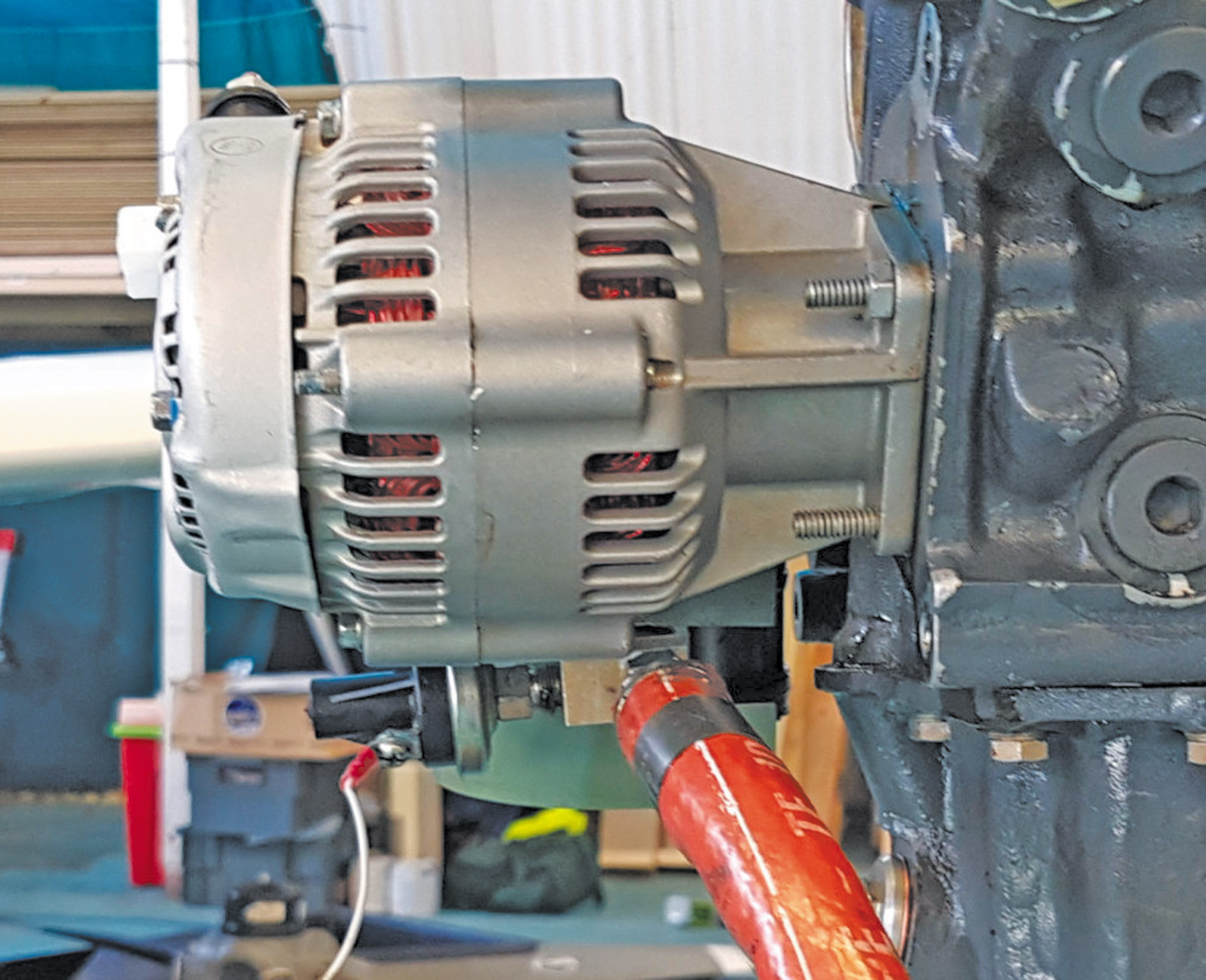
Yes, it’s a good news, less-than-good news situation. The good: If you fly IFR in a big-engine single and are concerned about keeping the electrical system alive for longer than any available batteries will live after the alternator gives up the ghost, there is probably a standby alternator retrofit for your airplane. While you may still have to do some electrical load-shedding, we think that’s a great thing.
We’ve lost alternators in VFR and IFR and, especially out West, have been amazed at how slow the airplane suddenly becomes when trying to divert and shoot an instrument approach before the available battery backup(s) also expire.
The less than good: If you fly IFR in other than a big-bore single, there is currently not an option to install a standby alternator but we’re hoping that changes later this year. The system that can be installed on smaller-engine singles that was on the market for many years stopped deliveries about four years ago, but it’s looking like deliveries may resume in the fall.
The Good
We fly IFR. We like standby alternators when in the clag and we cheered when aircraft manufacturers started offering big singles with two alternators some years ago.
We like it that there are standby alternators available at all—and while we wish there were more retrofit options—we like the systems that are on the market and think that they are well thought out and designed. In service, pilot workload is minimal, but the pilot still needs to know the standby system. We’re aware of one accident—fortunately not serious—that came about because of pilot ignorance. He didn’t turn on the standby alternator switch on engine startup nor when the primary alternator failed. When he ran the battery flat, he couldn’t get the gear down. He didn’t even try to manually extend it. We like to think that the standby systems are pretty much foolproof, but fools are so ingenious.
We note that the standby alternator will not put out as many amps as your primary—so you are going to have to load shed. We recommend preparing a checklist for what needs to be shut down—it will give you something to do while the kit is being installed. You don’t want to run the battery flat because you didn’t load shed when relying on the standby system.
Before you buy, make sure that the kit can be installed on your particular airplane. A chat with your A&P and the kit manufacturer should answer the question quickly.
We’ll look at the kit makers in alphabetical order—just because.
B&C Specialty Products
The big dog in the standby alternator world is B&C Specialty Products (www.bandc.com) based in Newton, Kansas. It’s been making standby systems for certificated systems since the 1990s and theirs are standard equipment on a number of new singles.
If you own a 1958 or later Bonanza, L-, M- or N-model Cessna 210 or T210, or one of the Piper PA-32 series (6, Lance, Saratoga), whether with a 14- or 28-volt system, B&C offers a 20-amp standby alternator kit for you.
We found that B&C is quite willing to work with owners of other model aircraft to see if there is a way to obtain field approval for a one-off installation. In our opinion, if you want a standby alternator, it can’t hurt to ask B&C simply because they have over 30 years of experience and may be able to tell you if it can be done or you’d be wasting your time and money to try.
B&C’s kits vary slightly by aircraft and the complexity of the electrical system but, in general, mount the standby alternator on an engine accessory drive pad. It is then wired into the aircraft electrical system with appropriate switches and circuit breakers installed on the panel.
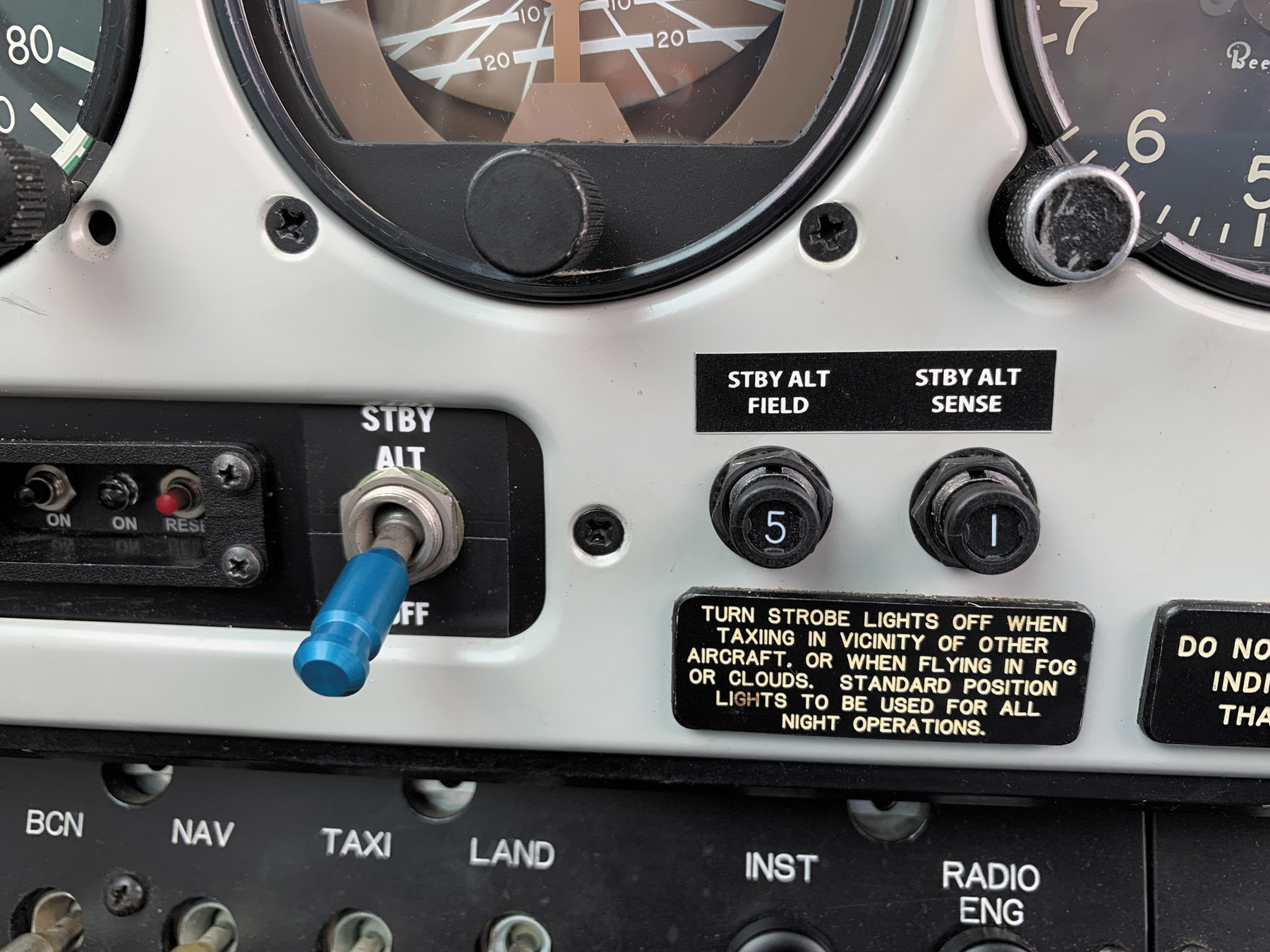
Operation is simple—during engine start the pilot turns on the alternator and standby alternator. That’s it. The standby system monitors aircraft bus voltage, signaling its operation to the pilot via a panel-mounted annunciator light. Should the alternator go on holiday, the standby system senses the bus voltage drop and activates.
At that point the odds are that the electrical load will exceed the 20-amp capability of the standby alternator and it’s time to shed some of the load using the checklist you prepared. You did prepare it, right? To let you know whether you’ve shut off enough stuff, the annunciator light will flash until the load is at 20 amps or less. The system is robust enough to withstand five minutes of over 20-amp load without damaging the standby alternator.
• Price for B&C’s Bonanza standby system ranges from $3750 to $4870, depending on accessories needed for the particular airplane, particularly those with electroluminescent switch panels. Those with mechanical air conditioning may require that the compressor mounting casting be modified for clearance with the standby alternator. That requires that the bracket be removed, all hardware removed from it and the collection sent to B&C for modification.
The kit includes a STBY ALT ON annunciator, two standard pull-type circuit breakers—1 amp and 5 amp—STBY ALT field toggle-type switch, alternator gasket, alternator field connector, current sensor, wire, terminals, clamps, placards for each panel-mounted device, miscellaneous hardware, installation instructions and flight manual supplement.
• Price for the Cessna 210 system is $3750. The standby alternator is mounted on the right-hand accessory drive pad to allow throttle linkage clearance. That is where the vacuum pump is normally mounted. If it is not to be discarded, it must be moved to the left-hand accessory drive pad. The standby alternator controller/regulator is mounted behind the interior panel near the pilot’s left leg.
The kit grew out of the one for the Bonanza and contains many of the same components, modified as needed for the 210.
• Price for the PA-32-series system is $3650. We note that B&C’s website says that the 28-volt system is currently unavailable.
In looking at the website, we found that the standby alternator system can be mounted on almost all of the PA-32 series, but not all, such as the turbocharged aircraft with the TIO-540-S1AD engine. Make sure that the serial number of your airplane is included for the available mod on B&C’s website.
On some engines a Lycoming hydraulic pump drive adapter must be purchased separately and installed on the accessory case—and becomes the new home for the vacuum pump. On some engines the accessory case is removed and an accessory drive gear installed for the standby alternator so the vacuum pump need not be moved.
As may be obvious, we cannot estimate the time involved to install a standby alternator kit. For the PA-32 series, we recommend a call to B&C to determine precisely what will be needed to install a kit on your airplane before you make a purchase.
We were told by B&C that the time for a basic installation starts at 10 hours.
Freedom Aviation
Based in Lynchburg, Virginia, Freedom Aviation (www.standbyalternator.com) sells a standby alternator kit for four Cessna models, the 182T, T182T, 206H and T206H. While its website says that the kit is for G1000-equipped aircraft, we were assured by Freedom Aviation that it is approved for the pre-G1000 aircraft as well. That matches what the company’s impressive website says.
Freedom’s standby alternator system is strikingly similar to that of B&C’s and uses a B&C-built 20-amp alternator. It mounts on an accessory pad on the Lycoming engine—however, before buying, make sure that there’s a gear under the pad.
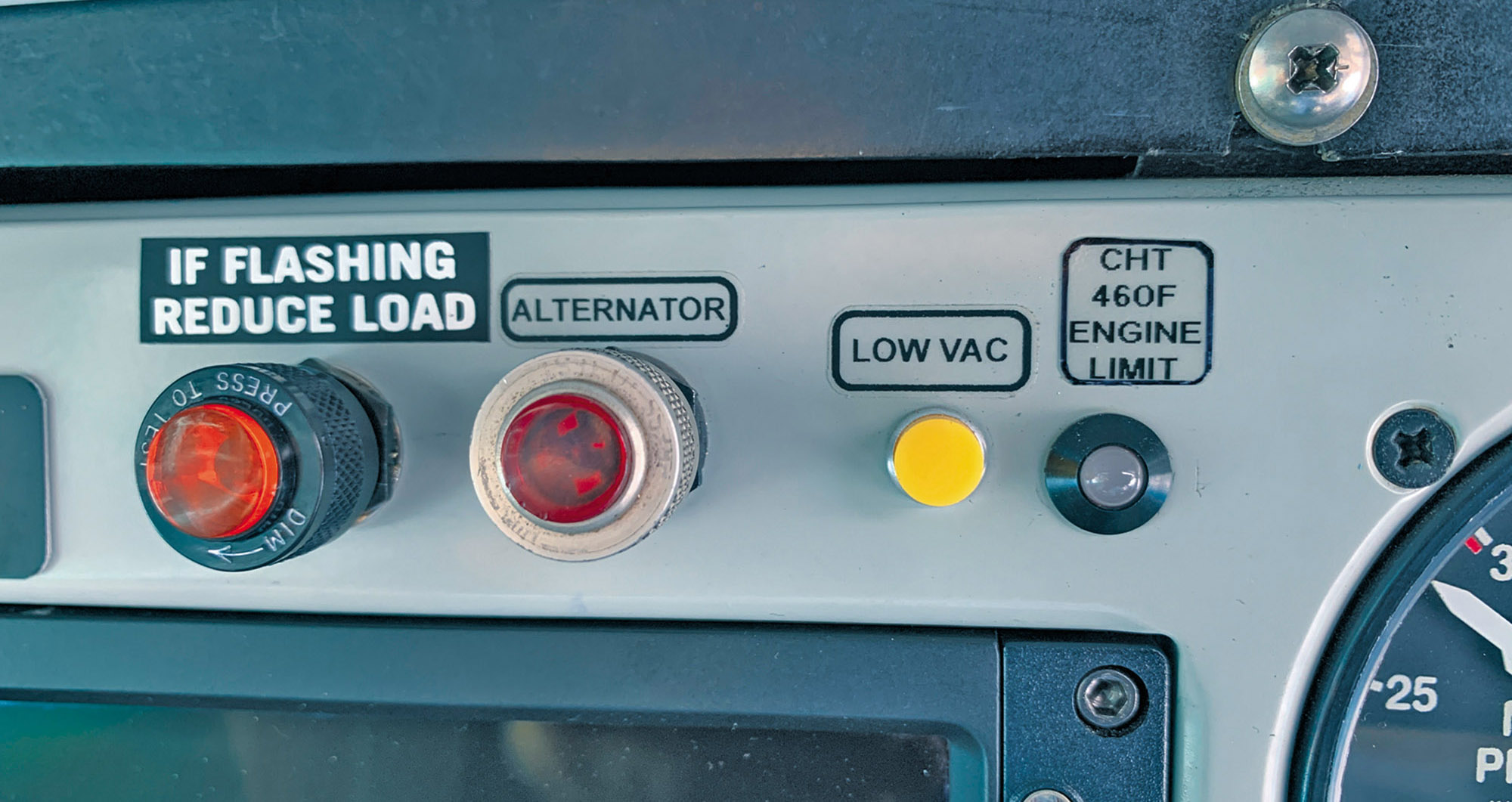
The system includes a voltage regulator and switches, circuit breakers and annunciator lights. As with the B&C system, the standby alternator is turned on at engine start. The system runs in the background and activates the standby alternator upon detecting the voltage drop associated with a primary alternator failure.
It also has a flashing light to alert the pilot to reduce electrical load to below 20 amps.
Price for the kit is $4995. We were advised by Freedom that the first time a shop does an installation it takes about 15 hours. After that it drops to 10.
We were impressed with the amount of information on Freedom’s website. It explains the system clearly and provides the STC, AFM Supplement, Instructions for Continued Airworthiness, installation instructions and a detailed system drawing.

The Less Than Good News
In about 1991 company called Basic Aircraft Products (www.basicaircraft.com) developed a ram air turbine (RAT) that folded out of the fuselage of an aircraft, spun up in the slipstream and powered the electrical system (load-shedding required). About 1200 were sold before the founder passed away in 2021, production stopped and the company changed hands.
We have been in touch with the new owner over the years as he’s worked to resume production. During our most recent email exchange he said that the company had been wrestling with the fact that because the system originally came out last century, some components are no longer available. They are currently redesigning and updating the circuit board and they hope to resume deliveries near the end of this year.
We’re mentioning this in the less-than-good news section because the Turbo Alternator was available for several smaller singles than can’t use conventional standby alternators, we think the RAT idea has great merit—it’s been successful on jets—so we recommend anyone interested keep checking to see if the product line is resurrected.
Conclusion
We like the standby alternator options offered—we wish there were more. We like the content richness of Freedom Aviation’s website—it’s a good example for the industry.
We’re hoping that the Turbo Alternator becomes available again. We think that they are a sensible design for getting out of trouble should an alternator fail and they can be mounted on a lot of different airplanes.
We’ll be watching.
Be Kind to Your Alternator
We like that we’re getting reports of alternators lasting well beyond an engine’s TBO, sometimes twice as long. We’ve been pleased to watch reliability steadily improve—it’s one of those unsung bits of good news for aircraft owners.
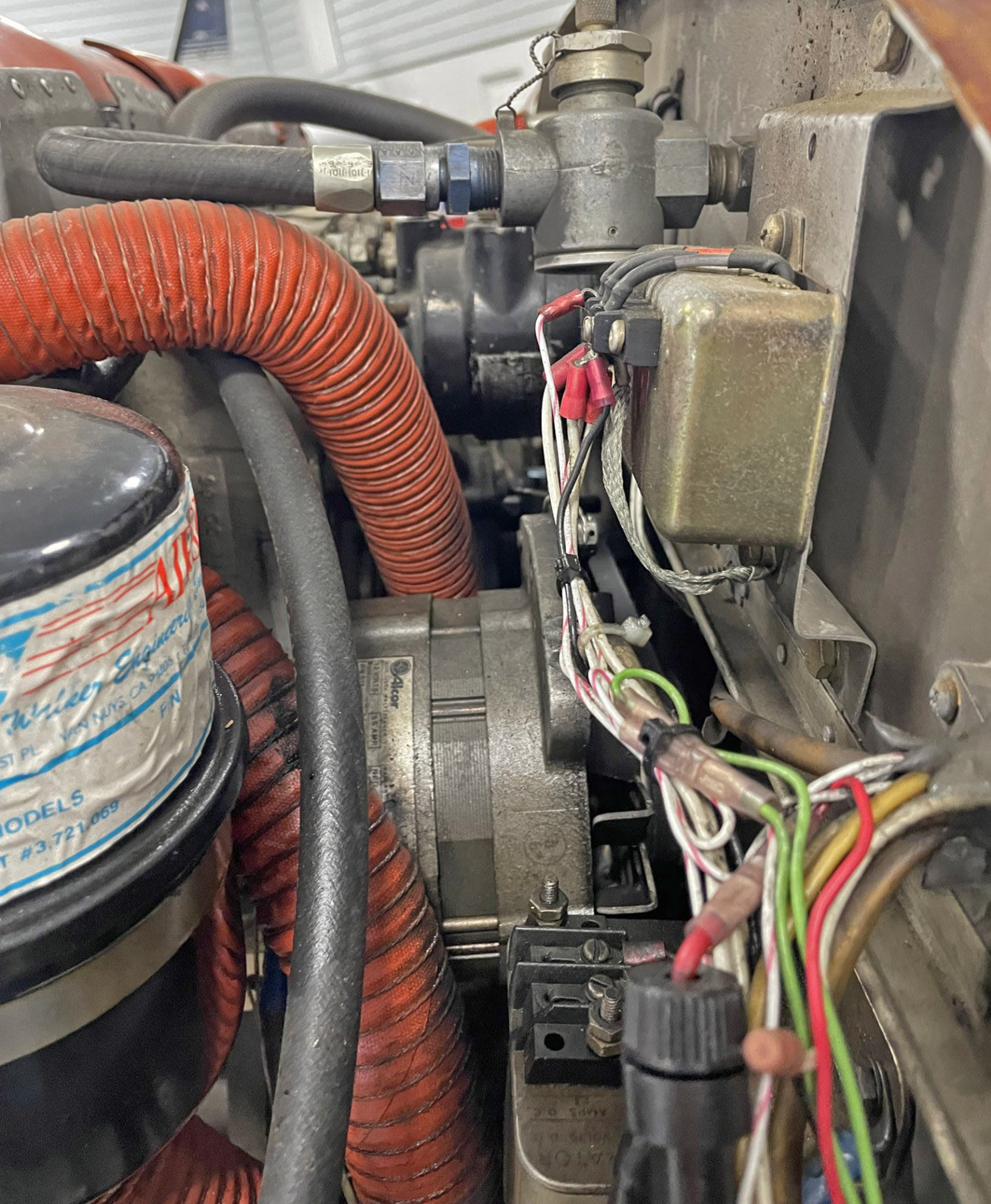 Nevertheless, alternators live in a challenging (that’s our understatement for the week) environment. The photo on the right is of the alternator on a Cessna 185. It is attached to the engine (to the left of the picture) and shoehorned in between the engine and firewall where it does its best to stay alive in a world of heat and vibration. Accordingly, every A&P we talked with about alternator life told us that every annual and 100-hour inspection should include an examination of the alternator to catch small problems while they are still small.
For belt-driven alternators, that examination should include belt tension and alignment of the pulleys. Misalignment causes accelerated belt wear and/or the belt to come off of the pulleys. The belt should be soft, flexible and free of nicks, cuts and significant wear. Belts also cause wear to the pulleys, so they should be checked as well.
Gear-driven or direct drive alternators have specific inspection requirements drafted by the manufacturers because alternator failure can cause catastrophic engine failure. Gear-driven alternators have a flexible coupling designed to slip or fail should the alternator seize to protect the engine. The manufacturer’s instructions include the procedure for inspection of the coupling.
Cracking of alternator mounting brackets happens often enough to warrant checking them each time the alternator is examined.
We found it interesting that, according to the techs we spoke with, alternator failure is not the most common cause of charging system issues—it’s failure of connectors or wiring that is chafed or worn, so look those over well.
—Rick Durden