











Shortly before the outbreak of World War II in Europe, Germany stunned the world by fielding the most advanced and competent air force on the planet. And it did that despite Draconian post-war treaty restrictions that all but prohibited combat aircraft development. But the pilots came from a different tradition-a passion for gliding and soaring. That continues yet today with most of the worlds glider production centered in Europe, including the re-introduced HK36 Super Dimona motorglider from Diamond Aircraft. “New” doesnt exactly apply to this airplane because it has been in and out of production for 20 years. In fact, the design is really responsible for much of the way Diamond airplanes look, feel and fly for before it was a powered airplane company, Diamonds predecessor, HOAC, was a motorglider company, with antecedents extending to 1980. Although motorgliders are a rarified taste in the U.S., Diamond is making another run at selling the HK36 to the North American market. It pitched them in the early 2000s with mixed results, but when the DA40 and DA42 projects took off, Diamond had no room in the Wiener Neustadt factory in Austria to produce them, so the project was shelved. About a year ago, Diamond restarted the line to produce a limited number of HK36s and the sales effort is being handled not directly by the factory, but by Great Lakes Aircraft Sales, a major Diamond dealer in the Chicago area. Diamond may find an emerging opportunity in “full-circle” pilots who are affluent enough to buy new airplanes but don’t want to support aircraft that require them to maintain a medical. Light sport fits that design brief and so does a motorglider, which can be flown by a pilot without a medical and even a drivers license, for that matter. (See the sidebar on page 19 for more detail.)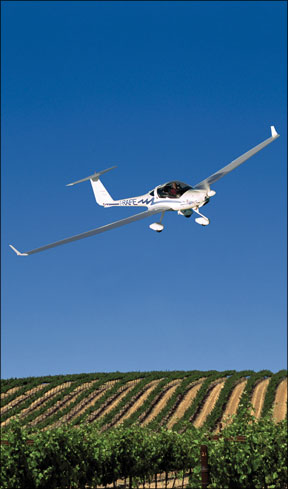
A Compromise
Motorgliders of all types represent a compromise of sorts and the HK36 is no different. The design motivation is that for