











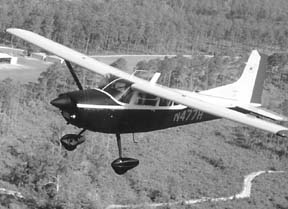
The term working airplane has an unmistakable connotation. Theyre the workhorses of the GA fleet, doing yeomans service in hauling freight, towing gliders and banners and spraying crops.
Most manufacturers have a working airplane or two in their model line-ups but Cessna has been especially successful in the piston single realm with the 180, 185 and 206/207, each of which has carved its own market niche.Among that distinguished group, the Cessna 185 is perhaps unique for its reputation as an airborne pick-up truck easily able to haul heavy loads into and out of short, unimproved strips. And as a taildragger with plenty of power, its also a prized towplane.
History of the Line
Like most manufacturers who found success in the post-World War II GA boom, Cessnas original big sellers were tailwheel airplanes. The 185 came along in 1961, a follow-on product to the Cessna 180, which enjoyed considerable sales success. And for a taildragger in a world of trikes, the 185 held its own until 1985, the last year of production.
Outwardly, the 180 and 185 are similar, with comparable overall dimensions and major parts. The primary difference, of course, is the engine. The 180 had a 230 HP Continental which was adequate but didnt elevate it to the status of a super load hauler.
When the 185 debuted in 1961, it had a 260-HP Continental IO-470F and 84-gallon fuel tanks and could perform the rather remarkable feat of lifting more than its own weight: The useful load of 1680 pounds is about 200 pounds more than its standard empty weight, something bush operators prized.
Locked securely in the utility market, the 185 was spared some of the cosmetic improvements that some say larded up other Cessnas. It never got the swept back tail, for example, or the rear window that was added to the 172/182 line.
Instead, you could order a new 185 with Edo floats, a massive belly cargo pod that could accommodate 300 pounds or a spray application rig, to name a few options. Towing set-ups and flip-up doors for skydiving operations were also available.
Anyone who hauls stuff for a living always wants more power so in 1966, Cessna replaced the IO-470F with a 300 HP Continental IO-520D as an option. The 300 HP Skywagons are called A185s.
The bigger engine improved the 185s already exceptional performance. For a mere 10-pound increase in empty weight, the airplane gained a 100-pound increase in gross, five extra knots of cruise speed and some 200 feet was shaved off the takeoff ground roll, a boon for back-country operators. The engine was such a hit that it was made standard in 1967.
Also new that year was the addition of an aft baggage compartment, along with an optional stretcher door, both of which make loading bulky objects easier. In 1973, a new wing profile was added to the 185. The so-called camber lift wing was created by Robertson as part of a STOL kit for the Cessna line and it reduces stall speed slightly, improving roll control at low speeds. Since its a leading edge mod, Robertson can retrofit it to earlier 185s.
The re-winged 185 became the A185F, which is by far the most numerous flavor, accounting for more than half of all airframes. A185s as a group account for 74 percent of all 185s built.
More work-related options came along in 1975, including bubble side windows for photography and skylights. In 1976, flap-extension speed (Vfe) went from 96 to 120 knots and the fuel selector was changed to Cessnas all but idiot-proof left-right-both arrangement.
Lift handles were added to the tail to give ground handlers a safe means to muscle the airplane on the ramp without damaging the stab. One improvement that was a mixed blessing was the reduction in usable fuel from 81 to 74 gallons, which cut into the airplanes range.
1979 models had a new wet wing fuel system with 88 gallons, 84 of which is usable. The older bladder-style tanks were optional. While the bladders had less potential for leakage, they had other problems, as we’ll note in the maintenance section.
Skywagons have had both two and three-blade props, with the three-blade surfacing as an option in 1978 but soon becoming standard in 1980. The three-blade can be retrofitted and although it may cost a knot or two in cruise speed, it reduces vibration and noise or at least changes the vibe signature. Climb is said to be better with the three blader.
The 185 enjoyed brisk if not spectacular production numbers until 1981, when only 389 were built. By 1984 and 1985, only 34 Skywagons were made.Although no one knew it, GA was headed for the Big Slump and the fact that the average equipped price of a new 185 nearly doubled, from $55,670 in 1979 to $108,090 in 1985 probably didnt help.
Performance, Handling
Given the performance of retracts equipped with the IO-520, the Skywagon wont set any speed records. But if youve got the cash to pay the fuel bill, its no slouch, either, and will do something many airplanes cant: Fly with full tanks and full seats.
Load a Skywagon with full fuel, four 220-pound people and perhaps 50 pounds of bags and the airplane will take off in just over 800 feet, climb at better than 1000 FPM and then fly 800 miles at 140 knots, outdistancing a handful of retracts and twins. Even at higher altitudes, the IO-520 has plenty left: Climb rates of 500 FPM at 10,000 feet are easily achieved.
But its not exactly miserly at the fuel pit. Fuel flows range around 14.5 GPH, depending on power setting so 10 nautical miles per gallon is about as good as it gets with this airplane, without some effort.
Add a set of GAMIjectors and run it lean of peak and you can improve fuel economy for a minor loss in speed. Then again, if youre being paid to haul stuff, the fuel economy isn’t your chief worry.
But if gas is a concern, climb to 12,000 feet, where a power setting of 2400 RPM and 18 inches MP will yield 130 knots TAS, burning 10.8 GPH. Not bad.
In stock form, the 185 is nearly a STOL airplane. With those big barn door flaps at 40 degrees, stall speed is under 45 knots so 55-knot approach speeds are doable. Weve been told of skilled bush pilots plunking the Skywagon down in as little as 300 feet in a rough clearing or river sandbar.
As with any airplane, the technique is a high-alpha approach with flaps and power at a speed between 50 and 55 knots, followed by a full-stall three-pointer. Watch the aggressive braking, however, since the airplane can nose over with locked wheels.
Although the airplane handles we’ll in the air, some owners say its not easy to land and wont tolerate lazy feet on the rudder, especially in crosswinds and hard pavement. Yet as taildraggers go, its not overly twitchy and the deck angle allows seeing over the nose so S-turns arent necessary.
Wheel landings, while doable, require finesse due to the 185s spring-steel landing gear legs, which will coil-up a good bounce if the touchdown on two isn’t a kisser. If the pilot doesnt convert a botched wheelie into a three-pointer, loss of control may follow. Indeed, thats the typical accident the 185 is involved in, according to our review of the Cessna 185s accident history.
Most owners seem to prefer three pointers, which are aided and abetted by the locking tailwheel, which also helps in crosswinds. Just don’t forget to unlock it before taxi turning, otherwise you risk tire damage.
In the air, handling of a Skywagon is similar to another Cessna product, the Skylane. Trim, unlike that on most Cessnas, is through a jackscrew in the tail rather than via a trim tab and the systems low gearing means you move the wheel a bit before noticing the effect.
Cessna didnt offer electric trim, but some autopilot installations include it and pilots who have it like it better than the manual system. Cessna never offered electric flaps in the 185, either, a real blessing in our view. Manual flaps are simply superior for ease of use-get them down or up quickly with no question of flap position. Theyre also more maintenance reliable.
Like most Cessnas, the 185 is susceptible to a trim-tab stall, which is what happens when you apply full power with flaps fully deployed. If the nose-up moment isn’t dealt with with forward stick and trim, the airplanes angle of attack will exceed the stall value. Its better to apply partial power, arrest the sink, then lose the flaps before applying full climb power.
Payload, Cabin
A 185 can haul just about anything you can get into it. But if the cargo isn’t dense, the volume may not be all that great compared to a Cherokee Six or Cessna 206. A Piper sales brochure once showed a piano, of all things, going into a Cherokee Six.
No way anything that large will go through the 18 by 20 inch baggage door or the two cabin doors of a 185. On the other hand, the right front door can be removed easily, as can the back seat, but that still doesnt leave much maneuvering room in the cabin for large objects.
The optional fiberglass belly pod is 9 feet long and 14 inches deep and while huge objects still cant be loaded, the pod is ideal for awkward cargo such as chainsaws, tool, skis and fishing gear. (Not to mention the smelly fish.)
Interior, Maintenance
Cessna interior photos show sixseats and the airplane was billedas a six-placer. As is typical of suchmarketing claims, thats a gross exaggeration.
Calling the third row seating is generous, except perhaps for a child. The seat is limited to 120 pounds and most owners leave it in the hangar, opening more space for baggage.
An option on later 185s was a pair of articulating seats for the front row, with adjustable height and reclining seat backs. The back on the rear seat was split and it too could recline.
The seating position is quite upright, with good head and legroom but not generous shoulder room in a cabin measuring 41 inches in width.
Cessna singles have a reputation for being maintainable if not exceptionally durable. Thats the 185 in spades. Its a derivative airplane, being based on the 180, which was, in turn, a bigger version of the 170.
Therefore, Cessna got the flaws hammered out in what was a good airplane from the beginning. Owners tell us to watch these troublespots: Tailwheel shimmy can be caused by wear of the bolt that holds the fork to the tailwheel spring. Airplanes with McCauley wheels and brakes arent as desirable as those with Clevelands, which can be retrofitted.
Mufflers tend to crack after a few hundred hours so inspect them carefully. Airplanes built before 1981 had trouble with the trim because in cruise, the jack screw needs 300 foot-pounds of torque to move.
This stresses roll pins connecting the trim wheel to the chain drive sprocket. If the pins shear, the trim is stuck. Later airplanes replaced the pins with rivets.
As Continental engines go, the O-470 and O-520 series have delivered decent service, although they don’t have the robust reputation of the Lycoming large displacement engines.
We continue to hear from owners complaining about soft cylinders at a few hundred hours into a TBO run. Still, the big TCMs run much smoother than the Lycomings.
In many models, the engine installation is at the root of short engine life but that doesnt seem to be the case in the 185. It has a roomy cowl and large cowl flaps, so overheating isn’t an issue, although rapid cooling might be.
Advertised TBO is 1700 hours, which is realistic if the owner is prepared to do a mid-time top overhaul. If the top isn’t needed, consider it gravy.Give Cessna credit for one thing: It has delivered on parts and support, even in the lean years when no piston production was alive. If flown often and worked hard, expect to replace landing gear boxes now and again, plus tailwheel parts.
The Skywagon is a typical Cessna single, so there are plenty of mechanics around qualified to examine one for pre-purchase and to maintain it afterwards. Of particular note, however, is the possibility of corrosion if the airplane has ever been on floats, as many 185s have. Check the logs for this history. Like any corrosion, it can be expensive to repair and its likely to be there in some form on any aircraft operated on salt water.
ADs
Most of the ADs that affect the 185are of the shotgun variety and most are one-shot deals. Here are few worth noting:
AD 84-10-1, the notorious rock-n-roll AD. This one is most famous for its association with the Skylane but it also applies to the 185. Some of the Cessna bladder tanks had a diagonal wrinkle in the bottom that acted as a dam, potentially trapping water so it couldnt reach the sump where it could be easily drained.
When sampling the gas, youd get a good clean cup full but after takeoff rotation, the water would spill over the wrinkle and choke the engine after takeoff. There were a handful of accidents because of this.
The almost comical response to this called for the pilot to grab the wingtip and shove it up and down during preflight in an effort to dislodge the water and drive it toward the sump.
Passengers, were sure, love seeing this and with an amphibian on a beach or dog, forget it. A better plan is replacement fuel cells, which are available.
ADs 97-26-17 calls for ultrasonic inspection and possible replacement of the crankshaft; 96-12-22, recurrent inspection of the oil filter adapter; 86-13-4, cylinder pressure check; 91-15-4 and 82-27-2, prop inspections.Mods, Clubs
Being a bush and utility favorite, lots of mods are available for the Cessna 185, some of them also found on other Cessna singles.
STOL kits are available from Horton and Sierra; engine and prop upgrades-including the IO-550-from Bonaire and long-range fuel tanks can be bought from Flint Aero. From Tornado Alley Turbo, a turbo normalizing system will allow the 185 to operate in the flight levels.
Contact Bonaire at 217-965-3493; Horton at 800-835-2051; Sierra at 830-278-4481; Flint Aero at 619-448-1551; Tornado Alley at 580-436-4833.Prospective purchasers should join two organizations: The Cessna Pilots Association is worthwhile for anyone who owns or regularly flies Cessnas and the International 180/185 Club.
The latter is more focused on the 185 than the CPA and is worth the modest cost of dues, in our view, Cessna Pilots Association is at 805-922-2580/www.cessna.org. The International 180/185 Club is at P.O. Box 639, Castlewood, Virginia 24224, phone 540-738-8134. www.skywagons.com.
Owner Feedback
I bought a 1967 Cessna 185 in 1996 from a private owner in Vancouver. It had been delivered directly to Canada from the factory when new and therefore had no U.S. airworthiness certificate.
The seller flew the airplane to my home base in the U.S. before the ownership was transferred. Obtaining the C of A required a days work by a designated inspector, who checked the records and physically inspected the aircraft to check compliance with the manufacturers specifications.
I flew the engine another 250 hours to its 1700-hour TBO without problems, then replaced it with a factory remanufactured engine. Since the first engine had last been overhauled in 1973, it did not have the VAR crankshaft now required in the IO-520D and it had an early generation (light) crankcase.