











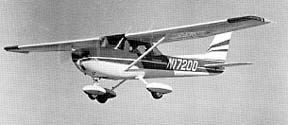
Way back in the 1960s, when the Cessna 150 was on its way to becoming the dominant two-seat trainer of all time, many pilots and most instructors had been trained on conventional gear, which was to say taildraggers.
But no more. The majority of todays pilots were trained in nosegear aircraft and who doesnt have logbook entries showing some Cessna 150 or 152 time? The reasons for that are many. The 150/152 filled a niche perfectly, being relatively cheap to operate, easy to fly with few bad habits and originated by a company that defined light aircraft manufacturing after World War II.
History
Following World War II, Cessna enjoyed good sales success with first the 120, then the 140. By 1959, it was a time for a new design and that turned out to be the all-metal, tricycle gear Cessna 150.
When the 150 rolled out, the all-metal 140, with its 90 HP Continental engine, had been out of production for several years. Although most people don’t realize it, the wildly popular Cessna 172 pre-dates the 150 by three years, having first appeared in 1956. The 150 was created as a pure trainer to capitalize on what was then a hot growth market.
The first 150s look positively staid by modern standards. They had a straight, squared off tail-same as the 172-and a fastback turtledeck-style fuselage, with no rear window. Like the 120/140 series before them, that reduced rearward visibility. Following the 1959 introduction, the first of many changes began. The main gear struts were moved aft two inches in 1961, curing the airplanes tendency toward tail heaviness. Ten years later, tubular gear legs with a wider track were added.
In 1964, the rear window appeared and, of course, it needed a snappy marketing moniker, thus was born Omni vision. The stodgy straight tail went away in 1964, replaced by the swept-back tail.
The overall size of the airplane hasnt changed much but its max gross weight allowances have. The 150 began life as a 1600-pound airplane but by 1978, the gross weight had been bumped up to 1670 pounds. Thats a substantial increase but much of it was offset by increases in empty weight.
Similarly, although the cabin remained small and tight, Cessna did improve its habitability somewhat. For example, the doors were bowed out slightly and the center console was narrowed, providing a bit more leg room side-to-side. In 1976, vertically adjustable seats were added.
The baggage compartment was also enlarged several times and one option included a rear child seat. The baggage area could accommodate up to 120 pounds of kids and/or bags, so was suitable for a toddler and a daybag, but little else. In 1975, a larger fin and rudder were added and before that, electric flaps were installed. Previously, the flaps had been manually operated and some pilots complained that electrics were a step backward.
A New Engine
For its early years, the Cessna 150 tooled around on a 100 HP Continental O-200, a reliable and easy-to-maintain engine that matched the airframe nicely.
When red-tinted 80/87 gas became hard to find around 1978, Cessna re-engined the 150, installing the 110 HP Lycoming O-235 that provided more power and boosted the TBO from 1800 hours to 2000 hours and eventually 2400 hours.
Along with other changes-including a 28-volt electrical system, a one-piece cowling, a McCauley gull-wing prop, an oil cooler and redesigned fuel tanks, the 150 morphed into the 152.
Sum total of changes? About 40 pounds more useful load than the original Cessna 150 had but fully 60 pounds less than a 1948 Cessna 140 could heft. The airplanes performance was about equal to the 150 it replaced but the engine was susceptible to severe lead fouling when burning 100LL and the 28-volt electrical system was a nuisance.
Worse, the 152 turned out to have some significant warts. Early models were hard to start because of weak spark and lack of priming. Cessna added impulse coupling on both magnetos to improve this, plus direct priming for each cylinder.
Later models had a split cowling, so mechanics could de-cowl the engine without removing the propeller, a sore point. In 1981, the Lyc got a spin-on oil filter as standard, rather than the old rock screen. In 1983, Cessna and Lycoming tackled the lead fouling issue by replacing the O-235-L2C engine with the N2C variant, which the model had until it was discontinued in 1985.
Throughout much of the 150 and 152 production run, two variants were available: The Aerobat and a seaplane conversion, which appeared in 1968. There are still a few of these models running around, some even used on the water. The seaplane was, by most accounts, a decent little water taxi. With the addition of floats-and, of course-some beef ups in the fuselage structure-the seaplane was no Beaver. It couldnt haul much and reportedly took a while to unstuck itself from the water.
The Aerobat version-which first appeared in the 150 in 1970, made a much bigger splash, so to speak. At the time, aerobatic mounts at the local FBO were all but unheard of and renting one was out of the question. The Aerobat, with its checkered wings and striped tail, changed that. Some 5 percent of the 150/152 fleet is acrobatically capable.
But alas, a Pitts it aint. For one thing, negative G maneuvers arent permitted and with two aboard, it lacks the power and punch of a true aerobatic thoroughbred. Any maneuvers that require climbing back to altitude had best be performed judiciously, since gaining back that altitude will be a plodding process.
Also, the Aerobat has wheels, not a stick. Aerobatic purists sniff at that but more to point, in performing some maneuvers-point rolls, for instance-the rightseater can expect to be pummeled by flailing elbows as the pilot whips the airplane through its paces.
But hey, whos complaining? How many models can do both workaday flight training and limited aerobatics? Naturally, the Aerobat commanded a price premium when new-about $1500 to $2000-and thats still true on the used market. The price delta is now about $3000 for the Aerobat.
Performance, Handling
By modern standards, the Cessna 150/152 still posts better than credible performance and handling traits. What do we mean by modern standards?
The only pure modern trainer that we know of is Diamonds Katana, which is the first strictly two-seat trainer of note to hit the market since the 152. In our view, the Katana can be credited in part with the current modest revival in flight training for the masses. FBOs and flightschools weve talked to report that the Katanas sleek and sexy looks make it the airplane of choice for intro rides and initial training but many pilots switch to a Cessna 152 or Cessna 172 to complete training and for checkrides. Why? Frankly, the 152s higher weight gives it a somewhat solider feel than the Katana has and pricewise, 152s remain competitive to buy and operate. That said, the 150/152s handling and performance is nothing special. In cruise and climb, it enjoys no real advantage over other popular trainers such as the Beech Skipper and Piper Tomahawk. Its a marginally better climber than the Katana A1, with its 80 HP Rotax engine.
Top speed for the 152 is given as 109 knots, same as the Tomahawk and two knots faster than the plodding Skipper. In the real world, of course, 152s go slower. Much slower. Owners tell us they flight plan for 90 to 95 knots, a realistic speed in our view.
In useful load, the 152 is essentially the same as the other popular trainers. At 528 pounds useful, its a smidgen more than the Katana, a smidgen less than the Skipper and Tomahawk. Before the model got fat, however, some E/F/G 150s topped 600 pounds in load carrying capability.
Where the 152 shines, however, is on load flexibility. With a fuel capacity of 39 gallons, it has far better range with a single pilot than either the Tomahawk or the Skipper although with its miserly Rotax, the Katana does quite a bit better on max range with one pilot.
Does this really matter? We think so. These aircraft are, after all, trainers, and one of the skills student pilots learn early on is how to run out of gas. In our view, the more gas aboard, the less likelihood of a fuel exhaustion event. Not that having an instructor aboard always makes a difference.
One Katana accident we examined involved a pair of instructors who ran the airplanes tanks dry.
Handling is, well, predictable, which is just what Cessna intended and just whats wanted in a trainer. Control forces are relatively light and the airplane exhibits no nasty stall habits. In fact, its slow flight characteristics are so utterly benign that the 150/152 nearly qualify as STOL performers in the stock condition.
The large flaps-even when limited to 30 degrees-are quite effective, although they do generate quite a bit of nosedown trim moment. This is easily handled, although the control forces escalate somewhat. Students have to be taught to watch for abrupt noseups when applying full power for a go around, training that prepares them nicely to transition into the Cessna 172, which has the same characteristic.
Landing a 150/152 is easy enough to teach and learn, to a point. And that point is often exceeded, since runway fender benders are the most common type of accident suffered by the 150/152 series.
The airplane is comfortable with an approach speed of 60 knots or slower, but it will easily tolerate higher speeds, since those draggy flaps bleed off excess airspeed in a heartbeat. Land it fast and it will bounce. (Any pre-buy should include a specific check of the logs for landing damage that included nosewheel work or firewall damage.)
Operators tell us the 152s runway performance is good, especially if the airplane is light. Its not as good when heavy on a hot day when it has been known to end up in the trees off the end of a short runway. Pop off the wheelpants-if it even has them-and the 150/152 will slosh through mud and high grass with the best of them.
Comfort, Ergonomics
As any flight instructor whose soldiered through hundreds of hours of time in the right seat to describe a Cessna 150/152 cockpit, and the adjective comfortable probably wont come to mind.
The cabin is narrow so even pilots of moderate size will be bumping shoulders big time. There’s adequate leg room, thanks to seats that slide fore and aft but the seat height itself is quite low, compared to a Cessna 172 or a Warrior.
In 1979, thicker seat padding became standard but it helps only a little. Many owners have had the seats re-padded or carry a pillow or two to make them more tolerable. Noise level is quite high, due to the proximity of the cabin to the engine compartment but the advent of headsets and intercoms has rendered this less of an issue. Ventilation in the 150/152 is via the standard Cessna pull vents in the wing roots, plus in most models the windows open for taxi and can also be opened in flight. During the winter, this can be a mixed blessing and some operators tape off the root vents to reduce drafts.
Powerplant
Except for troublesome starter drives, the Continental O-200 used in the Cessna 150 was a reliable and robust engine that could be counted to make the 1800-hour TBO, if not beyond. But when 80-octane gas began to disappear, replaced by 100LL, the O-200 turned out to be a lead magnet. Operators reported ongoing problems with lead fouling.
Cessnas response in 1978 was to convert the airplane to the 108 HP Lycoming O-235L2C. Actually, Cessna hoped to achieve three goals: First, solve the lead problem. Second, boost the power a bit to increase the payload and offset the fact that the 150 gained 15 percent in empty weight since its introduction in 1959 and last, reduce noise. The higher compression O-235 Lyc delivered its 110 HP at 2550 RPM rather than the O-200s 2750 RPM.
Did Cessna hit the mark? Not really, say operators familiar with both airplanes. In its favor, the Lyc wasnt plagued by chronic starter adapter failures that made the Continental a pain in the butt but if the engine/prop was quieter, youd hardly notice.Owners complained about high parts prices for the O-235-including pistons and valves, the latter being sodium filled for improved cooling.
And the lead problem? Still there, say owners. The O-235 accumulated lead deposits in every nook and cranny and lead fouling of plugs became such a problem that Champion developed a special extended-electrode spark plug for this engine, the REM37BY. Mechanics say even with careful leaning, the plugs must be removed and cleaned as often as every 25 hours.
Otherwise, one mechanic told us, you can throw the plug away-it wont even be cleanable. In Service Instruction 1418, Lycoming explains a procedure whereby cylinders can be blast-cleaned with walnut shells without removal for top-end overhaul. Prior to this, operators found that early tops were needed due to lead fouling of the cylinders.
Maintenance
One positive aspect of the Lycoming engine is its TBO; a whopping 2400 hours. If you can keep the thing from choking with lead, it may actually reach that impressive service limit. Also, thanks to intense competition in the engine overhaul field, overhaul prices remain quite affordable, on the order of $10,000 or less.
Owners who use the 150/152 for personal use-and many do-can count on literally years of service from the engine, if theyre operated enough to keep corrosion at bay and leaned to avoid lead build-up.
In general, these are simple airframes and don’t require much maintenance. However, any that have been used extensively as trainers-as most have-should be inspected carefully for hard landing damage, especially in the nosegear/firewall bulkhead area.
The 150/152 series has what we would call an average list of ADs, none of which are particularly onerous or expensive. The major safety-related item is the seat track AD, which prevents the seat from unlocking and sliding rearward. Most aircraft should have had this done long ago. Owners report that annuals are thrifty-in the $400 to $600 range, depending on parts needed. Since the airplane is so simple, owner-assist annuals are a good bet.
Mods, Organizations
The 150 can be given a huge power boost and even turned into a taildragger, as quite a few have. AvCon Conversions (800-872-0988) and Bush Conversions (800-752-0748) do both engine and tailwheel mods. AvCon also has flap gap seal kits and Bush offers flap and aileron seals. AvCon also has a STOL kit.
Both the AvCon and Bushs kit puts a 150 HP or 160 HP Lycoming in place of the 100 HP Continental. No surprise that this jacks the cruise speed up 140 MPH and the climb rate to more than 1000 FPM.
Horton, Inc. (800-835-2051) sells STOL kits for the 150/152. Another company, R/STOL, used to sell kits but theyve either moved or gone out of business. We couldnt track them down. In any case, these conversions have a flap-aileron interconnect system with drooping ailerons that work at different angles to match flap angles. This mod also recontours the leading edges, adds stall fence, cambered wingtips and aileron gap seals. In addition to Bushs tailwheel conversion, Aircraft Conversion Technologies (916-645-3264) supplies landing gear kits for a tailwheel conversion thats supposed to increase speed by 8 to 10 MPH by eliminating drag.
A company in Washington, Air Mods N.W. (425-334-3030) sells an engine conversion for 152s that includes a new prop that boosts climb and takeoff performance by allowing the Lycoming O-235 to spin up to 2800 RPM. It also has higher compression ratio so supposedly, this decreases lead fouling.
Two organizations of note are the Cessna Pilots Association and the Cessna 150-152 Club. CPAs Santa Maria, California HQ is the fount of all things Cessna and members rave about its technical services. Contact CPA at 805-922-2580 or on the Web at www.cessna.org.
The Cessna 150-152 Club has a monthly newsletter thats an excellent clearing house for information, parts, mods, maintenance and service tips. Contact the club at 805-461-1958 or www.cessna 150-152club.com.
Owner comments
We purchased our 1966 150F in 1995. As a hangar queen extraordinaire, it had not flown for 17 years and was covered with a half inch of dust. My 16-year-old son had completed all requirements for his private license, save the FAA checkride. I wanted him to learn the mechanics of an aircraft before advancing.