











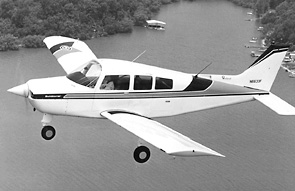
With names like Duke and Baron and a coat of arms on the yokes, Beech has always fancied itself as general aviations version of royalty. And why not? The products are expensive, generally we’ll made and often the best flying airplanes in their respective classes.
But as with true blue blood royalty, nothing is perfect, thus from the line of pedigreed Bonanza and Barons come the frumpy 19 and 23 series Beechcraft, the Musketeer, Sport and Sundowner.
Not that these airplanes were necessarily failures, mind you. In fact, among trainers, theyre among the better built and definitely the nicest flying of the mid-1960s trainer crop. But handling isn’t everything and in general, this segment of Beech stable leave much to be desired on the performance front.
These aircraft represent a shopping paradox for those in the market for a used aircraft. Sure, you can buy one for a song. But when you try to sell it, will it even be worth the opening intro notes? There are lots of these airplanes parked with weeds growing through the wheels.
Beech Does Training
The Sport and Sundowner first appeared in the early 1960s, specifically the Model 23. It has a 160-HP Lycoming O-320, could carry four people in comfort, as long as they werent in a hurry to get anywhere. The original Model 19 debuted in 1966. With 150 horses, its really a two-seater with a backseat for more stuff. Except for the engines, the two aircraft are essentially identical.
Beech also came out with the same aircraft sporting retractable gear and a 200-HP engine and carrying the Model 24 Sierra designation, an airplane thats the subject of its own UAG report.
The Musketeer evolved over the years. The original 1963 Model 23 had a 160-HP Lycoming, following the lead established by the Piper Cherokee two years before but Beech soon re-engined the airframe with Continental IO-346-A, an oddball engine that was essentially an IO-520 with two cylinders hacked off. Many owners have since swapped out this orphan engine with a type much easier to service.
By 1968, Beech switched horses again, this this time back to Lycoming, with a 180-HP O-360-A-series, the motor that carried the line through the rest of its production life.
Meanwhile, Beech wheeled out the 150-HP Sport as a trainer in 1966. By 1970, the two models had become the B19 Sport and the C-23 Sundowner. (If youre confused, youre not alone.)
Not So Hot
The 19/23 series was never a hot performer. Indeed, by 1973, the FAA determined that, when flying at its certificated maximum gross weight of 2250 pounds, the B19 couldnt meet the certification climb performance minimums. In response, AD 73-25-04 was issued, limiting the B19s gross weight to 2000 pounds, a heavy performance hit. A Beech kit raised max gross back up to 2150 pounds, but it the airplane was no load hauler. After 1973, Sports which rolled out of the factory came with the mods already installed.
The Sport continued in production until 1979, when Beech introduced a clean-sheet design as a replacement-the two-place Skipper, another Beech idea that didnt quite pan out. The Sundowner chugged along for a few more years before being sucked under by the great GA depression and sales downturn of the 1980s.
By 1983, the line was history. Still, some 2400 Sundowners were built and many still fly. The Sport isn’t quite so numerous, with only 900 built, some of which occasionally turn up on the training flight line here and there.
Owners fairly gush about how comfortable these airplanes are but tend to frown painfully when describing performance. Cruise speeds in the 100-knot range are about the best you can expect from the 160-HP models. The Sundowner with the big Lycoming will do 117 knots with a light airframe and fresh wax job.
In its original incarnation, the Sport got socked with an AD due to poor climb performance at gross weight. But even after the AD-mandated improvements, it was hardly any better.
Owners have reported gross-weight climbs in the 300- to 400-FPM range on hot days. Then again, this may vary by aircraft condition. One owner said climb rates of about 500 FPM through 9500 feet were possible. Loaded to gross, Beech claimed only a 792-FPM climb for the Sundowner at sea level. So don’t expect much.
The Sundowner is not STOL ship in the landing department, either. Although the book says you can stop on less than 1000 feet of pavement at sea level with no wind, we say good luck. Allowing for real world piloting skills, add at least 25 percent to that figure.
And if you do manage to shoe-horn your way into a 1000-foot strip, you’ll probably need a set of wrenches and a truck to get the airplane out.
Listed takeoff performance for the airplane is 1130 feet of pavement just to lift off. you’ll need nearly 2000 feet of level ground between brake release and the first 50-foot obstacle if you expect to clear it.
If density altitude creeps up, you can find yourself needing jet-length runways. At a 2000-foot high field on a calm, 88-degree day, figure on 1700 feet to get off the ground and almost 3000 feet to clear the obstacle. These airplanes are clearly not suitable for high-elevation airports or even sea-level dromes with short runways.
Payload, Range
Okay, so these aircraft don’t burn up the course speed-wise. But don’t look to them for aerial pick-up truck duty, either. Net payload for both the Sport and Sundowner are quite close to other aircraft in their class, which is to say not much.
Range is certainly not outstanding, although quite acceptable for most owners. In all but the early model Sports, standard fuel load is 57 gallons useable. Thats enough gas to carry the Sport about 620 miles, while the Sundowner will cover only 530 miles on the same load.
That fuel load may sound impressive, especially when you look at the fuel capacities of the competition. The Piper Cherokee, American General (Gulfstream/ Grumman) Tiger and Cessna Cardinal all carry seven gallons less gas.
Yet, all those airplanes can fly just as far because their higher cruise speeds let them cover the same amount of ground on less fuel. Of course, your mileage may vary, especially if youve got any illusions about carrying people and baggage.
Fill the cabin and you cant fill the tanks, its that simple. The Sundowners can be expected to haul about 900 pounds of useful load in their average equipped condition. If you need full tanks, that means you can only carry three people and 50 pounds of baggage.
If youre in a Sport, toss out the third person and the baggage and you still get to sweat those high-weight climb rates. So, the Sport/Sundowners are cheap to buy but the payback is lack of performance; there’s still no free lunch.
Like most Beech products the Sport and Sundowner are routinely described as being delightful to fly. In the air, the controls are light and we’ll harmonized, smooth and responsive. Theyre stable enough to make good IFR trainers, even if their low cruise speeds turn them into one-airplane traffic jams. There are even aerobatic models.
But that doesnt mean handling and flying is wart free. The Sundowner, and especially the Sport, can be downright vicious on landing.
These airplanes have developed a reputation for providing some ego-crushing landings for even experienced pilots. Student pilots who were unfortunate enough to endure training in the Sport all too often wound up with more than their egos crushed.
The reason for all this sturm and prang is the airplanes bad habit of porpoising and crow-hopping on landing, a trait it shares with Mooneys but not with other trainer types in this class.
Some experienced Sport pilots can regale hangar-flying crowds with tales of epic wrestling matches as they worked throttle and yoke desperately trying to stop the porpoise before A) the nose gear collapsed; B) the aircraft groundlooped; C) the runway ended; or D) all of the above.
At least part of the reason for this touchdown behavior is the landing gear design. Beech chose a trailing-beam configuration for the aircraft. Normally, this type of landing gear is quite forgiving of botched landings.
But Beech went for stiff rubber shock mounts instead of oleos, converting what would have been wonderful cushioning into terrible springs, ready to help the aircraft rebound into the air at the drop of a wheel. With its stiff rubber donuts, the Mooney gear has the same shortcoming with the same results for hapless pilots.
Gentle, mains-first touchdowns are the rule to prevent a crow-hopping excursion across the field. All this is not to imply that good landings are impossible in the Musketeers. Precise speed control is the key. If youre the type who likes to tack on a few knots for the insurance company and another couple for the wife and kids, buy a Cherokee or some similar, more forgiving design.
The Sport and Sundowner demand precision handling down final and into the flare. If your landing technique is off, these aircraft will show you exactly where youre going wrong by magnifying the results out of all proportion to anything youve seen before. Great training, if it doesnt scare you to death.
Speed control is also important in the opposite direction for Sport pilots. Coming over the fence a few knots too slow can result in running out of stabilator in the flare. That, in turn, translates into a nose-first touchdown and at least some crow-hopping down the runway.
Pilots report the Sport is a bit nose-heavy, especially with flaps down, and many have found that carrying some power into the flare provides more controllability into the touchdown.
Another strategy for coping with the aircrafts landing habits is to install the Beech spin kit. One Beech dealership we spoke with some years back reported that the spin kit, which adds strakes to the nose and stabilator along with a ventral fin to the rear fuselage, seemed to tame the aircrafts landing characteristics.
With all this as background, it should come as no surprise that the Sport and Sundowner have their greatest safety troubles in the landing arena. Thats true of other types too but its doubly true of this model.
At least the aircraft are consistent in this regard. Consider that an NTSB study reaching back to the early 1970s identified the Sundowner as the worst aircraft in its class for hard landings. Were talking about a rate of hard landings that was five times worse than the Cessna Skyhawk or the Piper Cherokee.
Indeed, every time weve looked at the safety records of the Sport and Sundowner, the story has been the same-lots of hard landings and lots of overshot landings. And even today we find the pattern intact. One interesting finding of our studies through the years has been the low rate of groundloop accidents.
Both the Sport and Sundowner have nice, wide-stance main landing gear, so once the aircraft are firmly on the ground, they handle and track quite well. Its getting them to that point thats the problem.
Musketeer ground handling is so good, in fact, that its possible to get the aircraft to pivot around inside its own wingspan, making maneuvering on the ramp or around the gas pumps a breeze.
Maintenance
If there’s one thing that really seems to keep Musketeer owners happy, its that the airplanes are cheap to keep. Maintenance troubles through the years have been merci-fully few and far between. Thankfully, Beech seems able to maintain a sense of proportion as to whats important and whats mere window dressing when it comes to issuing mandatory service bulletins.
Other maintenance items to be concerned with are fairly obvious. The landing gear, for example, should come in for detailed scrutiny at any pre-purchase inspection, as we’ll as during annual inspections.
Given the previously discussed landing troubles, its a better-than-even bet that some sort of trouble will be found on pre-purchase.
By the same token, make sure the firewall gets a good once-over, since bending and warpage of the firewall is one common consequence of excessive crow-hopping and nose-first arrivals.
Some other maintenance points to ponder include AD 78-16-06 (inspection of the elevator trim tab actuator rod), AD 73-20-07 (inspection of forward wing attach frames and brackets for cracking) and a 1988 AD mandating improved fuel boost pumps.
Beech and Dukes have been steadily upgrading and improving these fuel boost pumps-the originals had carbon vanes that had a bad habit of fragmenting and clogging the lines and wed strongly advise owners to make sure their boost pump is of the latest and greatest configuration.
The most recent type-specific AD is 89-24-9, calling for the installation of access ports and the inspection of the aileron rod ends. Two engine ADs of note are 98-2- 8, which calls for inspection of the hollow bore of the crankshaft for corrosion pitting (possibly repetitive until overhaul, depending on whats found) and 95-3-14, which calls for replacement of the engine mount brackets on IO-346- equipped aircraft.
Another item to scrutinize closely on annual inspections is the fuel caps. The NTSB called for pressure checks of older caps, but simple visual inspection should be able to detect caps that have become too stiff and crusty to provide a good seal to the wing filler port.
Nevertheless, cap replacement and/or overhaul every 10 years is not a bad idea as a prophylactic measure. And, of course, pay attention when checking the sumps on preflight. Engine troubles on these aircraft should be few and far between.
One notable exception is valve sticking, which on the O-320 and O-360 should be considered facts of life. Lycoming Service Bulletin 388B calls for checks of valve guide wear every 400 hours, but wed cut that interval in half if youre experiencing normal 100- to 150-hour-per-year utilization.
Cut it in half again if youre flying less than 100 hours per year. The inspection is simple, once youve got the proper jigs and it could save you thousands in later cylinder work.
In the just-plain-annoying category, there are complaints about leaking windshields and windows. This sort of thing is not really a problem particular to the Musketeers, since most of the smaller GA singles seem to be suffering from window leaks to one extent or another.
The cure-the real cure, that is-is to remove the suspect window, clean the tracks and re-install it with new sealant. The route most often taken, though, is to simply slather more RTV around the rim and hope for the best.
On pre-purchase inspection, pay special attention to the sidewall insulation and carpet padding for clues to potential pre-existing leaks. As with Mooneys, which suffer the same problem, this can lead to serious corrosion.
Watch the IO-346
Make no mistake about the IO-346-found in the 1964 through 1967 Sundowners-its an oddball. It was used only in the Musketeer and is found nowhere else. Only 513 examples were built.