










The Search for a Great FBO

Deciding where to park can be a head-scratcher. Choosing one facility over another can determine how much you pay and what airport you fly to.

FBO
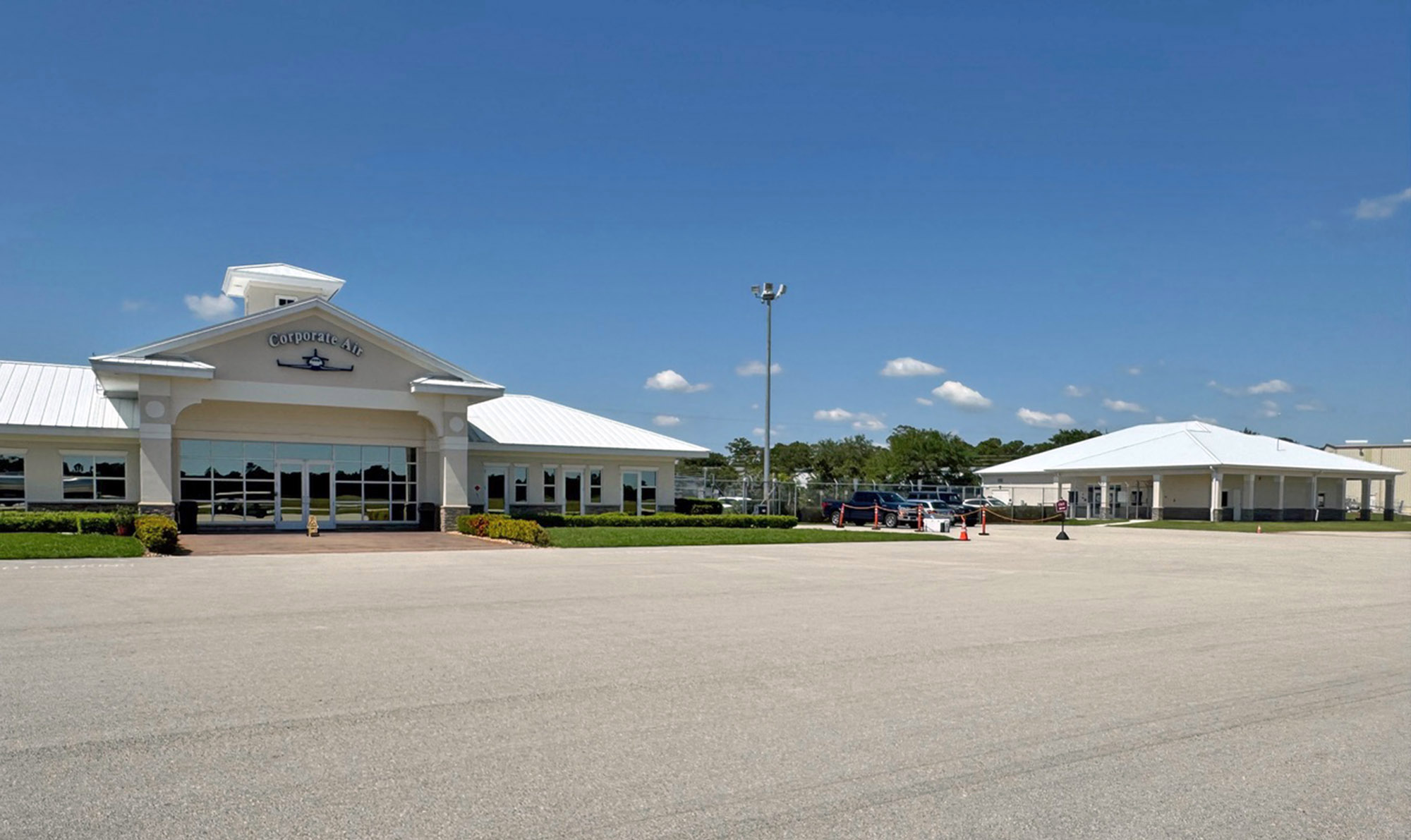
Corporate Air in Vero Beach, Florida, accepts that pumping avgas in small airplanes will yield little or no profit compared to filling its healthy stream of turbine-powered planes, but offering it without gouging is simply good for business.

Maybe I’ve repressed travel agent aspirations, but planning a long trip in our Piper Arrow—over 500 miles and maybe a few days—is an enjoyable challenge for me. Perhaps after over four decades of professional flying with flight plans, takeoff data, layover hotels and transportation already established with minimal input from me, it has become an opportunity to reassert an aspect of aviation involvement I lost along the way.

So, when it comes to choosing an FBO, I consider it a fun form of bargain shopping. Who has the best value for the services we require? And quite frankly, what airport has the best value? It pays to do a thorough job of planning because prices and services vary widely and depend on the aircraft you fly. Here’s a primer in hopes of saving some bucks on quick turns and long stays.

It’s all about the destination

On many occasions, our trips take us to destinations with large cities that have major airports that aren’t great bargains for single-engine recip airplanes. Rather than spend exorbitant sums and attempt to navigate airspace saturated with airline arrivals and departures, the choice is very often which satellite general aviation airport to patronize.

Of course, for some destinations, the choice is limited, and more often than not, that particular airport has only one FBO option because it’s operated and owned by the local municipality. As many of us are aware, those facilities can be hit or miss in regard to amenities. That said, I’ve found that most communities are proud of their general aviation airports and do their best to put forth a pleasant environment within local budgetary constraints.

For the purposes of this discussion, we’ll present the primary factors in considering an FBO. Because pilots and airplanes are all unique, certainly other factors may play into the decision. That said, before a particular FBO even becomes a potential selection, I look for an airport to have at least two instrument approaches in different directions with minimums low enough to sustain a safe arrival in weather conditions not below my personal forecast minimums of 800/1.

I’d like to think Corporate Air in Vero Beach (VRB), Florida, is emblematic of all FBOs when it comes to mission statements. When asking the owner, Rodger Pridgeon, his response was immediate. The employees, some being family members, are to conduct themselves such that safety is the number one priority. Airplane movement, fuel quality and personal well-being are just some of the factors that fall under the safety banner.

Customer service, whether it involves airplane owners, pilots, passengers or the community, is Rodger’s second priority. The third priority is of course profitability.

Flexible FBOs offer self-serve fuel because it cuts down on staffing workload and provides lower-end customers with cheaper options.

Fuel factor

One of the major expenses of a long trip is usually the gas pumped into the airplane. The cost is affected by crude oil prices, refining costs, distribution transportation costs, taxes, lead input costs, supply and demand, storage and the cost of separate facilities for handling avgas or Jet-A, just to name a few. Those factors notwithstanding, it is still astounding that the difference in price between airports less than 25 miles apart can be dramatic.

For example, as of this writing, the ForeFlight-displayed price for avgas at the John C Tune Airport (JWN) in Nashville, Tennessee, is almost $2.00 per gallon less than Nashville International Airport (BNA), a distance of only 11 miles. At the Smyrna Airport (MQY), a distance of 20 miles from JWN and 10 miles from BNA, the lowest price difference at Azure Flight Support is 50 cents more than JWN. The competing FBO, Hollingshead Aviation Services at MQY, is another 50 cents more than Azure Flight Support. Go figure.

On a recent trip to Albert Whitted Airport (SPG) in St. Petersburg, Florida, we parked at Sheltair. The FBO is the only game in town. It caters mostly to general aviation recip airplanes even with limited ramp space available. The restaurant above the facility attracts a good amount of day traffic. For the area, the 100LL price is fair, about $2.00 less than the nearby Sheltair FBO at St. Pete Clearwater International Airport (PIE). A self-serve pump operated by Sheltair at SPG is available on the other side of the primary runway with a price that is generally about one dollar less.

But, if you want to drink their coffee, eat their cookies and dirty their clean restrooms then you should pay reasonable facility fees to do so.

Most of us accept the fact that an airport that primarily supports airline and corporate aircraft is going to command higher prices for FBO services. Their capital expenses and overhead costs are likely higher than for an airport with small airplane operations. But a $2.00 difference in avgas price seems excessive. More on this shortly.

Granted, aviation fuel is a relatively small market compared to automobile gas, but it does annoy the pilot psyche that the price difference between our neighborhood filling stations is usually a couple of cents while the difference can sometimes be astronomical for airplane self-serve pumps. Aviation fuel tends to remain at the same price for a longer period due to the lower frequency of having to fill the storage tanks, which can be almost daily for auto gas.

So, are the big corporate FBO facilities using higher fuel prices to discourage small airplane pilots from patronizing their facilities?  According to Rodger Pridgeon, the short answer is yes. Because of competitive pricing, the lower volume pumped and the same manpower required for a smaller airplane as for a corporate jet, the profit margin is nonexistent at general aviation airports. In that regard, FBOs at airports like BNA charge a premium.

We found Sheltair’s SPG FBO to be organized and efficient, with clean facilities and a customer-service oriented counter.

For most FBOs, the facility is required to provide avgas along with Jet-A. Corporate Air also offers self-serve fuel at a lower price as an incentive for pilots to utilize that service, which also reduces labor costs for the FBO.

Fuel is the primary source of profit for most FBOs. Rodger negotiates with the higher frequency corporate operators for per-gallon prices based on volume bought. The amount per gallon above cost is considered the “into-plane-fee.” Once labor, capital and other expenses are factored in, servicing a particular airplane becomes a fixed cost after a certain volume of fuel is pumped, with the remainder being pure profit. Corporate Air has contracts with NetJets, FlexJet and Wheels Up.

Regardless, Rodger’s philosophy on pumping avgas at no profit, or at a loss, is that good customer service brings customers. Small-airplane pilots may own corporate airplanes as well or have friends and/or family who own corporate airplanes. Word of mouth is a great marketing tool.

If a fuel stop is the only purpose, usually an airport within a 20-mile range of a straight-line route to the day’s final destination is my criteria. The farther the distance away from that route, the more that buying cheaper gas becomes counterproductive because of the fuel burn required to land and take off from the cheaper airport.

Additionally, I would rather pay a higher fuel price at an airport that has at least one FBO with maintenance and clean facilities than land in the middle of nowhere because the self-serve price is a bargain. (Much to my wife’s dismay, I’ve made the nowhere decision.)

One of ForeFlight’s map layer selections displays fuel prices based on selected regions. Color coding is red for relatively higher-than-average pricing, green for lower-than-average pricing and orange for moderate pricing.

FBO ramp fees and airport landing fees vary by aircraft and its operation. Charter flights might pay more.

Fee factor

Because pilots were going into apoplectic shock reviewing their bills after patronizing a particular facility—mostly at the larger nationally known FBOs—AOPA began a campaign approximately eight years ago for transparency in fees. In 2019, the organization initiated a new tool in its Airport Directory that provided FBOs the opportunity to enter and update those fees. Now, many aviation apps like ForeFlight or Garmin Pilot offer a similar tool.

Of course, the old-fashioned phone call directly to the FBO is also a good method to obtain fee information even if it’s just for confirmation. On the ForeFlight app, some FBOs either don’t update their fees or change their fees frequently enough that a notation to call them is displayed.

The first item that most of us check is tie-down and/or hangar fees. Does the FBO actually provide tie-down ropes or are you at the mercy of only a chock? Is the fee reasonable? And is the fee reasonable for a hangar if weather becomes a factor?

Service fees seem to come in various flavors, sometimes labeled as facility/ramp fees, security fees, actual service or all of the above. If indeed a service is included, are you getting what you pay for? Are you parked appropriately by a lineman? Does the lineman chock your airplane, tie it down and offer a golf cart ride to the FBO’s main entrance? Oftentimes, the facility will waive specific fees if a minimum amount of fuel is purchased. Does the math work such that buying the fuel you require makes it worthwhile? Or is it less expensive to just pay the fees?

St. Simons Island (SSI) in Georgia is a busy, uncontrolled airport that we frequent on occasion for lunch. It caters heavily to corporate airplanes. The FBO waves the $10 single-engine facilities fee if you purchase a minimum of 10 gallons of gas, but most times we don’t require fuel. The price is high relative to the surrounding area, so it’s cheaper to pay the fee if we remain overnight. Usually lunch is our goal, so we pay their nominal $10 charge for a crew car of which they have at least two. The staff is always friendly and accommodating no matter your purpose for being in St. Simon.

Almost all FBOs charge fees based on airplane type: single-engine recip, twin-engine recip, single-engine turboprop and twin-engine turboprop. A jet classification—with some facilities distinguishing between VLJs, medium-size and large—is a classification that has been used at FBOs since the days of Lindbergh, but is it fair?

Speaking of Lindbergh, his stop in the day was Hartford Brainard Airport in Connecticut. Today you roll up to independently operated Hartford Jet Center’s ramp. Mandy Burton—the FBO’s veteran FBO CSR who knows the clientele well—said the operation works hard to provide well-rounded services. Courtesy vehicles, meet and greet, wash services, hangar space and catering are some. You’ll pay a $40 facility fee that’s waived if you take on 15 gallons of fuel (or a top-off). Working airplanes pay a state landing fee. Hangar fees start at $100 per night for small singles.

Not that I have any input, but consider the following idea. Some smaller twins can occupy the same ramp space as a single-engine recip, i.e., a Twin Comanche versus a Piper Saratoga. Is the ramp fee justified because of the additional engine? Other than the type of fuel, do all turboprops require more service just because of their powerplant, i.e., a Piper Meridian versus a Piper Malibu?

Why not consolidate the classifications based on passenger-carrying capabilities with the logic that more passengers have the potential to command more service? Rather than single-engine or twin-engine, why not simply consider wingspan and fuselage length in regard to ramp space required?

With turboprops and jets, how about classifying fees based on fuel capacity? The more fuel that can be added equates to more lineman time required for fueling, ramp guidance, catering and other conveniences like transportation delivered to the airplane, baggage loading and offloading. Corporate Air charges ramp fees to discourage regular jet operations that tanker fuel into the FBO, mostly for a day. These folks utilize the facility’s services and then never purchase any Jet-A. Regardless, fees are a necessary evil. If they are fair and reasonable for the service provided, then it’s in our best interest as users of the system to accept them and ensure the FBO’s survival.

Hotel, transportation factors

Does the FBO have direct access to hotels? Sometimes they can offer better rates than online. Regardless, if the FBO is associated with local hotels, chances are good that transportation to the hotel is also available. More importantly, is the airport itself conveniently located near hotels and the attractions in which you have an interest?

One of my favorite amenities at an FBO is a crew car, especially if the airport is only being used for a fuel stop and a lunch break. For us seasoned long-distance flyers, a crew car can run the gamut from junkyard dog to new and shiny. Regardless, it’s a factor to be considered at those less populated areas where the word Uber may be foreign to the local community.

On a monthlong sojourn trip, visiting mostly my wife’s family, a planned overnight to catch up with a long-lost cousin had us flying into Lisbon, North Dakota (6L3). The very friendly resident crop duster and de facto manager of the airport directed us to the tiny FBO where we could find the keys to the crew car. The keys were attached to a sign-in sheet on a clipboard that simply required a name and phone number.

Because the airport doesn’t see much in the way of pilots seeking tours of downtown Lisbon, keeping the car overnight wasn’t a problem. Despite the inop A/C and a manual transmission, we were more than grateful based on the fact we didn’t see evidence of a taxi service, let alone Uber. As an aside, the crop duster manager was kind enough to tow our airplane into his hangar because of the forecast convective weather for later that evening.

Rental car availability is a great amenity. Many FBOs have associations with rental car agencies, and some have the rental car agencies on location. Enterprise is our go-to car rental. Oftentimes they can deliver the car directly to the airport with prior arrangements. In some locations, the FBO handles the paperwork and delivers the car right to the airplane.

Bargain fuel prices and low fees or no fees are great but if the FBO location doesn’t provide access to some form of transportation, or the transportation is expensive because of distance, another airport may be a better option.

If it’s a day trip that you seek, and you enjoy exercise, some FBOs have arrangements with bike rental shops and will deliver to the airport. Of course, that’s assuming the airport is a reasonable distance from town.

Cleanliness and service

My wife and I can survive an FBO that doesn’t provide an array of coffee creamer choices or reclining La-Z-Boy chairs, but if the facility has restrooms that don’t meet 1960’s truck stop standards, we’ll opt out on our next visit.

An FBO that provides a crisp, comfortable and clean environment is a standard that promotes repeat patronage. Amenities like comfortable seating, flight planning areas, quiet rooms, drinkable coffee and Wi-Fi are always a plus. And no matter the size of your airplane or the amount of fuel purchased, it is always a pleasant customer service experience to be treated the same as the crew of the G650 parked on the big-boy section of the ramp. As little airplane pilots, we have all experienced “second class” treatment. Rodger indicated that the large FBO corporations are often owned by private equity firms whose primary focus is on profitability and not necessarily customer service.

Wrap it up

Oftentimes I remember a great trip by the customer service received. For example, on a visit to Gettysburg, Pennsylvania (W05), which has limited ramp space and a small FBO lounge area, we were greeted by a very affable airport manager who not only provided us with tie-down ropes and chocks but had our Enterprise rental agreement available on the counter, inclusive of the car in the parking lot. The manager also gave us great recommendations for dining, hotel and sightseeing.

To aid in a better experience, a helpful platform for both you and the FBO is at www.flightbridge.com. Most FBOs rely on the platform to assist with their ramp space and service planning. It’s a relatively intuitive online setup process. The chosen FBO for a particular trip is not only notified of basic flight details, but it can receive information for fuel, catering, transportation, hotel, rental car and hangar just to name a few. FlightAware subscribers can allow the FBO to track your departure and arrival through FlightBridge.

We used FlightBridge for the first time on our trip to SPG. It took a few moments to get oriented on the website, especially when my wife made some itinerary changes, but eventually it came together. Although we revised our plans about a hotel, the reservation process was relatively easy and so was the cancellation. The primary goal was notification to the FBO for arrival and departure, which functioned as advertised.

In addition, AOPA pilots are given the opportunity to use their membership number for automatic discounts on hotel, rental car and fuel. These amenities can be booked online through the FlightBridge website or mobile app. Already have existing loyalty numbers for airlines and rental cars? Those can be applied as well.

Since we used Nashville (BNA) as an example, a few attempts were made to contact managers at both Atlantic Aviation and Signature Aviation. At press time neither FBO has responded to interview requests.

Choosing an FBO is a personal choice. It’s part of the flying adventure. If options are available, my vote is for value over price—within reason of course.

Les Abend

Contributor Les Abend is a retired airline captain on the Boeing 777, a contributing editor to sister publication FLYING Magazine with his Jumpseat column and the author of the novel Paper Wings. He also serves as an aviation analyst for CNN.