











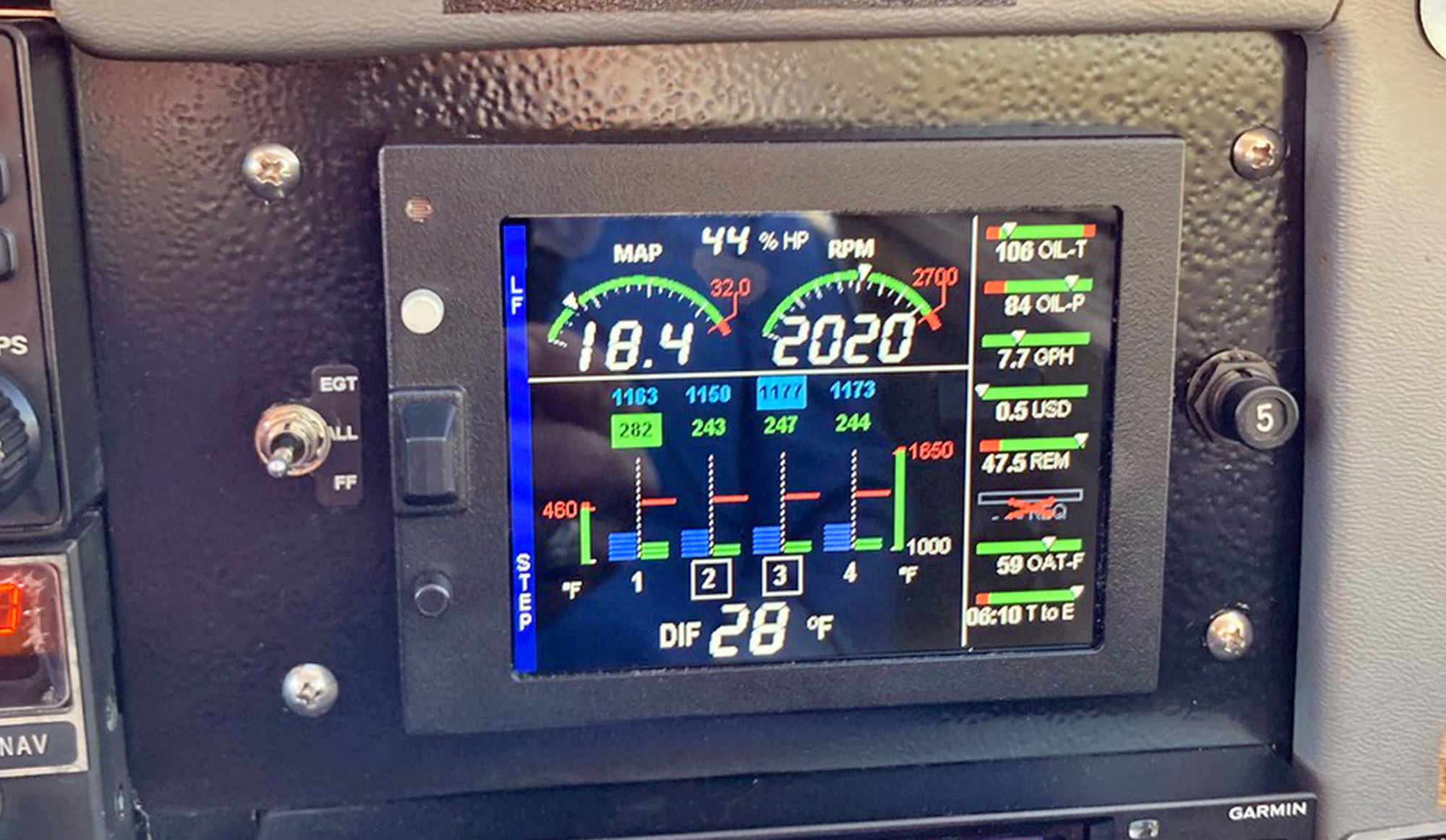
The market recognized a long time ago that aftermarket graphic engine monitors are a huge leap forward in capabilities compared to the basic plain-vanilla OEM instruments from the 1970s. And so it was about 1500 feet into the climb from Waycross, Georgia (KAYS), when the performance of our Piper Arrow II began to dramatically decline.
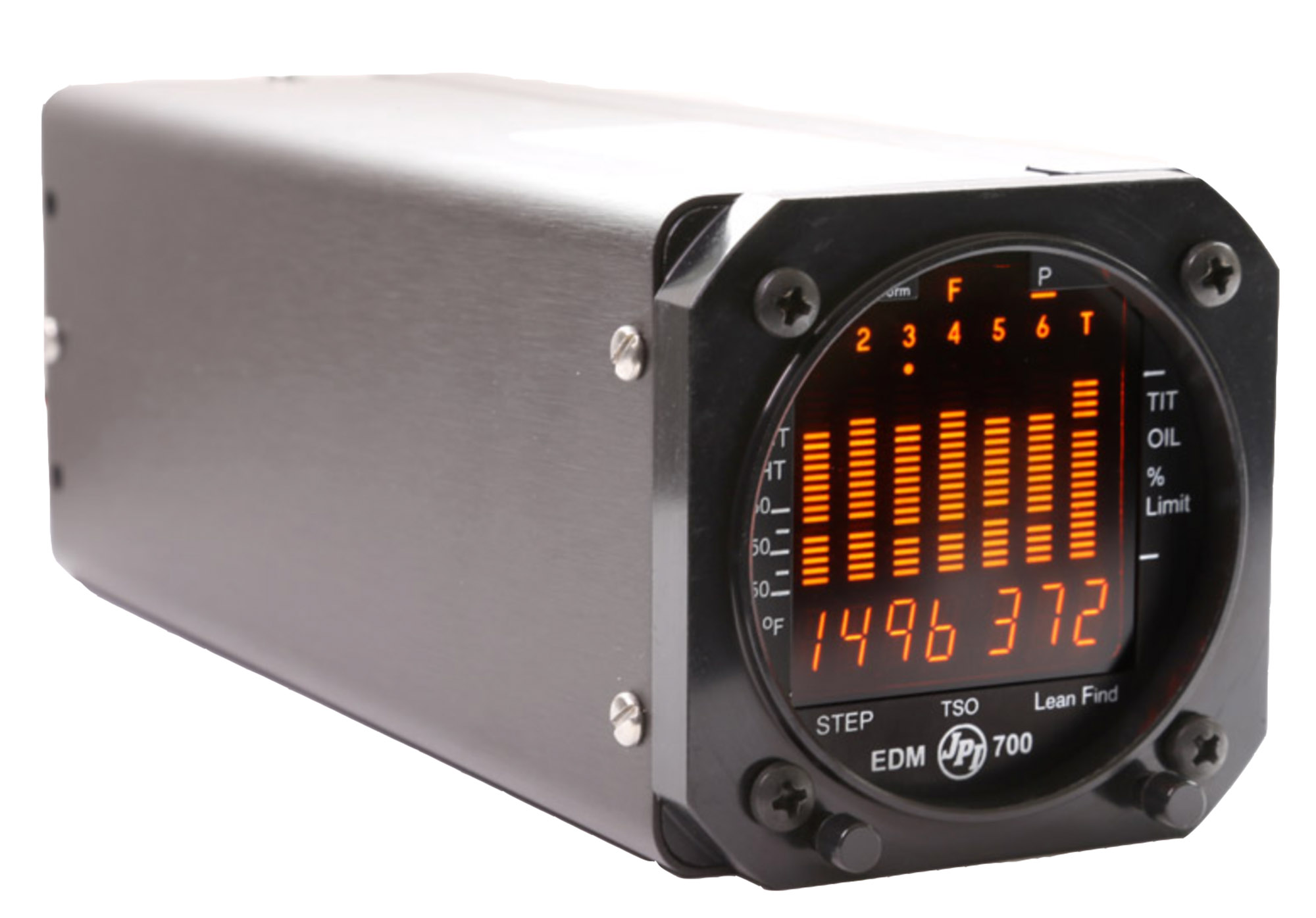
The airplane protested with a pronounced shake. A glance down at the older JPI EDM 700 display to the left of the ignition switch and just above my left knee confirmed an issue. But would a more modern display and additional capabilities of a newer system better prepare for me dealing with the partial engine failure? The short answer is yes.
Engines and Alligators
The amber LCD digits of the EGT DIF (that’s the difference between the temperature of the coolest and hottest cylinder) and the CHT on the number three cylinder flashed an angry desire for my attention. I’m fairly certain the vertical EGT bar was flashing as well, but it didn’t matter. My focus was on safely returning three passengers to the runway from whence we came. My passengers were associated with SouthWings, an aviation environmental advocacy organization. The mission was to observe any adverse impacts to various sections of the Okefenokee Swamp. I later reflected on the possible scenarios of an engine failure over the area. None of them were good. In my humble opinion, alligators are best seen from behind a wire fence and not from within their playground.
Although the engine was still marginally operating on the three remaining cylinders, anything other than a 180-degree turn back to the airport would have been an exercise in exceptionally bad judgment. Using my best captain’s voice, I explained the situation to my suddenly quiet but stoic passengers while aiming directly for the runway threshold. A normal traffic pattern be damned. Along with the engine problem, I announced a nonstandard, angling right base entry to the runway on the CTAF frequency. We arrived without issues and taxied to a tiedown spot. My three passengers deplaned with nervous smiles. I apologized for the abbreviated flight while wondering just how much my checkbook balance was going to be reduced. But the first order of business would be where I would find an A&P on the outskirts of civilization.
Fortunately, the line folks at the FBO offered southern hospitality in the form of phone numbers for outside mechanics, a crew car and eventually an available hangar. Next on my list was a call to Mike Busch’s Savvy Aviation. Although I had already done the footwork in locating an A&P, the Savvy technician was helpful in walking me through some troubleshooting steps. I fantasized about an outcome that was a simple fix like a valve or a misbehaving spark plug, but it soon became abundantly clear that a cylinder replacement was in the Arrow’s future.
Roached Cylinder, Failing Monitor
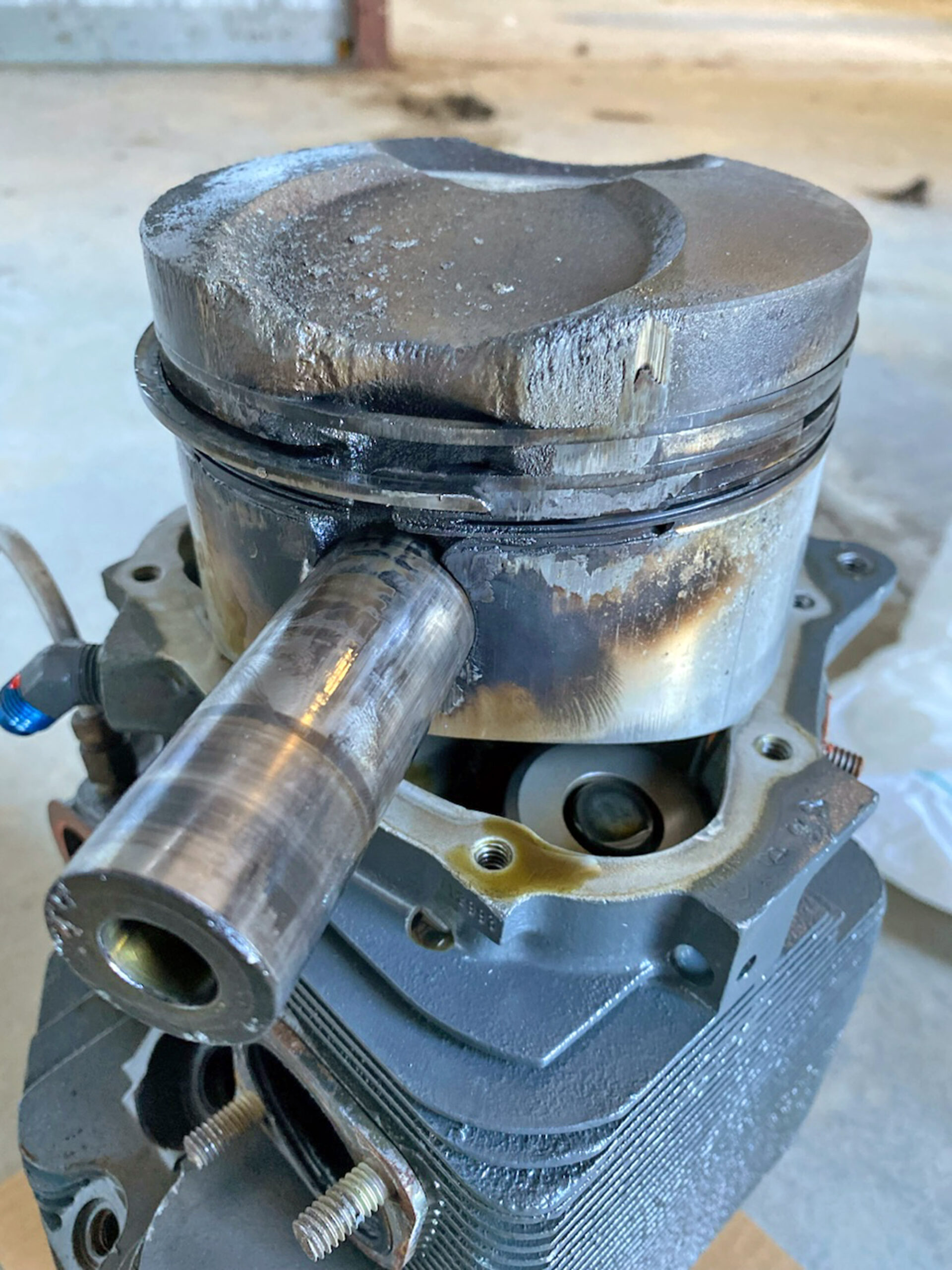
When the pain and suffering was mostly over, my concern was the cause of the failure. The removal of the cylinder proved it to have suffered an obvious detonation event. But why did a cylinder fail with less than 200 hours in service? Was it my operating practice? Was it an issue that could rear its ugly head again like a malfunctioning fuel injector? Or was was it just circumstance? Savvy’s analysis application and technicians would assist with the evaluation, but more on this later.
About seven years into ownership of our Arrow II, and 16 years with the EDM 700 having been installed by the previous owner, the engine monitor was beginning to show signs of weariness. The LCD display would occasionally flicker. And more frustrating, the STEP button that allows selection of various parameters lost its tactile function such that viewing those parameters became intermittent. The latter issue had been a new development about a month before the cylinder event.
Before this incident, I had called JPI to inquire as to the potential repair cost of the ailing EDM 700. An exact price was difficult to determine until the unit was evaluated, but the range quoted was between $225 and $600. This estimate is based on the total of the two discrepancies: the flickering display and the tactile function of the STEP button. (The EDM 700 unit has been discontinued, so be certain that replacement parts are available before making the decision to repair.)
Although I understood the original logic for the EDM 700 to have been installed in a portion of the panel where if fit snugly and efficiently at the lower pilot side of the airplane, it just wasn’t a normal part of an instrument scan, which was always my concern. The display was partially hidden by the control yoke. The EDM was adjacent to the autopilot control panel and associated toggle switches—a select-it and forget-it area. With the cylinder event, it’s indeed possible that the flashing display might have been trying to get my attention earlier in the flight, but I failed to notice. Unfortunately, a separate visual alert for the engine monitor was never installed. In my airline work, visual alerts and audio alerts accompanied by a master warning/caution light were a given.
So, with the almost-engine-failure experience being the catalyst for dictating a change, what were my options? Repairing the EDM 700’s LCD display was a reasonable proposition, but that decision wouldn’t help with alarm alert visibility. Shopping for a new engine monitor with a high-resolution color display would certainly enhance the ability to be warned of an impending problem. But installing the unit in a conspicuous section of the instrument panel was imperative.
Fortunately, a sizable blank space toward the right side was available. The blank space was being used as a small bulletin board to secure a couple of laminated cards containing appropriate airspeeds and limitations. For me, after years scanning EICAS (Engine Instrument and Crew Alerting System) screens, this was a natural spot to get my attention.
Shopping for Value
A normally aspirated four-cylinder engine monitor system for a certified aircraft ranges from approximately $2300 for a G-2 Insight to $7000 for a JPI EDM 930, which includes the monitoring of two fuel tanks. The JPI 930 allows you to ditch the old analog gauges completely while the Insight G-2 allows most of its functions to substitute as a primary source. A six-cylinder engine monitor will cost more, as will a turbocharged engine, as will a twin-engine system, of course.
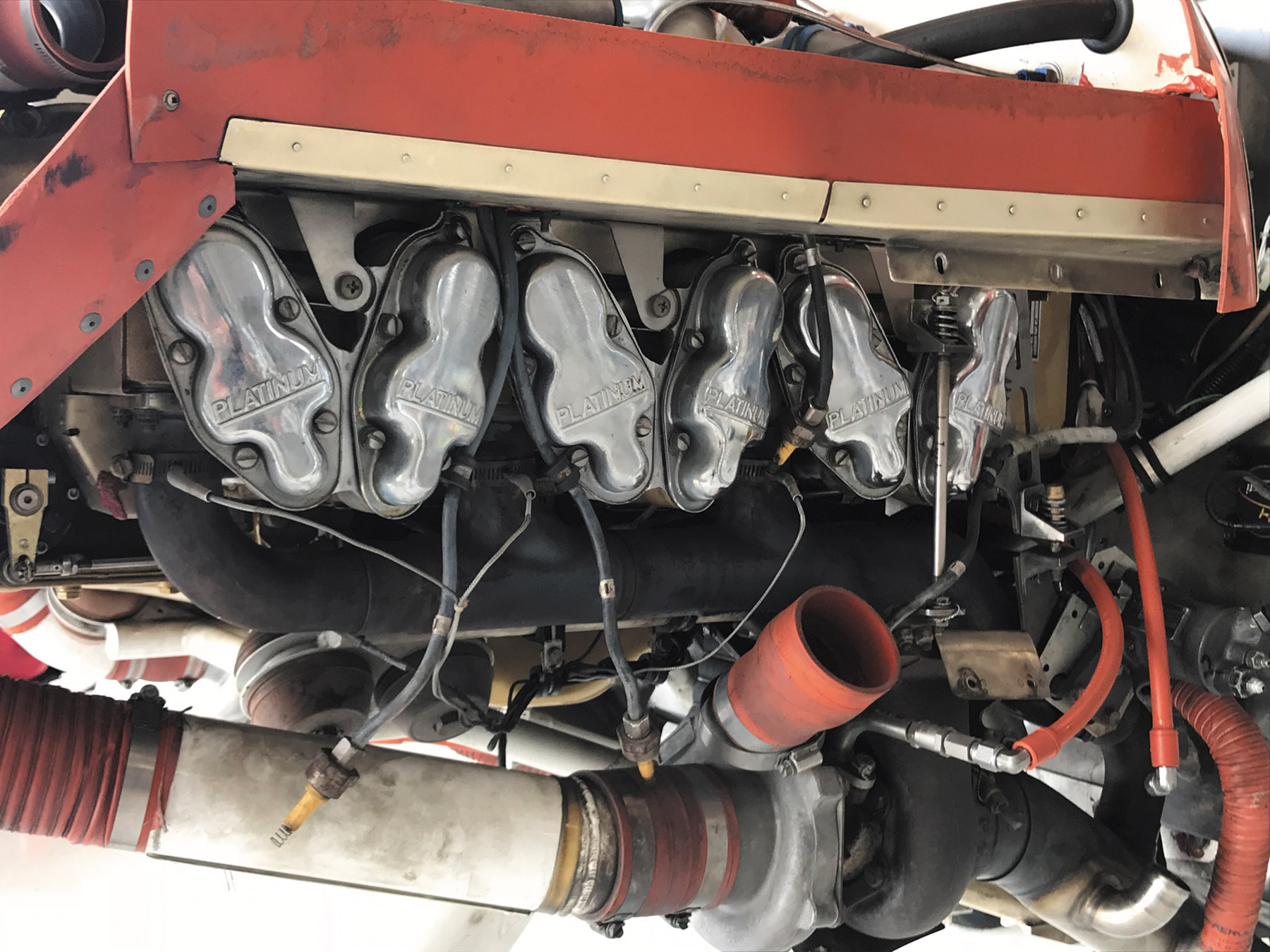
Since engine monitor choices could fill one issue of this magazine (look for a market scan in an upcoming issue), my suggestion would be to draft a spreadsheet if you are in the market. The common denominator among most manufacturers is that more engine parameter options require purchasing more probes or sensors, which aren’t cheap depending upon what’s being displayed.
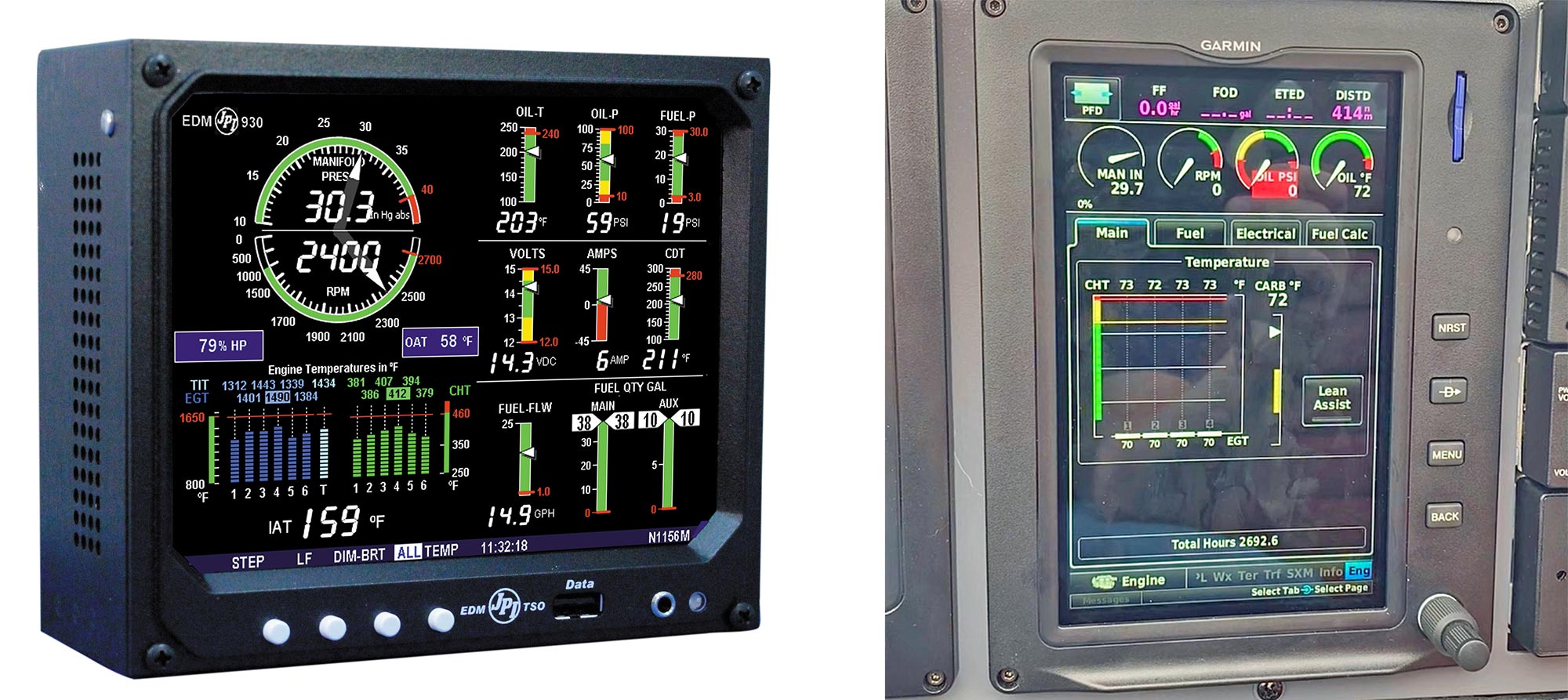
Oftentimes, the available instrument panel space will dictate your purchase. Most manufacturers design the insert portion of their units to fit into a typical instrument panel’s 3/8-inch cutout. That said, if the bezel display is square, the engine monitor may fit well even if the old unit was mounted through the same hole.
My quest for a new engine monitor didn’t take long. JPI was offering a trade-in program as it still does at press time. Return the old EDM 700 core directly to JPI and be credited with $300 from your chosen supplier for a final price of roughly $1500 for a new EDM 730 or EDM 830.
One of the most compelling aspects of the JPI trade-in is that the existing engine monitor probes are compatible with both the EDM 730 and the EDM 830, thus the reason for an approximate $1000 reduction in price from a ground-up installation.
I chose the EDM 830 upgrade over the EDM 730 because the unit included manifold pressure and RPM, which then calculated percent horsepower using the input of my already-installed OAT probe. Having horsepower displayed at a glance is a luxury, especially during the leaning process. Of course, the additional functions had a price. Both the RPM and the manifold pressure sensors totaled $538, not including tax and shipping. Oil pressure and oil temperature were never part of my original EDM 700, so an additional $444 later, those functions also became part of the system. I had managed to add another $1000 to the tab, but at the end of the day it was money well-spent.
If engine monitors catch your eye and make you giddy, be certain to read the manuals and the fine print about options before you break out the Mastercard. Call the manufacturer’s technical support, lest you leave an important functionality out of your installation. Also, discuss the installation in detail with your installer so you’ll know exactly what functions you’ll fly away with.
Although the JPI EDM 930-Primary was an attractive all-in-one option (Garmin’s EIS is another), the $7000 expense seemed unnecessary if the sole purpose was to eliminate the analog gauges. With the EDM 830 acting as a technical secondary source of engine information on the Arrow, and the mechanical gauges acting as a certified primary source, redundancy would be built into the system. Redundancy was always an important risk mitigator in my professional flying career.
JPI touts a plug and play installation, but it isn’t quite that simple. A few miscellaneous programming steps are required. In my circumstance, the new placement of the engine monitor prompted some probe wire relocation. Fortunately, the existing wires were long enough.
Worth the Investment
As a testimonial to the merits of trading in my old JPI EDM 700 and locating the new EDM 830 to a more visible position on the instrument panel, an alternator failure this past summer proved the engine monitor’s worth. The alarm alert flashed the failing voltage value in large, red numerals on the bottom of the display. It caught my attention almost immediately. (See our sister publication’s Jumpseat column in the October 2024 issue of FLYING magazine for that story.)
The needle on the analog ammeter gauge was locked to the full left position, which confirmed the problem … and confirmed my love of system redundancy. Because the ammeter was installed by Piper to the far left on the bottom of the instrument panel, the situation may have gone unnoticed awhile longer had I not installed the EDM 830.
I’ve experienced only one minor issue with the new engine monitor. Despite the troubleshooting guidance of JPI technical support, the Fuel Required display is void of a value—a red X remains over the function. Although this function is available via a knob twist to the appropriate GNS 430W page, it would still be a benefit to view the information directly on the EDM 830 like many of the other functions.
In this day and age, investing in an engine monitor or trading up to newer technology should be on par with investing in a quality GPS system. My upgrade has already paid for itself just in the precision of leaning the mixture, notwithstanding the alert feature.
And you’re probably wondering what’s covering that hole where the JPI EDM 700 lived. It’s a win-win. That hole is now filled with a USB charger. Indeed, a happy ending.