











After a couple of hours, most people are ready to get out of a traditional, skull-clamping headset. Go eight hours in a sweaty cockpit, and wearing even a top-of-the line Bose A20 or Lightspeed Zulu gets old. The alternative is an in-the-ear (ITE) headset, which is fundamentally a pair of earplugs with speakers and a mic. don’t knock earplugs. When inserted correctly, they offer noise reduction comparable to all but the best ANR headsets (We tried. Its true.) They don’t clamp down on your head or cause sweat to bead up around your ears, either. Still, they arent for everyone. They require more practice and patience than a headset you can just toss on. They arent for pilots who jump in and out of aircraft all day. ITE headsets are small and light, but the thin cords and tubes are more susceptible to tangling or breakage. And then there’s earwax. It will get on the earplug tips (call them eartips) and require keeping a bag of them on hand to replace as needed. The eartip material of choice is foam, which must be inserted into the ear canal and held there as it expands to fit. When we tried ITEs during a mid-Atlantic summer a few years back, we had to be quick to get the compressed foam in the ear before it expanded. This time it was during a Maine winter and we had to wait until our body heat warmed the things before they expanded at all. All vendors offer silicone tips that simply slide in as an alternative, but we think their noise attenuation is too poor to recommend. 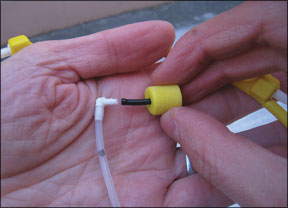
Quiet Tech Halo
Quiet Technologies has been at the ITE headset game for a while with several product variants. Their Halo is the current offering and is the lowest price of any of the ITE options at $349. Replacement eartips are $1.50 a pair. We also found it to be the most comfortable with three options for wearing: over the head like a headband, behind the head and over the ears (like glasses worn backwards) and loosely resting on the shoulders behind the neck.
Headband and behind the head were equally comfortable and worked we’ll with glasses and hats. The metal band is wrapped in a soft plastic sleeve. The band can be shaped to fit the head better and offers a tighter or looser fit. It was easy to get enough pressure to keep the boom mic in place but keep it light enough to forget we were wearing it. The over-the-shoulder orientation would be fine for a passenger who was just listening, but the mic doesnt move with the head, so its not for someone regularly talking.