











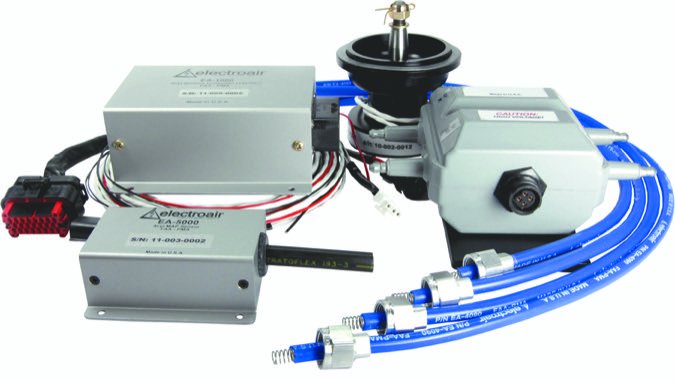
Magnetos have been around so long that one can’t help but wonder if Benjamin Franklin went directly from his supposed kite-into-a-thunderstorm electricity experiment to his basement where he built the first one.
While reliable, continuing to use mags on piston aircraft engines isn’t terribly efficient. They always fire the spark plugs at the same point—usually 25 degrees before top dead center (TDC)—and rely on the combustion event ignited to carry on by itself to reach maximum pressure by the time the piston reaches 11 to 17 degrees past TDC. Mags put out a spark that is on the order of 12,000 volts. That’s good, but not great. Finally, magnetos wear out faster than many other components in the airplane and need to be pulled for inspection and repair or replacement every 500 hours, not a trivial expense.