











What kind of spark plug do you have in your aircraft engine? Do you even know or care? Or should you just leave that up to the shop and buy whats cheapest? While delegating this choice to your shop is the no-hassle option, we think having an informed opinion on spark plugs might save you a few bucks. Maybe a lot of bucks, actually. But its a case of spending more to save more. In aviation as in everything else, youre confronted with the dilemma of one product that does the same thing as another, but costs twice or three times as much. Thats definitely the case with spark plugs. The popular massive electrode plug sells for a third less than its fine-wire electrode cousin. In this article, we’ll make the pitch for spending the additional money, at least for owners who fly high-performance aircraft and who are interested in fuel economy and long-term durability.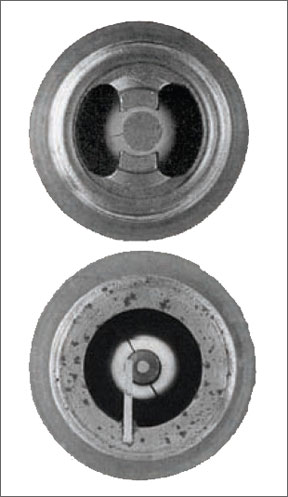
Spark Plug Anatomy
As shown in the illustrations here, a massive electrode plug looks just like the name implies: two (usually) huge outer electrodes surrounding a center electrode provide an air gap across which the spark travels to ignite the fuel/air mixture. Fine wire plugs have more in common with traditional automotive plugs, in that a single electrode-consisting of a small-gauge wire-forms the spark gap with a center electrode.
There are several variations in electrode designs within the fine wire and massive categories. In the fine wire group, the single iridium wire is the most common. For massive plugs, the standard is the two-electrode configuration shown in the photos here.
The latest Champion guide lists nine different electrode configurations in its offerings. Its up to the user to decide if the cost advantage of the more common massive electrode design outweighs the more costly fine wire design advantages.
The cost difference is slightly more than three to one for Champion plugs-roughly $22 versus $70 each at list prices. Occasionally, other brands such as Autolite go on sale at $30 for fine wire plugs and $15 for the massive types, so watch for these. We saw one recently at Aircraft Spruce and Specialty (www.aircraftspruce.com). Even if you don’t need the plugs right away, buying them on sale saves a pile of money.