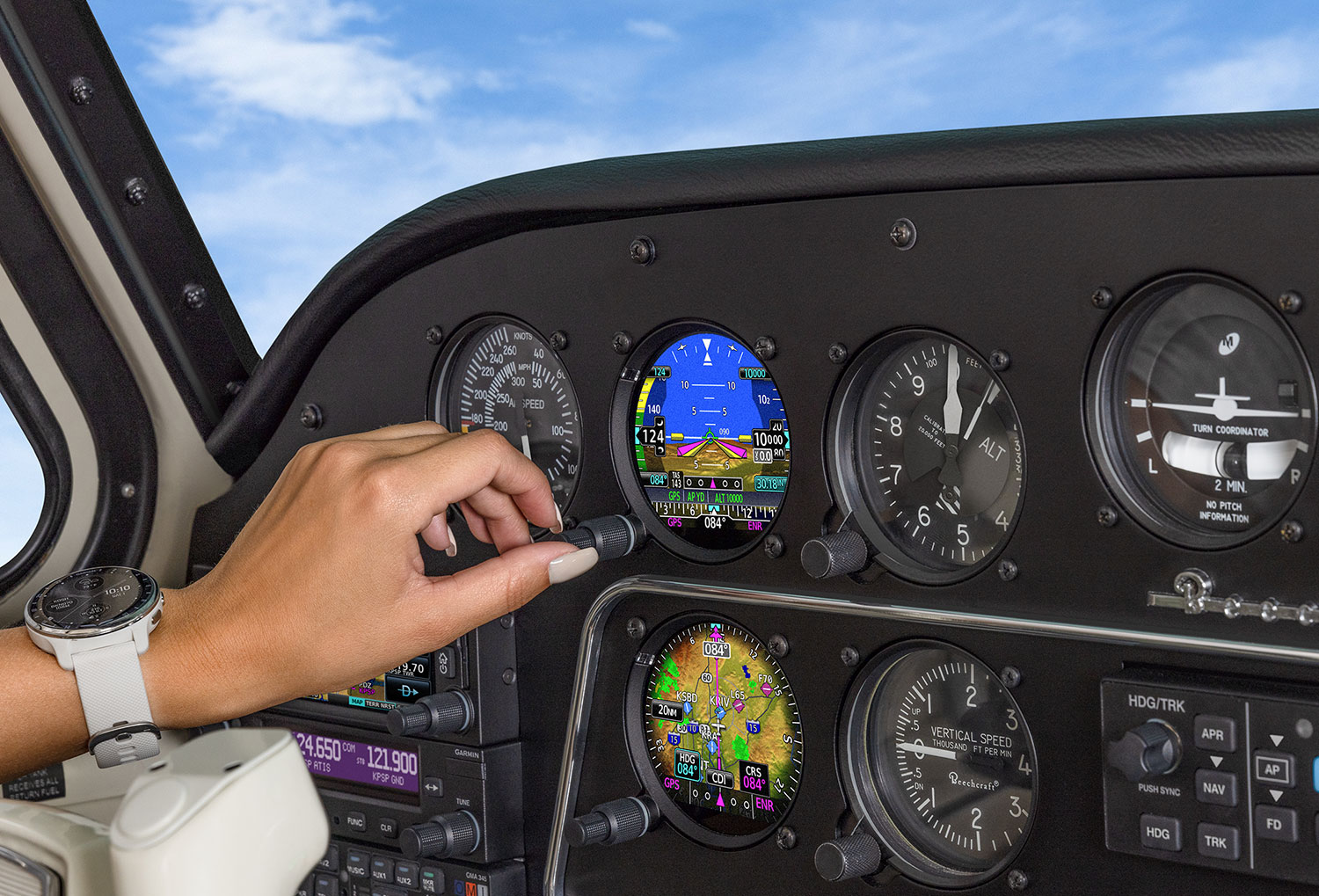
That’s a couple of Garmin GI 275 electronic flight instruments retrofitted in a vintage Bonanza. [Courtesy of Garmin]. To save the budget, they’re designed for incremental upgrades because they fit in existing three-and-one-quarter-inch instrument cutouts.After cutting a new instrument panel and all the other labor-intensive work that tags along with the retrofit, flagship big-screen EFIS (Electronic Flight Instrument System) upgrades come with eye-watering invoices and lots of downtime. While these big projects could make sense for some, we suspect the majority of buyers look for ways to keep the budget and complexity in check. Enter small-screen EFIS, otherwise known as a budget glass upgrade. These are generally two solid-state gyro instruments—an electronic attitude display and electronic HSI. While you’ll sacrifice screen real estate, you’ll also save big on install labor because mini EFIS units can fit the existing three inch instrument cutouts without having to cut new metal, and in some cases, even retaining the old-school plastic overlay. Here’s a primer on the budget EFIS market, where Garmin and uAvionix are two standouts, with some words on the realities of a bare-bones avionics upgrade.
The $15K Upgrade
While that isn’t chump change, the $15,000 price point is a realistic budget to set, though you might have some left over, and it’s possible to come out of the upgrade closer to the $10,000 price point, depending on the equipment and options. Still, after adding up the equipment costs and typical labor, there are always extras that add to the bottom line once the airplane hits the hangar floor.
PREMIUM CONTENT
This article is for subscribers
Log in to continue reading, or subscribe to get unlimited access to all content.
Editor in Chief Larry Anglisano has been a staple at Aviation Consumer since 1995. An active land, sea and glider pilot, Larry has over 30 years’ experience as an avionics repairman and flight test pilot. He’s the editorial director overseeing sister publications Aviation Safety magazine, IFR magazine and is a regular contributor to KITPLANES magazine with his Avionics Bootcamp column.