











Th
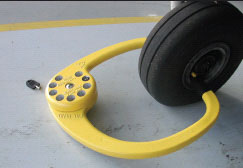
Robert Collins, who runs the non-profit Aircraft Crime Prevention Institute, told us that he has no reliable data on how effective anti-theft devices really are, but he believes any deterrent is better than no deterrent. When we spoke to Collins in early October, he reported that only six airplanes had been stolen in 2006, a near record low. No one is quite sure why this is so, but it may be an unforeseen benefit of added airport security following the 9/11 terrorist attacks five years ago. Some states, counties and airports are requiring additional locking devices on aircraft, which may further reduce theft.
Anti-theft gadgets are of two types: prop or wheel immobilizers and throttle locks. We tried all of the popular brands we could find. Here are our findings.
Pitbull Tirelock/Proplock
For years, police have immobilized deadbeat cars in place with wheel or tire locks, the Denver Boot being the most we’ll known. The $270 Pitbull Tirelock is a variation on the theme, consisting of a pair of heavy cast aluminum pincer arms joined by a single pivot. The arms have steel rods embedded in the casting for additional strength. If this sounds big and heavy, it is. The Pitbull weighs 10 pounds and measures 18 by 12 inches when folded.
To install it, you spread the pincers and insert them inside the hollow portion of the wheel rim, then close the arms. A series of holes bored in the arm pivot allows a range of fixed adjustments to fit any size wheel. When one of the holes lines up, a Gem-type lock is inserted, which prevents the arms from opening or closing further, securing the device to the wheel.