











ANOTHER GOOD PILOT-FRIENDLY MANUAL
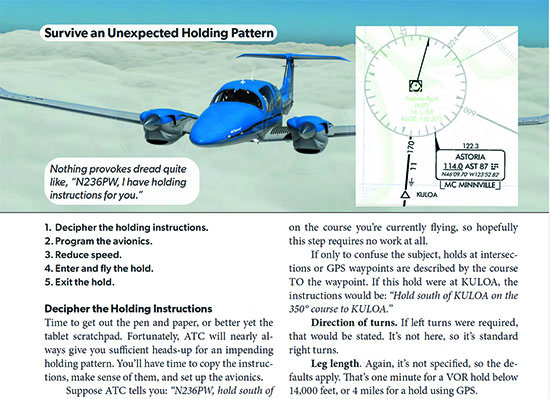
One of the things I’ve always liked about the training manuals from the folks at New Hampshire-based PilotWorkshops.com is that they’re stone simple to read. Whether the material pertains to avionics, engines or flight procedures, the Pilot-Friendly Manuals series is engaging, and for my short attention span, that makes digesting complicated and technical material easier. Part of PilotWorkshops’ recipe for success in previous manuals is the useful, straightforward explanations blended with a ton of good supporting images and graphics. For me, descriptive visuals are a good way to put it all together. The company’s latest IFR Procedures manual is no different, and it can be a good tool for instrument training, preparing for an IPC or for brushing up on procedures that may be getting rusty. It’s even a good resource for VFR pilots and those who recently invested in a modern avionics upgrade. The manual ($69 for digital/print, $49 digital only) is not a substitute for flight instruction from a qualified and knowledgeable flight instructor, of course, and it isn’t intended to be a ground school course, but it can help fill in a lot of blanks that ground school courses tend to create. Read it front to back, back to front or random bits at a time. All of the company’s Pilot-Friendly Manuals are organized by task and you can jump directly to any of them, although ultimately to get the most from it, you should read the 143-page manual cover to cover.
Unlike my experience with training manuals from some other sources, there’s little head scratching along the way. Each topic stands alone, and in this manual since the IFR system has so many interrelated tasks, you’ll find cross references inserted throughout the text. As an example, if the cross-reference is to an entire IFR task, the authors provide a page number so you can easily find that section for further study. If it’s related to a sidebar within a task, you’ll see the title of that sidebar along with the page number to help you locate the information. No tail chasing. That’s part of what makes the otherwise dry material so engaging. The material presented in this IFR manual is logically arranged in order of an IFR flight—clearance, flying enroute, flying an arrival, flying an approach and handling the post-flight chores, and there are no fewer than 55 procedural topics covered along the way, plus a terms glossary.